SOCIÉTÉ PRESENTS A SOLO EXHIBITION BY BUNNY ROGERS

Opening Preview: March 12, 2026 | 6 – 8 PM
On View: March 12 – April 18, 2026

March 4, 2026 (Berlin, Germany) – SOCIÉTÉ is delighted to announce My Original Friend, a solo exhibition by Bunny Rogers, on view from March 12 – April 18, 2026. 

Bunny Rogers’ conceptual practice draws upon deeply personal references to reflect on experiences of alienation and intimacy. Her intricate narrative worlds often center on “overlooked objects,” endowing modest everyday items with the presence of people and moments that have shaped her life. For Rogers, imagination is not secondary to “reality”, but a parallel structure through which experience is processed and reconfigured. Drawing on the pop-cultural landscape of the late 1990s and early 2000s, her multifaceted practice considers how notions of identity and belonging were reshaped at the moment when the virtual and the real began to overlap and intermingle in unprecedented ways.

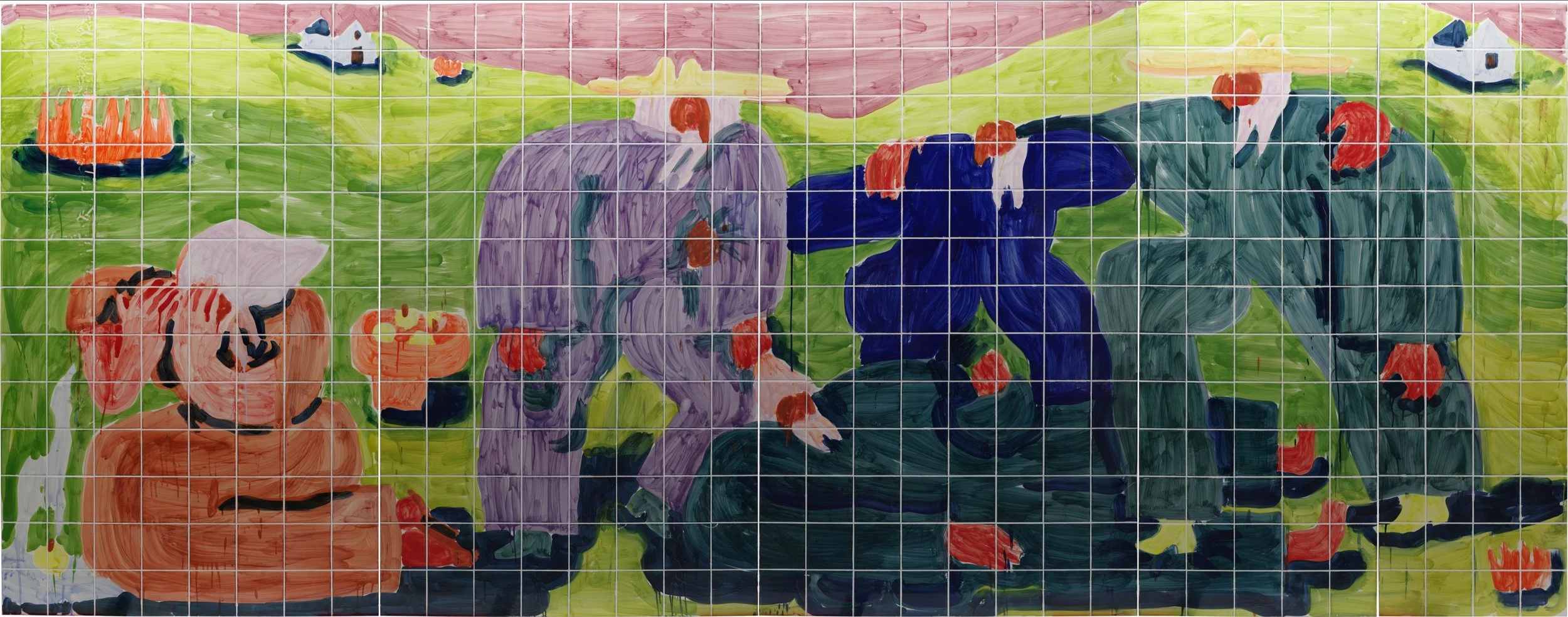
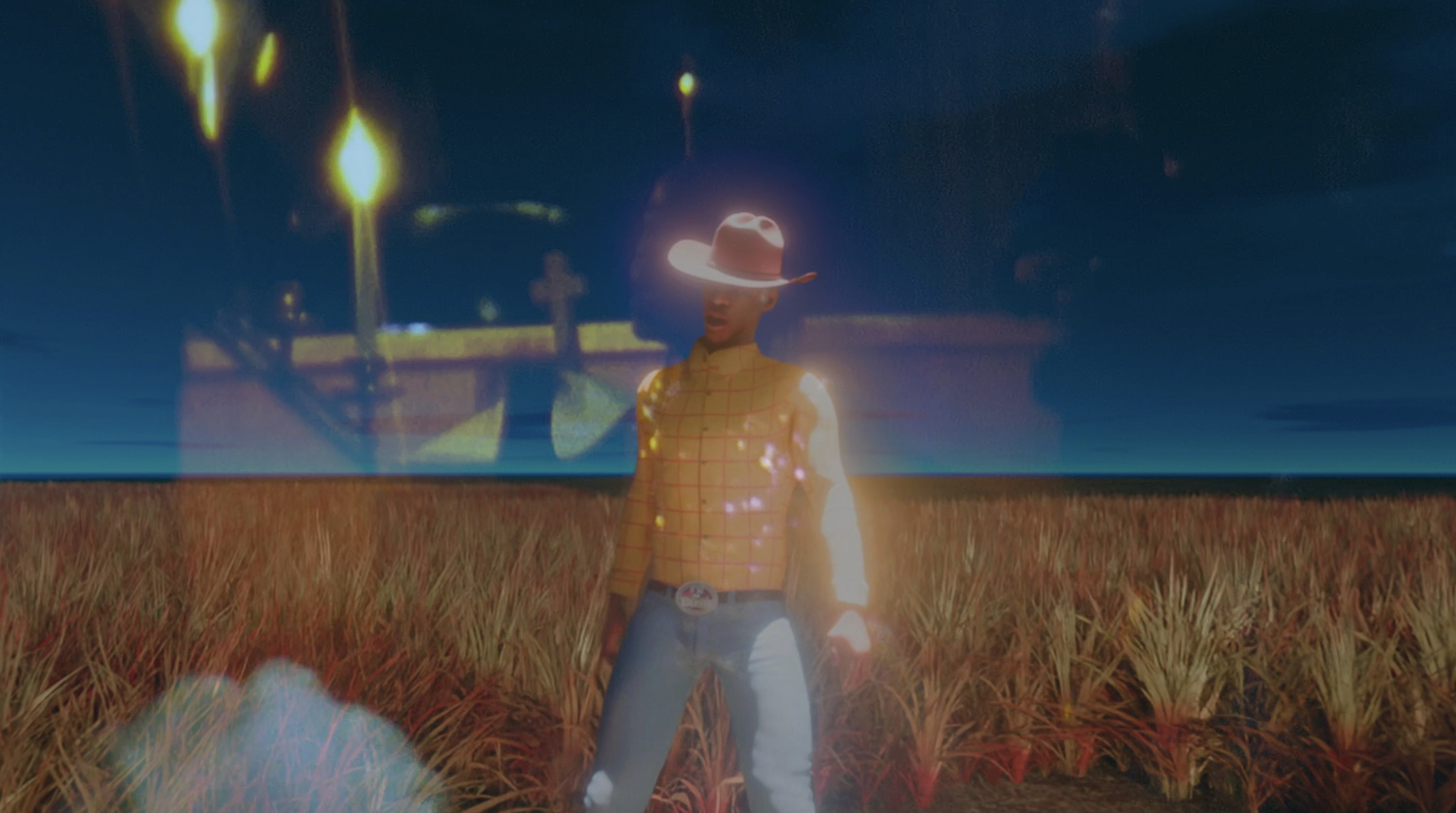
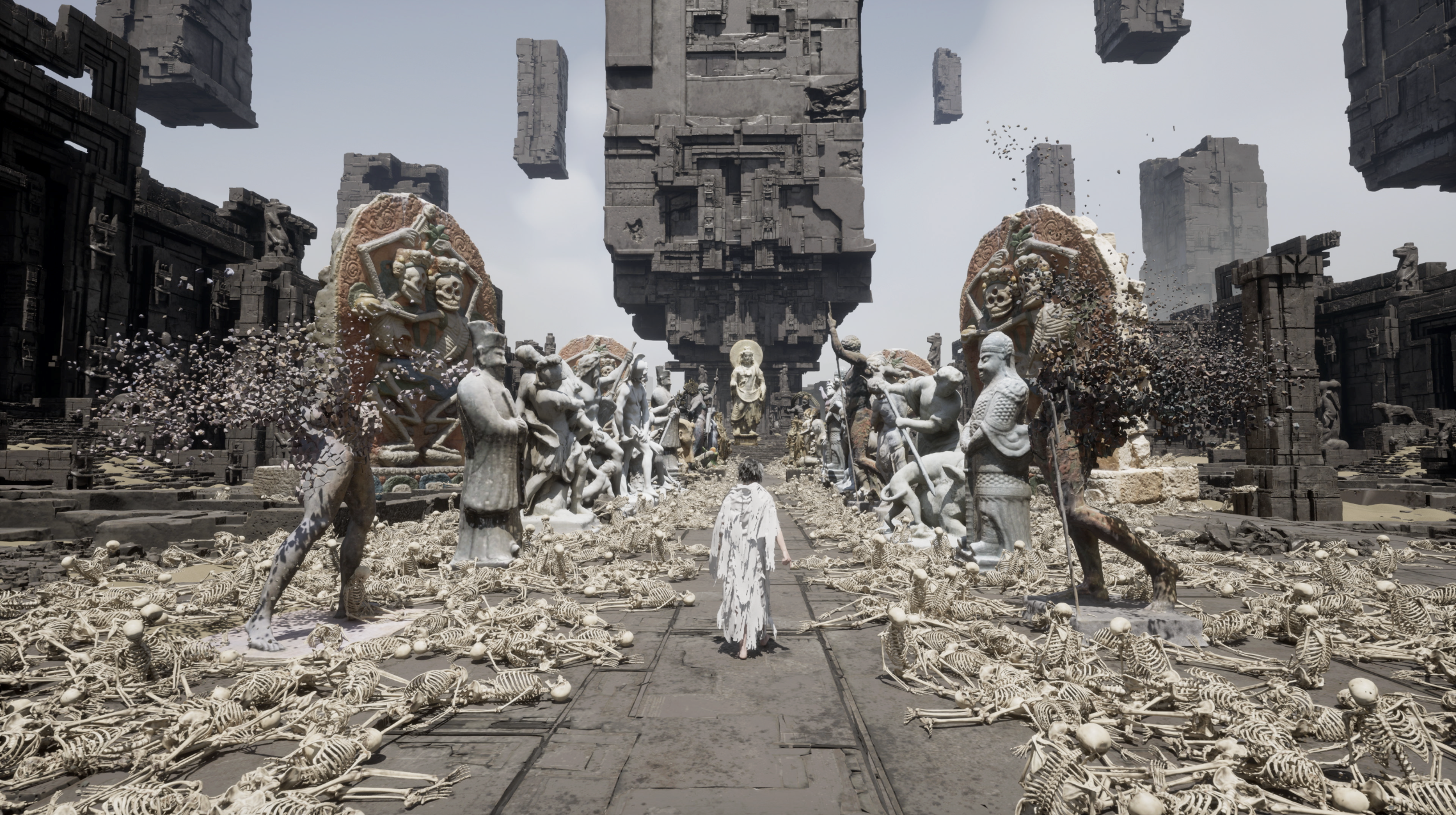
In her fourth solo exhibition with SOCIÉTÉ, Rogers transforms the gallery into an immersive installation that spatializes the familiar iconography of video game quests. In this dark, strangely flattened environment of grey brick, pseudo-classical columns, and torch lighting, we encounter a series of self-portraits in the guise of Joan of Arc, an animated character from the short-lived MTV series Clone High. Joan functions as a mask or placeholder for the artist, allowing Rogers to remove herself from the image and displace autobiography into a mediated form. In each image, she holds a different key derived from drawings of actual keys belonging to people close to the artist.

Rendered as quest objects, these keys become charged relics. They carry the intimacy of their owners while operating within the symbolic logic of the game world. Rather than serving as simple emblems, they suggest access, withholding, and the fragile architectures of trust that structure attachment. Suspended between personal artifact and digital artefact, the keys bridge Rogers’ inner life and the visual language of virtual space. Through subtle shifts in gesture, the figures stage the relationship between key and lock as a psychological threshold—charged with violence and tenderness, reverence and protection.

NOTES TO EDITORS
My Original Friend will be on view at SOCIÉTÉ from March 12 – April 18, 2026. 

Address
Wielandstraße 26
10707 Berlin

Opening Preview
March 12, 2026 | 6 – 8 PM

Opening Hours
Tuesday – Saturday | 10 AM – 6 PM
Closed on Sundays and Mondays


About Bunny Rogers: 

Bunny Rogers (b. 1990, USA) is a visual artist, poet, and performer based in New York. Rogers has been exhibited internationally in solo exhibitions at venues including Hamburger Bahnhof, Berlin; Kunsthaus Bregenz, Bregenz; Museum für Moderne Kunst, Frankfurt; Marciano Art Foundation, Los Angeles; Whitney Museum of Art, New York; De 11 Lijnen, Oudenburg; and Musée d’Art Moderne, Paris. She has participated in group exhibitions at Pinakothek der Moderne, Munich; Hangar Y, Paris; Den Frie Centre of Contemporary Art, Copenhagen; Palais de Tokyo, Paris; Julia Stoschek Foundation, Berlin; Hamburger Bahnhof, Berlin; New Museum, New York; Fondation Louis Vuitton, Paris; OCAT Shanghai, Shanghai; Louisiana Museum of Modern Art, Humlebaek; LUMA Westbau, Zurich; The Rubell Family Collection, Miami; Marian Goodman Gallery, Paris; Hessel Museum of Art, Annandale-on-Hudson, New York; and Sandretto Re Rebaudengo Foundation, Turin; The Jewish Museum, New York; Queens Museum, New York. She is the author of My Apologies Accepted and Cunny Poem Vol. 1 & 2. Bunny Rogers is part of a number of public collections including Boros Collection, Berlin; Fondation Louis Vuitton, Paris; Hamburger Bahnhof, Berlin; Julia Stoscheck Foundation, Düsseldorf; Louisiana Museum, Humlebæk; MMK Frankfurt; Whitney Museum, New York; among others.


About SOCIÉTÉ:

SOCIÉTÉ is a Berlin-based contemporary art gallery with a global reach. The gallery’s bold curatorial approach plays a pivotal role in advancing its artists’ visions, supporting major museum exhibitions, biennials, and acquisitions by leading institutional collections worldwide. Operating in both the primary and secondary markets, SOCIÉTÉ provides curated advisory services to select clients.

Beyond its exhibitions, the gallery’s publishing initiative, EDITION SOCIÉTÉ, collaborates with prominent writers and graphic designers to produce artist books, catalogues, and, more recently, high-end artist editions.

SOCIÉTÉ is an active presence at major international art fairs, including Art Basel, Art Basel Paris, Art Basel Miami Beach, Frieze New York, Frieze London, ARCOmadrid, and Gallery Weekend Berlin.

Image credits:
Bunny Rogers, Joan R Key 8, 2025. Fine Art Print on Hahnemühle PhotoRag Ultrasmooth 305g, gold-leafed artist frame, 200.5 x 163 x 7.5 cm, 79 x 64 x 3 in. Courtesy the artist and SOCIÉTÉ, Berlin.

PDF


ARTEFACT GALLERY PRESENTS ‘SELF AS SOLVENT’, A SOLO EXHIBITION BY JAGODA BEDNARSKY

Preview: April 23, 2026 | 6 – 8 PM

On View: April 24 – June 25, 2026

February 26, 2026 (Berlin, Germany) – ARTEFACT Gallery is delighted to announce Self as Solvent, a solo exhibition by Polish-born Berlin-based painter Jagoda Bednarsky, on view from April 24 – June 25, 2026. Alluding to the medium’s inherent solvency, the artist sees the self as fluid and permeable, in a state of constant negotiation. New paintings and watercolor works will be unveiled for the first time, emerging from the artist’s ongoing engagement with a boundless archive of images, exploring the ways they shape memory and desire.

Through a process of appropriation and reconfiguration, Bednarsky draws from art history, popular culture, and personal experience, dismantling familiar visual languages and recombining them into unexpected compositions. Recognizable motifs emerge only to quickly disappear within the dense fields of color and movement. In the dialogue between initial motifs and their transformed iterations, Bednarsky produces works that rethink the stories they reference. The artist expands: “In my paintings, I create order out of disorder through the repetition of motifs, gestures, and colors, following Jorge Luis Borges’s notion that repetition creates order.”

For Self as Solvent, Bednarsky has produced a new suite of watercolors that embody her singular perspective on contemporary experience and visual culture. The exhibition includes new works from the artist’s ongoing Shadowland series, reflecting on conventional notions of femininity and motherhood, while recognizing its natural form. Ranging from grey-toned water fountains to brightly colored compositions resembling hilly landscapes, the works appear ordinary at first, but reveal themselves as breasts arranged in cascading stacks.

Founder of ARTEFACT, Anna Rosa Thomae, reflects, “I first encountered the watercolors a little over six years ago, and was absolutely taken by their intimate humor and luminosity. Quietly perfected in Jagoda’s studio for many years, and I am so honored to now show them at the gallery.”

Throughout her practice, themes of self-image, wellness culture, motherhood, voyeurism, and femininity often intersect with design elements and theatrical fragments that suggest incomplete or imagined narratives. Across this new body of work, Bednarsky transforms the apparent excess of contemporary visual culture into a painterly language of repetition, variation, and reinvention. At once playful and analytical, the works probe the potential of images and their role in the construction of identity, while remaining infinitely open to reinterpretation. One is invited to linger and look beyond first impressions, discovering how meaning emerges gradually through memory, material, and imagination.


NOTES TO EDITORS:

The Emotional Life of Looking will be on view at ARTEFACT from April 24 – June 25, 2026. Special opening hours will be in place during Gallery Weekend Berlin, taking place from May 1 – 3, 2026.

Address

ARTEFACT

Geisbergstraße 12, 10777 Berlin


Opening Times

Monday – Friday | 10 – 6 PM and by appointment.


About Jagoda Bednarsky:

Jagoda Bednarsky (b. 1988, Zlotoryja, Poland) studied at the Kunsthochschule Kassel, Germany and the Akademie der Bildenden Künste Wien, Vienna, Austria before graduating from the Hochschule für Bildende Künste Städelschule in Frankfurt, Germany in 2014. Her work has been exhibited internationally in Europe and the United States, including institutional exhibitions at Deichtorhallen Hamburg, Germany; Kunstmuseum Bonn, Germany; Kunstsammlungen Chemnitz, Germany; Museum Wiesbaden, Germany; Kunstverein Oldenburg, Germany; Kunstverein Heppenheim, Germany; Nassauischer Kunstverein Wiesbaden, Germany; Museum für Moderne Kunst Zollamt, Frankfurt am Main, Germany; Kunsthalle Lingen (Ems), Germany; and Kunstverein zu Assenheim, Assenheim-Niddatal, Germany. Bednarksy’s work is featured in the permanent collections of the DekaBank Kunstsammlung, Frankfurt am Main, Germany; Deutsche Bundesbank, Frankfurt am Main, Germany; European Central Bank, Frankfurt am Main, Germany; and Muzeum Narodowe w Gdańsku, Danzig, Poland.


About ARTEFACT Gallery:

ARTEFACT is a Berlin-based gallery and project space presenting contemporary art and collectible design. We are dedicated to fostering a dynamic and inclusive community by supporting both emerging and established artists and designers in articulating their unique perspectives. Our collaborators are entrusted with unrestricted creativity, with the freedom to explore, experiment, and express themselves without limitations. 

artefact.berlin | @artefactgallery.berlin


Image Credits:

Photo by Felix Kultau, Studio Bednarsky/Kultau

PDF

SECESSION PRESENTS CIRCUS, A SOLO EXHIBITION BY MARIANNA SIMNETT

Press conference: Thursday, March 5, 2026, 10 AM
Opening: Thursday, March 5, 2026, 7 PM
On View: March 6 – May 31, 2026

February 16, 2026 (Vienna, Austria) – At the Secession, Marianna Simnett will present Circus, a multimedia exhibition comprising light, sound, and sculptural works that draw on her Yugoslav heritage. Personal references, including a work that was inspired by her Jewish-Croatian grandfather’s experience during the Holocaust, intersect with nods to folkloric bogeywomen, who may interchangeably figure as threat or ally, and the traditional Balkan skirt that stages the delicate play of revealing and concealing intimate body parts. The show’s Circus theme manifests itself in a variety of ways throughout the presentation: in the maniacal spinning of a skirt overhead, alluding to a circus tent; in a stage for a performance; in the sound of torturous laughter; or in dazzling lights illuminating a darkened space. 

Simnett’s practice consistently engages with intense corporeal states – urinating, fainting, the sensation of being tickled – which she taps into in an investigation of pleasure and pain. Having grown up in Great Britain as the daughter of a Croatian mother during the Yugoslav Wars, the artist remembers a recurring fantasy of a urinating figure resembling a folkloric female character who lifts her skirt to expose her genitalia to ward off evil spirits. Translated into neon lighting, this figure oscillates between provocation and defence, between abjection and agency. Neon does not merely illuminate; it intrudes. It screams, demands attention, and collapses distance. Building on the legacy of Bruce Nauman’s neon works, light here becomes a body in its own right – one that addresses, agitates, and physically affects the viewer.

In Catherine Wheel (2026), an illuminated blue skirt spins above the viewer’s head, synchronized with the artist’s uncontrollable laughter. The sound originates from a four-hour tickling session during which Simnett was pushed into an increasingly exhausted and unpredictable state. The resulting laughter – dark, strained, and edged with gallows humour – takes on a possessed, almost satanic quality. The skirt’s relentless movement becomes threatening in its sheer persistence, exerting pressure not only symbolically but bodily, as something that cannot be stopped or escaped.

The title refers both to a historical torture and execution method – used in Europe until the nineteenth century – and to a spectacular firework associated with fascination and childish awe. This semantic ambivalence mirrors a destabilizing experience that wavers between attraction and dread. While the corporeal experience invoked by the work borders on the intolerable, the body itself remains absent. The skirt assumes an anthropomorphic, ghostlike presence, standing in for a body that is felt but not seen. This absence functions as a repudiation of the representational regimes that historically framed the female body – particularly in states of so-called hysteria – as a spectacle of loss of control. Instead of showing the body in crisis, Simnett abstracts it, while activating the viewer on a visceral level.

The same strategy is also crucial to Faint with Light (2016). For this work, the artist made herself faint four consecutive times through hyperventilation before a medic intervened after she had a seizure. Monumental LED lights pulse in synchrony with her breathing, rising and falling alongside her repeated collapse and revival. The result is a blinding, overwhelming experience that is brutal in its intensity – disorienting, almost orgasmic, and unmistakably primal.

The work resonates with the story of Simnett’s Jewish grandfather, who survived the Holocaust. After he had escaped during transportation between different concentration camps, he fainted when he was about to be shot and thus was believed to be dead. At the same time, the work confronts a long visual and medical history in which women’s fainting spells were systematically medicalized: diagnosed as nervous weakness or hysteria, photographed, classified, and scrutinized as evidence of supposed physical and mental instability. The fainting female body became an object of control and eroticized passivity. This was not incidental but a visualization of deeply entrenched power asymmetries.

Simnett revisits fainting as a motif not to reproduce these images, but to dismantle them. By absenting the body while intensifying its physiological effects through light, sound, and rhythm, she stages exhaustion and loss of control as an active, deliberate strategy. Fainting is no longer something to be looked at, but something that destabilizes the act of looking itself. The work asks insistently: Who is falling? Who is watching? And who bears responsibility for holding – or letting go?

Drawing on personal experience and collective cultural memories, Simnett’s works embrace the surreal not as an escape from reality, but as a method of transformation. Fantasy, play, and excess function here as tools for renegotiating agency in the aftermath of trauma. Rather than narrating trauma directly, the exhibition articulates it as a bodily condition structured by repetition, anticipation, and sensory overload – something that is not resolved but continuously reactivated and reworked.

Programmed by the board of the Secession
Curated by Bettina Spörr

The exhibition is made possible by the generous support of Simona Petrova-Vassileva.


NOTES TO EDITORS
Address
Association of Visual Artists Vienna Secession
Friedrichstraße 12
1010 Vienna

Opening Hours
Tuesday – Sunday | 10 am – 6 pm
Closed on Mondays

About Marianna Simnett
Marianna Simnett is a British-Croatian multidisciplinary artist living and working between Berlin and New York. Her immersive narratives centre around the overlapping and at times incongruous themes of vulnerability, autonomy, control, pain, metamorphosis, and care. 

Simnett’s work has been exhibited internationally in solo exhibitions at venues including Max Ernst Museum, Brühl (2026); Société, Berlin (2025); Hamburger Bahnhof, Berlin (2024); LAS, Berlin (2023); Société, Berlin (2022); Institute of Modern Art, Brisbane (2019); Kunsthalle Zürich, Zürich (2019); MMK, Museum für Moderne Kunst, Frankfurt (2018); The New Museum, New York (2018) and Zabludowicz Collection, London (2018). Selected group exhibitions include Chrysalis: The Butterfly Dream, Centre d’Art Contemporain Genève (2023); the 59th Venice Biennale: The Milk of Dreams (2022); Espressioni: The Epilogue, Castello di Rivoli, Turin (2022); and Prize of the Böttcherstraße, Kunsthalle Bremen (2022).


Image Credits:
1.   Marianna Simnett, Circus, 2025. Preparatory drawing. Courtesy the artist and Société, Berlin.
2. Marianna Simnett, Faint with Light, 2016, SEIZURE installation view at Copenhagen Contemporary, Copenhagen, 2019. Courtesy of the artist. Photo: Anders Sune Berg.

PDF

BELVEDERE HOTEL MYKONOS OPENS FOR THE 2026 SEASON

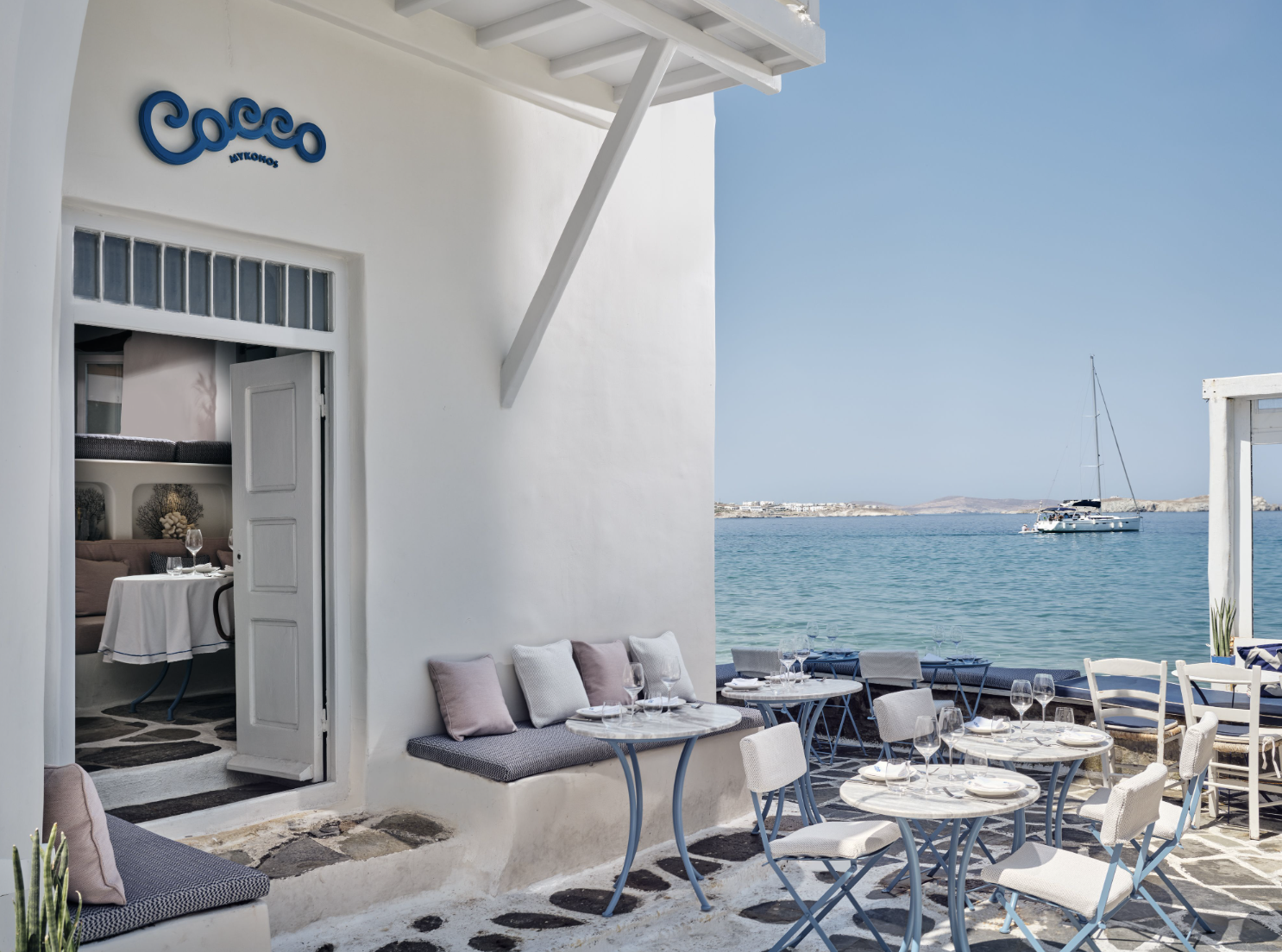
February 12, 2026 (Mykonos, Greece) – Belvedere Hotel, the legendary Mykonos hideaway and long-standing member of The Leading Hotels of the World, opens for the 2026 season this month, with a refined visual identity and a new private passage providing direct access to Mykonos Town. Conceived as an architectural extension of the property, the new entryway enriches the guest experience while reinforcing Belvedere’s position at the intersection of privacy and island life. Family-owned and welcoming guests since 1969, the five-star boutique hotel stands on a property that traces its origins to the 1850s. At its heart lies Mansion Stoupa, a stately residence that has remained in the family for generations and around which the Belvedere gradually evolved. Perched at the highest point of Chora, the hotel is celebrated for its world-class hospitality, exceptional gastronomy, and sweeping panoramic views over the Aegean Sea.

Once a lively gathering place for artists from the nearby School of Fine Arts and international personalities, from Julie Andrews and Stephen Rubell to Princess Soraya of Iran and Pierro Aversa, the property still carries the free-spirited energy and cultural sensitivity of its early years. Today, thoughtfully connected spaces encourage creativity, intimacy, and a sense of community, defining the Belvedere experience. The hotel’s new visual identity, anchored by a seahorse – a composed, symmetrical emblem of two forms framing the sea, pays tribute to the Belvedere’s rich heritage and core values. Creative Director and Designer of the Belvedere brand, Alexander Kellas explains that “the seahorse stands for kindness, peace, and loyalty, while also embodying a sense of playfulness. The coat of arms represents togetherness beyond all conventions and is a symbol of friendship and love for all generations who have found their home at the Belvedere Hotel.”

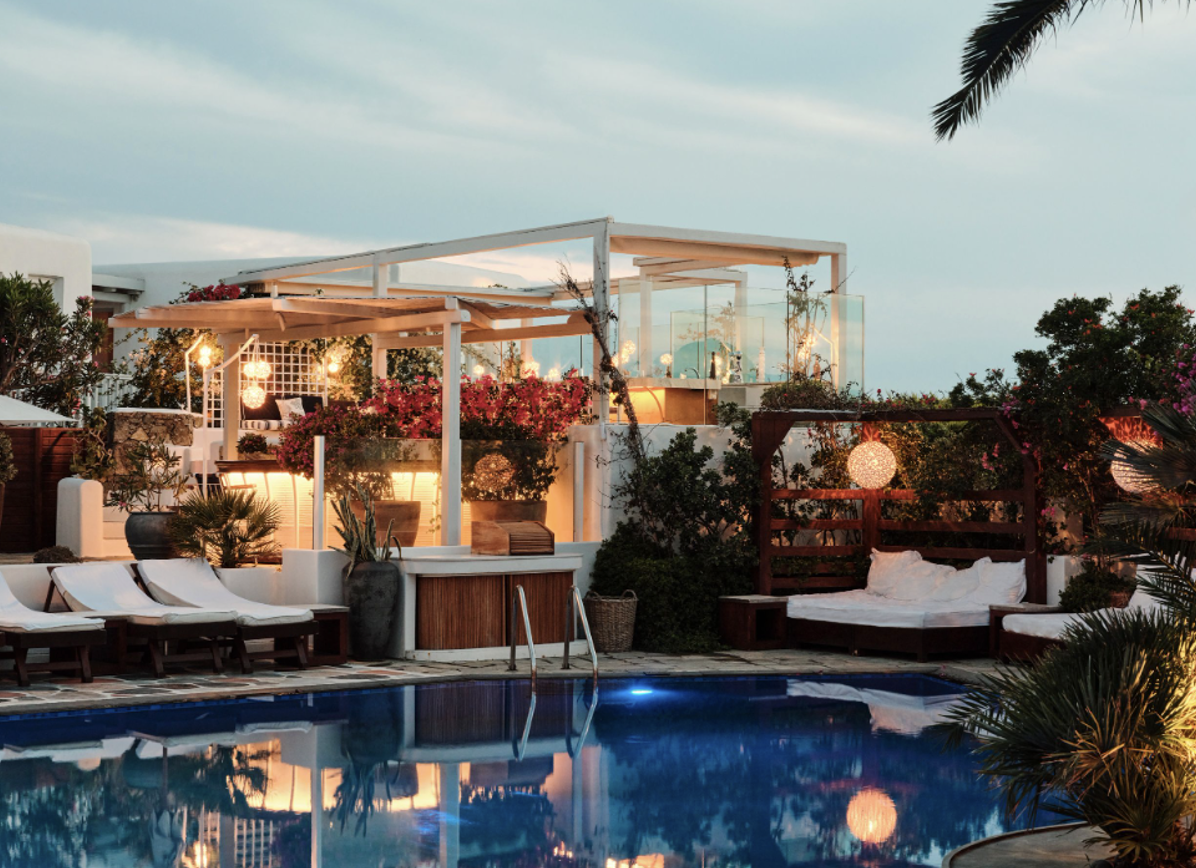
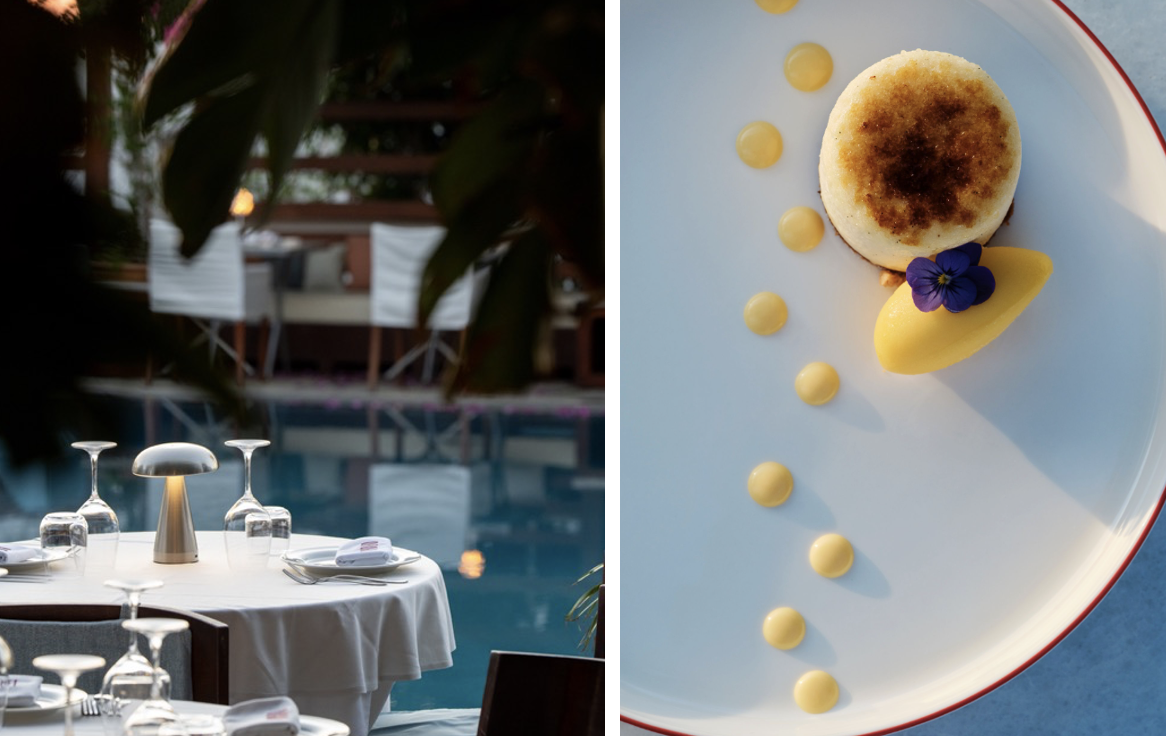
Surrounded by a lush garden with abundant greenery and signature pink bougainvillea, the main complex boasts a distinguishable Cycladic design that honors the traditional architectural landscape of Mykonos, with its white interior reflecting the elegant frames of nearby local houses. From here, guests can move effortlessly between the hotel’s main spaces and amenities, including the iconic Matsuhisa Mykonos, the pool, spa, and wellness facilities. A dynamic calendar of seasonal activations features a limited-edition restaurant pop-up led by a  Michelin-starred chef. Beyond the main building, a collection of rooms, suites, and private villas stretches across the property, offering views of the Aegean Sea, historic windmills and Mykonos Town. Situated just 250 meters from the central complex, the 26 Hilltop Rooms and Suites present a tranquil hideaway, while the Waterfront Villa and Villa Next Door, located in their own distinct settings, are conceived as private retreats. These properties deliver an immersive escape, secluded from city life while remaining linked to the hotel’s services and facilities.

The Belvedere delivers a luxuriant selection of experiences that honor both its Greek heritage and the expectations of a global clientele. At the heart of the main complex, the Belvedere Pool Club, serves as a lively social hub where guests can gather to connect, unwind, and submerge themselves in the hotel’s international community. This epicenter also includes the historic Belvedere Bar, renowned for some of the island’s most memorable evenings. With a strong emphasis on cocktail craftsmanship and precision, the bar reflects the influence of legendary mixologist Dale DeGroff, widely known as “the King of Cocktails”.

Firmly rooted in the culture and history of Mykonos, the Belvedere remains a guiding presence on the island, inspiring unforgettable moments of connection and serendipity, while embodying the heritage, sophistication, and cultural richness that have become synonymous with the Mykonos experience.

NOTES TO EDITORS

Address

Belvedere Mykonos

School of Fine Arts District, 84600, Mykonos, Greece

Facebook | Instagram | Belvedere Hotel , @belvederehotel

Facebook | Instagram | Matsuhisa Mykonos, @matsuhisamykonos


Image credits:

1. Belvedere Hotel Mykonos. Photography by Yiorgos Kaplanidis. Courtesy of Belvedere Hotel Mykonos

2. Belvedere Hotel Mykonos. Photography by Yiorgos Kaplanidis. Courtesy of Belvedere Hotel Mykonos

3. Belvedere Hotel Mykonos. Photography by Yiorgos Kaplanidis. Courtesy of Belvedere Hotel Mykonos

PDF

FLORENTINA HOLZINGER PRESENTS SEAWORLD VENICE | AUSTRIA’S NATIONAL PAVILION AT THE 61st INTERNATIONAL ART EXHIBITION LA BIENNALE DI VENEZIA

Preview Days: May 6 – 8, 2026
Pavilion Opening: May 6, 2026 | 12:30 PM
On View: May 9 – November 22, 2026

February 5, 2026 (Austria) – Austrian choreographer and performance artist Florentina Holzinger will represent Austria at the 61st International Art Exhibition – La Biennale di Venezia with SEAWORLD VENICE, a bold new interdisciplinary commission, curated by Nora-Swantje Almes (Gropius Bau, Berlin). Known for her genre-defying work that challenges socio-political conventions, Holzinger uses her long-standing research into the element of water—as both subject and symbol—to explore the human body in a radically changing landscape, in which nature and technology collide. On view from May 9 – November 22, 2026, the project will feature a permanent live installation and performances at the Austrian Pavilion, alongside site-specific Études across Venice and its lagoon.

Florentina Holzinger combines extreme physicality with theatrical precision to probe the limits of corporeal agency. Working across dance, performance, opera, and theatre, and critically engaging with their histories, the artist blends legitimised ‘high’ culture with pop and countercultural currents to unsettle the lines between spectacle and subversion. Her works experiment with endurance and moments of extremity—to make power legible at the level of the body. Elemental forces, such as water and bodily fluids, recur as material presence in her work and are used as agents that act upon bodies while implicating the audiences who witness them. SEAWORLD VENICE derives from this ongoing enquiry as a new work that enters into dialogue with Venice, a city defined by its entanglement with water, survival, and the consequences of human intervention.

Water, levels rising; water that we drink and excrete in countless cycles every day; water, a vital, life-sustaining natural resource and highly managed commodity; water, to plunge in, dive in, and emerge from, perhaps transformed: SEAWORLD VENICE is conceived as an underwater theme park, sewage treatment plant, and sacred building—a machinic organism inhabited by performers for the duration of Biennale Arte 2026. Through poetic yet unflinching imagery, Holzinger flirts with the limitations of humanity, revealing the vulnerability of human bodies and the systems they navigate. ‘Florentina Holzinger paints an apocalyptic scenario that is already here, illustrating humankind’s complicity in a collapsing (eco)system: lives lived in the waste of others. Fleeting images and compositions that haunt us, edging the impossible. She radically expands what is considered possible—a mindset that is contagious and that we need right now more than ever,’ says curator Nora-Swantje Almes.


SEAWORLD VENICE will unfold beyond the Giardini della Biennale and across the city through performances titled Études—a body of work the artist has been developing since 2020, consisting of choreographic exercises and performative actions staged in public, transitory spaces. In doing so, the commission becomes an open-ended exploration that evolves across multiple formats and locations. Rising from the depths of the Venetian lagoon, where turbo-tourism’s waste lies at rest, and ascending into the city’s skies, Holzinger’s performers—human and otherwise—reveal the vulnerability and resilience of bodies and the world alike. The artist states, ‘In Venice—a city caught in a profound and precarious relationship with water—my ongoing fascination with this element will take on new dimensions. Here, the body will play a central role in exploring the interdependence and interplay between nature and technology.’ The opening Étude will take place on the morning of May 6, 2026. 


On the occasion of Florentina Holzinger’s project at the Austrian Pavilion, Bierke Verlag, Berlin, will release HOLZINGER, her first major publication in collaboration with Gropius Bau Berlin and Kunsthalle Wien. The monographic work will bring together perspectives on her artistic practice, visual and choreographic vocabulary, and central themes, and includes texts by Claire Bishop, Caroline Lillian Schopp, Mire Lee, and Anna Leon, alongside an introduction by curator Nora-Swantje Almes and an interview with Florentina Holzinger.


NOTES TO EDITORS

Visitor Information
SEAWORLD VENICE
Austrian Pavilion
61st International Art Exhibition – La Biennale di Venezia
www.seaworldvenice.at


Address
Giardini della Biennale
Sestiere Castello, 30122 Venice, Italy
www.labiennale.org


Preview Days + Opening
Preview days: May 6 – 8, 2026
Opening of the Austrian Pavilion: 6 May 2026, 12:30 PM
Opening Étude: 6 May 2026 | Limited capacity. Registration opens on April 27, 2026
Exhibition duration: May 9 – November 22, 2026

SEAWORLD VENICE is realised on behalf of the Austrian Federal Ministry of Housing, Arts, Culture, Media and Sport, Division IV – Arts and Culture. The Lead Partners & Étude Commissioners are Bukhman Foundation and Hartwig Art Foundation. It is supported by the following Partners: The Friends of the Austrian Pavilion, Eva Dichand, Phileas – The Austrian Office for Contemporary Art, and More Spirit Please. The project is co-produced by Ursula Blickle Stiftung, Gropius Bau / Berliner Festspiele (Berlin), Amant (Brooklyn, NY) and Kunsthalle Wien (Vienna). Public funding is contributed by Land Niederösterreich, Land Salzburg, Land Kärnten, and the City of Vienna. You can find the full list of all project partners here: https://www.seaworldvenice.at/thank-you


The project will travel to Gropius Bau, Berlin, Kunsthalle Wien, Vienna, and Amant, Brooklyn, New York in 2027 and 2028. The Études series will continue as satellite projects, building narratives across different geographies and including collaborations with Vienna Festival, Nitsch Foundation, Kunsthaus Bregenz, marvaða Iceland, TRANSART – Festival for contemporary cultures, and Hartwig Art Foundation in Amsterdam.

About Florentina Holzinger
Holzinger’s works have been awarded the Nestroy (TANZ, 2020) and DER FAUST awards (Ophelia’s Got Talent, 2023) and have been selected by the Theatertreffen Berlin four times in a row (TANZ, Ophelia’s Got Talent, SANCTA, A Year without Summer). Besides her stage productions, Holzinger creates Études, an ongoing series of site-specific, one-off performances in public space that have been presented in collaboration with the Schinkel Pavillon Berlin, Bergen Kunsthall, Atonal Festival, and Wiener Festwochen, among others. Since 2021, she has been an associate artist at Volksbühne am Rosa-Luxemburg-Platz, Berlin.


About Nora-Swantje Almes
Nora-Swantje Almes is a curator with a focus on performance in the visual arts context and performative exhibition formats. She has been Curator of the Live Programme and Outreach at Gropius Bau Berlin since 2024. Prior to this, she headed the live programme at Bergen Kunsthall, Norway, for three years, where she developed the commissioned work Harbour Étude with Florentina Holzinger and her team in summer 2024. In her curatorial career, she has held positions at Glasgow International, Participant Inc., New York, Artangel London, and the Schinkel Pavillon Berlin.


Image Credits:
Florentina Holzinger, 2026. Photography by Katia Wik. 

PDF

SOCIÉTÉ IS JOINED BY HAUSER & WIRTH IN THE REPRESENTATION OF CONNY MAIER

February 2, 2026 (Berlin, Germany) – SOCIÉTÉ is delighted to announce the collaborative representation of Conny Maier with Hauser & Wirth.

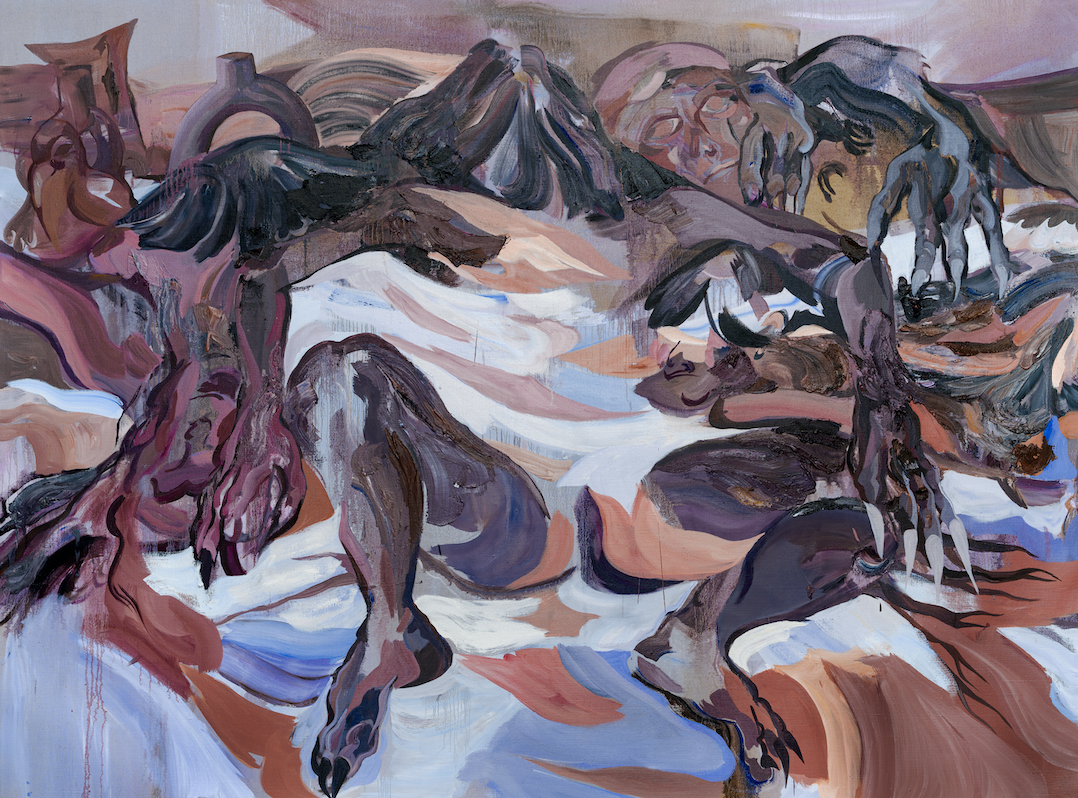
German artist Conny Maier lives and works in Portugal. Shaped by the distinctly different environments of her home country and the place she now calls home, her multi-perspectival practice forges new relationships between landscape, climate and human psychology, unfolding through climactic scenes that merge geological distress with instinctual urges. Maier has attracted international attention for bold, brawny, assertively hued paintings populated by misshapen figures, interspecies entanglements, and symbolically charged motifs. Symbolic objects—flowers, animals, offerings and ritual elements—appear throughout her paintings and sculptures, acting as anchors for the emotional and psychological currents her work traces.

In exploring the complexities of humankind’s relationship with nature, she infuses vivid, seemingly paradisiacal landscapes with a sense of latent unease, reflecting the ever-shifting equilibrium between human intention and contemporary ecological reality. With their graphic precision and tendency toward narrative, Maier’s tableaux reflect a particularly keen awareness of the patterns that emerge from—and further reshape—the moments in which natural and manmade orders converge. Maier’s art invites reflection on the systems we build and the forces that challenge them.

‘We are delighted to welcome Conny Maier to Hauser & Wirth, to engage with the vivid world she is creating—a realm she populates with creatures and objects born from her own imagination but somehow familiar and powerfully resonant. In its rawness and poetic impact, her work seems to take its place with that of such gallery artists as Maria Lassnig and Erna Rosenstein, and a younger cohort that includes Angel Otero and Firelei Báez. We look forward to sharing Conny’s universe with ever wider audiences worldwide and to introducing her to our West Coast friends when we present a solo stand of her latest paintings at Frieze LA.’

– Marc Payot, President at Hauser & Wirth

‘It has been deeply exciting to be a partner in Conny Maier’s remarkable journey, and I am thrilled that SOCIÉTÉ will join forces with Hauser & Wirth to shape the next chapter of her career.’

– Daniel Wichelhaus, Founder and CEO of SOCIÉTÉ


NOTES TO EDITORS

About Conny Maier: 

Conny Maier lives and works in Portugal. She was selected as one of the three recipients of Deutsche Bank’s prestigious Artists of the Year Prize in 2021. Her recent expansive solo exhibition Beautiful Disasters  was curated by Udo Kittelmann at the Langen Foundation, Neuss. Her first monograph was published on the occasion of this show. Her work has recently been exhibited in solo and group exhibitions at venues including Art Basel Unlimited 2023, Basel; De 11 Lijnen, Oudenburg; PalaisPopulaire, Berlin; MUDEC, Milan; and at Museum Frieder Burda, Baden Baden.

Conny Maier is part of a number of public collections including Albertina Museum, Vienna; Alkar Contemporary Collection, Bilbao; Boros Collection, Berlin; Deutsche Bank Collection, Frankfurt; Hildebrand Collection, Leipzig; Julia Stoschek Foundation, Berlin; Kistefos Museum, Norway; Musée d’art Moderne, Paris; among others. 


About SOCIÉTÉ:

SOCIÉTÉ is a Berlin-based contemporary art gallery with a global reach. The gallery’s bold curatorial approach plays a pivotal role in advancing its artists’ visions, supporting major museum exhibitions, biennials, and acquisitions by leading institutional collections worldwide. Operating in both the primary and secondary markets, SOCIÉTÉ provides curated advisory services to select clients.

Beyond its exhibitions, the gallery’s publishing initiative, EDITION SOCIÉTÉ, collaborates with prominent writers and graphic designers to produce artist books, catalogues, and, more recently, high-end artist editions.

SOCIÉTÉ is an active presence at major international art fairs, including Art Basel, Art Basel Paris, Art Basel Miami Beach, Frieze New York, Frieze London, ARCOmadrid, and Gallery Weekend Berlin.

Image credits:
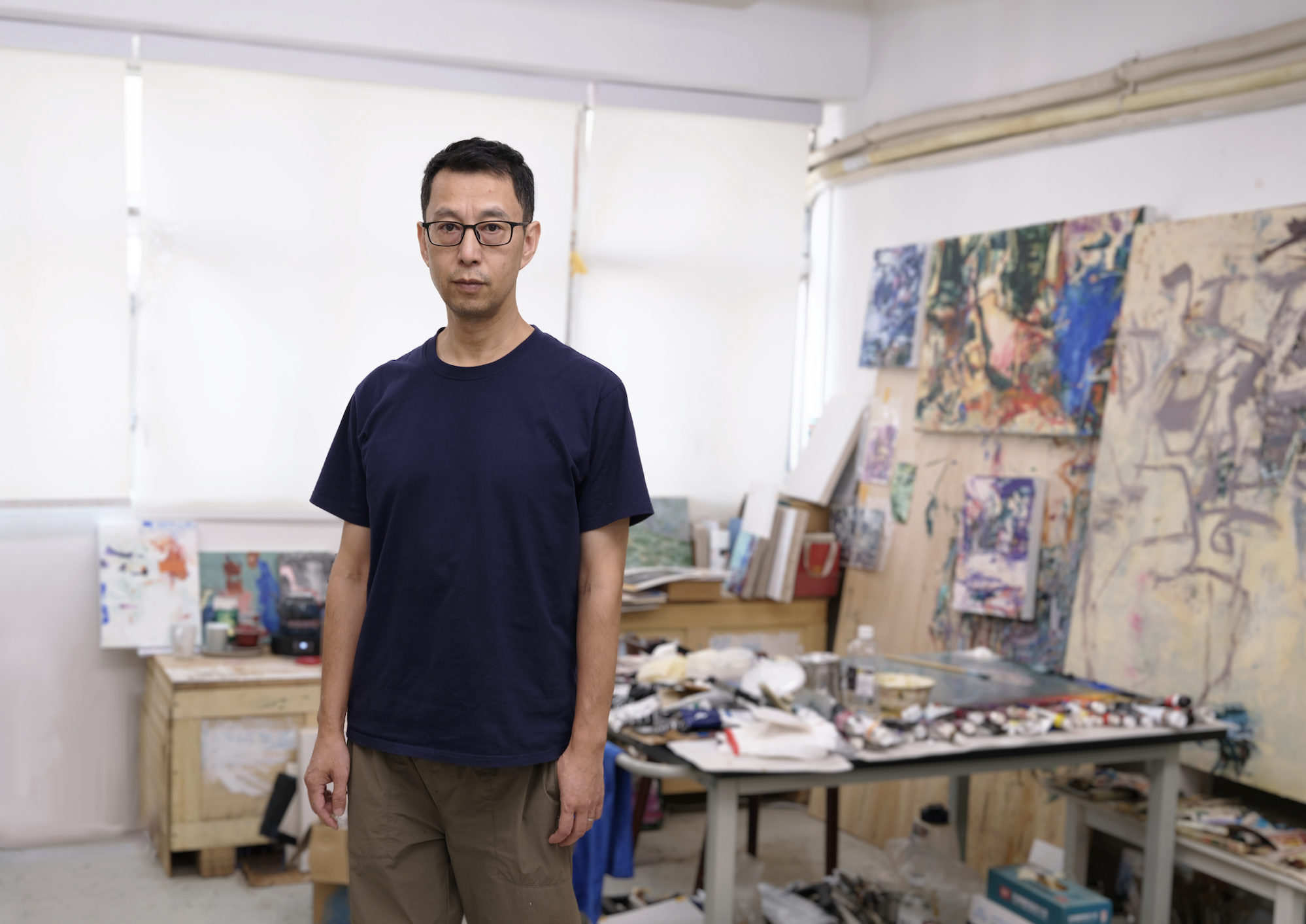
1. Portrait of Conny Maier. Photo by Sebastian Emmert
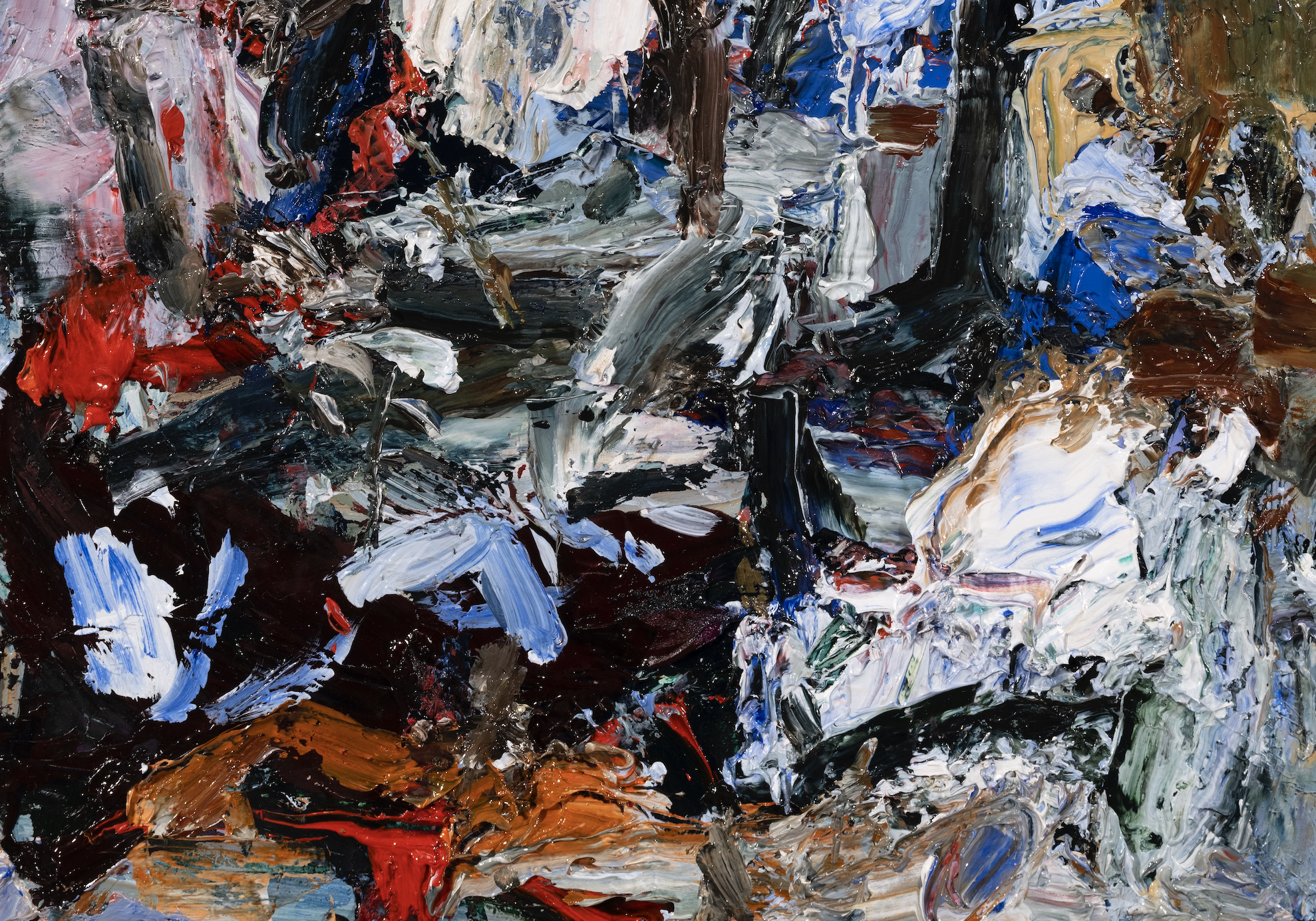
2. Conny Maier,Café & Orangen/ Bonjour tristesse, 2025. Photo by Trevor Good
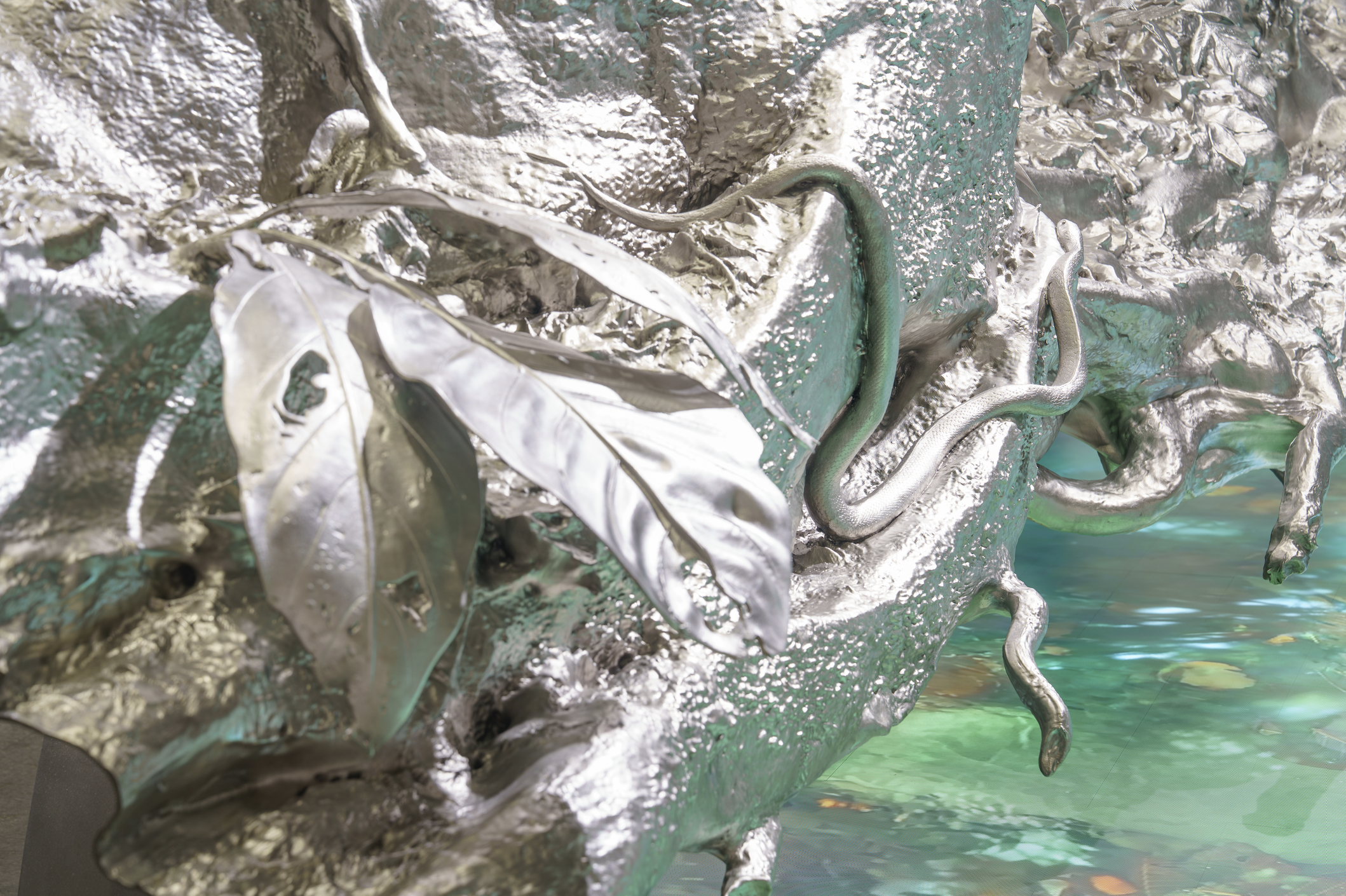
3. Conny Maier, Gigante 1, 2023. Photo by Trevor Good
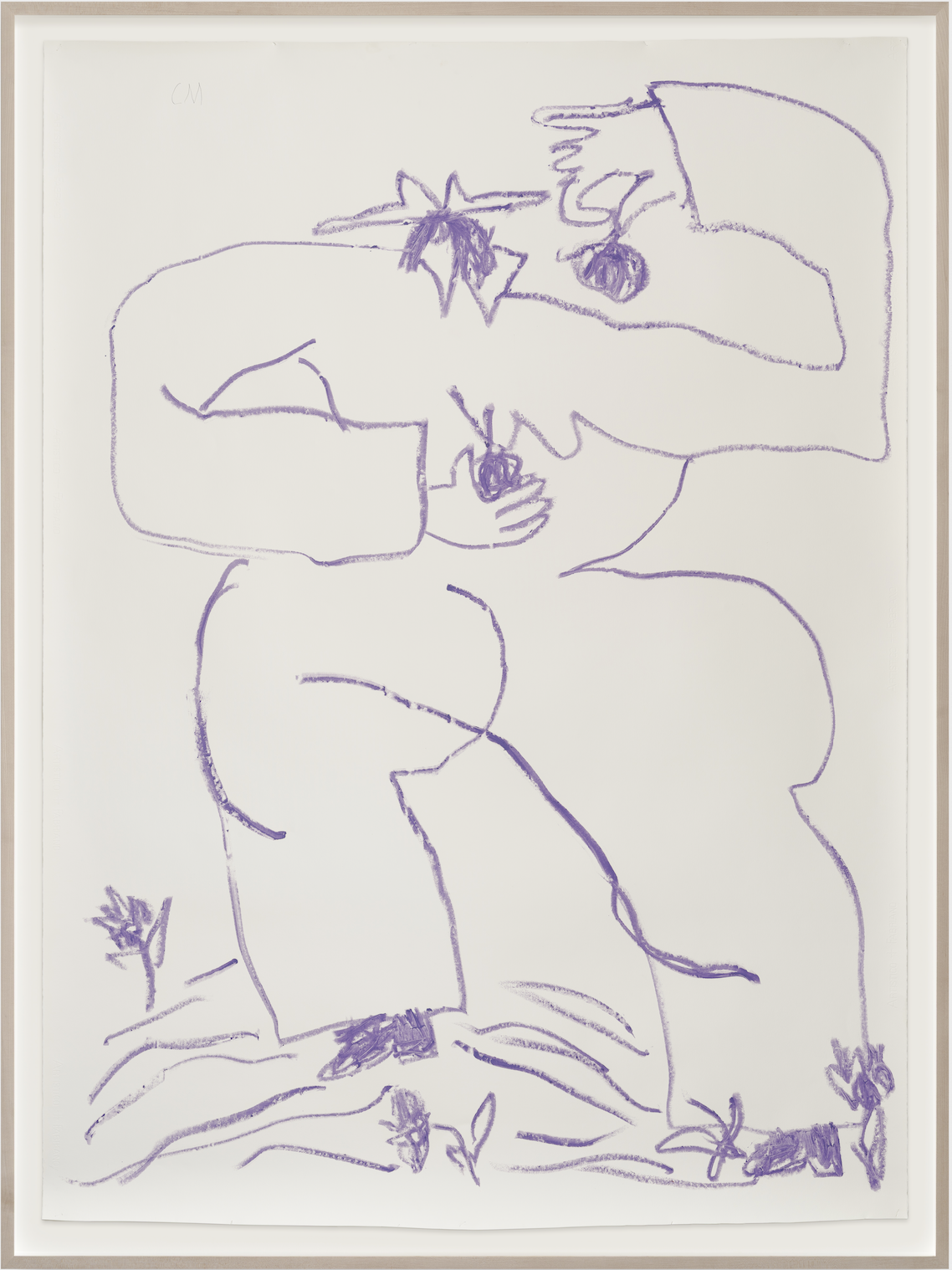
4. Conny Maier, Komm wir brüten, 2025. Photo by Trevor Good

PDF

THE MAX ERNST MUSEUM PRESENTS HEADLESS, A SOLO EXHIBITION BY MARIANNA SIMNETT

Opening: January 30, 2026 | 7 p.m.
On View: January 31 – July 5, 2026

January 27, 2026 (Brühl, Germany) – January 27, 2026 (Brühl, Germany) – The solo exhibition Headless by Marianna Simnett brings together both new and earlier works by the artist, highlighting her deep connection to the ideas of Surrealism. In an expansive installation, her multidisciplinary practice unfolds like a dreamscape - shifting between video, artificial intelligence, sculpture, painting, and music. A world both strange and seductive emerges, inviting viewers into a maze of fractured realities and uncanny encounters.

The title of the exhibition Headless is borrowed from Max Ernst's first collage novel, La femme 100 têtes (The Hundred Headless Woman, 1929), whose influence resonates throughout the show. A new series of paintings, produced especially for the exhibition, takes direct inspiration from this book, in which Ernst composed a loose sequence of eerie images, often featuring his feathered alter ego, Loplop. Marianna Simnett uses this as a starting point to interweave past and present - bringing together current events, mythology, and her own alter egos to form new, hybrid narratives.

Curated by Madeleine Frey and Sarah Louisa Henn.

The accompanying catalog Headless, published by Hirmer Publishers, will feature contributions by Cecilia Alemani, Madeleine Frey, Sarah Louisa Henn, and Lisa Tuttle.

NOTES TO EDITORS

The exhibition Headless by Marianna Simnett will be on view at the Max Ernst Museum from January 31 – July 5, 2026.

The opening reception will be held on January 30, 2026 at 7 p.m. The evening will feature the following speakers: the Chair of the Rhineland Regional Council, Prof. Dr. Jürgen Wilhelm, Chairman of the Board of the Max Ernst Foundation, and Madeleine Frey, Director of the Max Ernst Museum Brühl of the LVR. The artist will be present. The program includes a reading by Svenja Wasser from Lisa Tuttle’s Blood of the Host, followed by a DJ set by Alisa Berger.

Address

Comesstraße 42

50321 Brühl

Opening Hours

Tuesday – Sunday | 11 am – 6 pm

Closed on Mondays

About Marianna Simnett

Marianna Simnett (b. 1986, London) lives and works in Berlin and New York. In early 2026 she will be the subject of two major solo exhibitions at the Max Ernst Museum, Brühl, and at Secession, Vienna. Her work was part of last year‘s Art Basel Parcours sector and her solo exhibition WINNER was recently on view at Hamburger Bahnhof, Berlin. Her first work for the stage, entitled GORGON, commissioned by LAS Art Foundation premiered at HAU 2, Berlin in 2023. Her work The Severed Tail was presented at the 59th Venice Biennale: The Milk of Dreams and at the 66th BFI London Film Festival, British Film Institute, London. Her work has been exhibited internationally in solo shows at venues including City Gallery Wellington, Wellington; Copenhagen Contemporary, Copenhagen; MA, Institute of Modern Art, Brisbane; Frans Hals Museum, Haarlem; Kunsthalle Zürich, Zürich; MMK, Museum für Moderne Kunst, Frankfurt; The New Museum, New York; and Zabludowicz Collection, London. Selected recent group exhibitions include Manifesta 15, Barcelona; Yours Truly, Nahmad Contemporary, New York; Topalekuak, Tabakalera, San Sebastian; 1.5 Degrees, Kunsthalle Mannheim; The King Is Dead, Long Live the Queen, Museum Frieder Burda, Baden-Baden; Espressioni: The Epilogue, Castello di Rivoli, Turin; Prize of the Böttcherstraße, Kunsthalle Bremen, Bremen; British Art Show 9, various cities; A Fire in my Belly, Julia Stoschek Foundation, Berlin; Unprecedented Times, Kunsthaus Bregenz; and The Body Electric, Walker Art Center, Minneapolis.

Image Credits:

Marianna Simnett, Headless #1, Oil on canvas, 2025. Courtesy the artist and Société, Berlin. Photo: Thomas Müller

PDF

DAS MINSK KUNSTHAUS IN POTSDAM PRESENTS OSCAR MURILLO: COLLECTIVE OSMOSIS

January 21, 2026 (Potsdam, Germany) – Colombian-born artist Oscar Murillo will activate the interior and exterior spaces at DAS MINSK, transforming the museum into a lively experiment of exchange and community from March 14 - August 9, 2026. The exhibition Collective Osmosis is a multi-layered meditation on visibility, landscape, and the political implications of artistic work across borders. The project marks the first collaboration between DAS MINSK and Museum Barberini, with works by the artist on view at both institutions.

In the project Collective Osmosis, Murillo creates a dialogue between his abstract paintings, visitors, and Impressionist works by Claude Monet. The starting point is Murillo’s engagement with the French painter’s life, work, and reception. In his later years, Monet suffered from cataracts, gradually losing his eyesight until undergoing surgery, which led to changes in his paintings’ composition and coloration. Murillo considers the artist’s shift in perception as both an allegory for the blind spots in our society and a catalyst for imagining new realities. Murillo thus explores the political dimensions of seeing and not-seeing, employing darkness as a speculative space for a new reading of Impressionism.

In science, the term osmosis, used in the exhibition’s title, describes how water particles move through a semi-permeable membrane, from a less concentrated solution to a more concentrated one, until equilibrium is reached. Murillo uses this concept as a metaphor to express his vision of equality and a universal human community. The principle of Collective Osmosis also stands for the opening of the museum, creating permeability and exchange between inside and outside, between museum and city, and between Potsdam and the world beyond.

Through its participatory dimension, Collective Osmosis brings to the fore each person’s inherent potential to create artistic gestures with brush, hand, or pen. Murillo sees art as a form of communication—the act of mark-making, for him and for participants in his collective painting actions, is an expression of freedom. 

“Oscar Murillo succeeds in pushing forward the discourse about the medium of painting by interrogating both visible and invisible boundaries and redefining social and economic cycles,” says Anna Schneider, director of DAS MINSK. “His work explores new possibilities for community building. Collective Osmosis will become a lived experiment that fosters exchange and challenges inequality. Oscar Murillo’s decision to choose Claude Monet as an accomplice—an artist who translates light and landscape into works admired worldwide for their luminous colors—is an astute idea. In doing so, he expands his own frame of reference and moves closer to the idea of a universal human community.”

Oscar Murillo in Conversation with Claude Monet: The First Collaboration Between the Two Museums of the Hasso Plattner Foundation

Murillo has created a set of new paintings for the exhibition, on view at both DAS MINSK and Museum Barberini. At DAS MINSK, three of Monet’s iconic serial paintings from the Hasso Plattner Collection—the London Houses of Parliament, grainstacks, and the water lilies at Giverny—enter into dialogue with Murillo’s Frequencies series. New paintings from Murillo’s Disrupted Frequencies series will be accompanied by the AI-generated video work Territorial Osmosis, which combines drawings by schoolchildren from around the world into a hybrid moving-image work. These works are surrounded by an installation of black canvases, entitled The Institute of Reconciliation (ongoing since 2014), creating an environment that situates Monet’s historical paintings in the context of political, social, and ecological events in today’s globalized world.

A selection of canvases from the extensive Frequencies archive will also be exhibited. Initiated by Murillo in 2013, the Frequencies project invites school children from across the world to draw on canvases affixed to their desks over a period of several months. The resulting sketches on canvas document a global visual language of an emerging generation. Most recently, the project was carried out in six schools in Potsdam and Brandenburg in advance of the exhibition. The participating schools were: AWO Grundschule “Marie Juchacz” in Potsdam; Evangelisches Gymnasium Hermannswerder; Gesamtschule Am Schilfhof, Potsdam; School International, Potsdam; Städtisches Gymnasium Wittstock and Goethe-Schiller-Gymnasium, Jüterbog.

Mark-Making and Participation: Central Elements of the Exhibition at DAS MINSK

The ground floor at DAS MINSK focuses on Murillo’s painting processes, which consist of a multitude of gestural marks and fleeting traces. At the center of the display are new paintings from the series Scarred Spirits.

The presentation also features two participatory projects that Murillo has developed over the past few years in various locations: Social Mapping and Collective Painting. For the Social Mapping process, Murillo invites participants to draw on large-scale canvases. These canvases are then painted on by visitors in a second process of Collective Painting, which takes place in exhibition settings at different sites—including The flooded garden (2024) in the Turbine Hall at Tate Modern or A song to a tearful garden (2025), recently initiated in São Paulo’s Ibirapuera Park for the 36th São Paulo Biennale. Canvases and documentary material resulting from these projects will be on view at DAS MINSK.

In the first weeks of the exhibition, painted canvases from the collective work A song to a tearful Garden will be on display on the terrace at DAS MINSK. From April 25, 2026, the participatory event will begin, with visitors invited to paint Social Mapping canvases in an open-air Collective Painting process.

On occasion of the exhibition, Murillo will launch a nationwide Social Mapping project across Germany, with the canvases produced in different parts of the country arriving at DAS MINSK throughout the run of the exhibition.

Oscar Murillo: A New Work at Museum Barberini

A new, large-scale triptych entitled surge (social cataracts) will be on view in the collection presentation of Impressionist painting at the Museum Barberini. This constellation of Murillo’s triptych and Monet’s serial works explores how the act of seeing is rehearsed and realized in painting, juxtaposing Monet’s figurative representation with Murillo’s abstraction.

Regarding his works from the series Surge, Oscar Murillo says: “For me, Monet and his paintings are a medium through which I can grasp paradox. On the one hand, his works are expressions of a universally recognized aesthetic—gesture, size, color, harmony, and joy. On the other hand, his experiences as a person and the bilateral cataracts he suffered allow me to imagine cosmic torment and darkness as a metaphor. The strong, structured paintings I am working on are a direct result of these reflections—reflections that seek refuge in pixels of nothingness or orbit around them.”

Image credits: 
1. Oscar Murillo, (untitled) scarred spirits, 2025, oil, oil stick and graphite on canvas, 220 × 300 cm. Courtesy of the artist © Oscar Murillo. Photo: Tim Bowditch & Reinis Lismanis
2. Oscar Murillo, Frequencies, 2013—ongoing, Ljubljana, Slovenia, ballpoint pen, fountain pen, graphite, felt tip pen, highlighter pen, permanent marker, paint, crayon, staples, natural pigments, debris and other mixed media on canvas, 55 × 141 cm.  Courtesy of the artist © Oscar Murillo. Photo: Tim Bowditch
3. Oscar Murillo, A song to a tearful garden, part of the 36th São Paulo Biennial, Not All Travellers Walk Roads—Of Humanity as Practice, September 6, 2025–January 11, 2026. Courtesy of the artist © Oscar Murillo. Photo: Reinis Lismanis
4. Oscar Murillo, surge (social cataracts), 2025, oil, oil stick, and spray paint on canvas, in three parts, overall 250 × 750 cm, installation view. Courtesy of the artist © Oscar Murillo. Photo: Tim Bowditch & Reinis Lismanis

PDF

ART PARIS ANNOUNCES ITS 28TH EDITION AT THE GRAND PALAIS | A CURATED PROGRAM ON LANGUAGE, REPARATION AND DESIGN

Alongside its curated themes, the 2026 edition will feature monographic exhibitions, the Promises sector for young galleries, an expanded French Design Art Edition, art prizes, and a dedicated presentation of African, South American and Caribbean artists from the City of Paris collection.

VIP and Press Preview: April 8, 2026 | 11 AM - 9 PM (by invitation only)
On View: April 9 – 12, 2026

February 11, 2026 (Paris, France) – Art Paris, the premier spring event for modern and contemporary art, returns to the Grand Palais from April 9 – 12, 2026. The 28th edition will host more than 160 galleries from over 20 countries, and unfold around two curated themes: Babel – Art and Language in France curated by Loïc Le Gall, and Reparation, curated by Alexia Fabre, examining language as a system of signs and reparation as a sustained practice of care, resistance, and continuity. Following the success of its inaugural edition in 2025, the French Design Art Edition returns with an expanded selection, alongside monographic exhibitions, major prizes, conferences, and institutional presentations. With its expanding international scope and multi-disciplinary programming, Art Paris 2026 continues to establish its role as a global crossroads for historical reflection, creativity and cultural exchange.

International galleries account for 40% of exhibitors, while French galleries represent 60%, and 30% first-time participants. This balance reflects the vitality of the French gallery ecosystem while opening it to a broad range of international perspectives. Art Paris 2026 also continues its commitment to emerging practices through the Promises sector, which will welcome 27 young galleries and artists. Among the first-time participants are French galleries Bendana-Pinel, In Situ - Fabienne Leclerc, Esther Schipper, Iragui Gallery, Pietro Sparta, and Galerie Papillon, and key international galleries Lumen Travo (Amsterdam), RocioSantaCruz (Barcelona), Cassandra Bird (Sydney, Paris), and Schenkweitzdörfer (Cologne), joining long-standing exhibitors like Galleria Continua, Lelong, Loevenbruck, Nathalie Obadia, Michel Rein, Almine Rech, Semiose, Templon, and Waddington Custot.

Babel – Art and Language in France by Loïc Le Gall

Babel – Art and Language in France is a themed visit through Art Paris 2026 that brings together 21 artists selected from the participating galleries and whose work explores the richness and, at times, the enigmas of systems of signs and linguistic structures in French contemporary art. In the words of the curator: “Some artists explore the material nature of letters themselves, whereas others examine the tension that exists between text and images, or tackle themes such as translation, the ambiguity of signs, the many and varied alphabets and the way in which words circulate across networks. The ensemble proves that art is a laboratory where the forms of language are observed and analysed, sometimes used in new contexts and often reinvented. Featuring creations that waver between figuration and abstraction, this themed visit is an invitation to rethink our relationship with words and symbols and the way in which, both individually and collectively, we construct and decode the reality of our surroundings.”

Selected Artists: Juliette Agnel • Galerie Clémentine de la Ferronnière | Joël Andrianomearisoa • Almine Rech | Jean Dubuffet • Galerie Jeanne Bucher Jaeger | Léo Fourdrinier • Galerie Les filles du calvaire | Fabrice Hyber • Galerie Nathalie Obadia | Isidore Isou • Galerie Patrice Trigano | Marcel Jean • Galerie Boquet | Mireille Kassar • Saleh Barakat Gallery | Elias Kurdy • Dilecta | Jean Le Gac • Galerie Françoise Livinec | MC Mitout • Galerie Claire Gastaud | Tania Mouraud • Galerie Claire Gastaud | Julie Navarro • Galerie Wagner | Sara Ouhaddou • Galerie Polaris | Laure Prouvost • Galerie Nathalie Obadia | Luca Resta • Yvon Lambert | Anne-Marie Schneider • Michel Rein | Ernest T. • Semiose | Camille Tsvetoukhine • Loevenbruck | Ben Vautier • Galerie Catherine Issert | Fabienne Verdier • Galerie Lelong.

Reparation by Alexia Fabre

Alexia Fabre sets out to explore perspectives of reparation in contemporary art through the works of twenty international artists selected from the participating galleries. Reparation is a broad term: its meaning shifts across artists, cultures and temporalities. By making connections between the past, present and future, reparation evokes notions such as care, kindness and time spent preserving objects, ideas, people and stories. It seeks to put together fragments, to mend wounds – both physical and symbolic. It hints at injuries, wars, absences, suffering and oblivion, gesturing towards historical silences and injustices, as well as the hope of projecting a new and “entirely” reconstructed element into the future. Reparation conveys the idea of restoring the self, a story, or a reality that once was. It may be visible - marking its existence by a scar, or elusive, fading into invisibility. At times, reparation conceals the very traces it seeks to mend. It permeates both the intimate and the collective, connecting personal narratives with the state of the world itself, sometimes forging ties between the two. While it can imply notions of debt or compensation, here it speaks above all of resistance, resilience and reinvention. Reparation is about engaging in a sustained relationship that prioritizes doing rather than doing again, the desire to make things last, and the need for dialogue and mutual understanding with what has been repaired.   

Selected Artists: Nú Barreto (b. 1966, Guinea-Bissau) • Galerie Nathalie Obadia | Oliver Beer (b. 1985, United Kingdom) • Almine Rech | Anaïs Boudot (b. 1984, France) • Binome | Javier Carro Temboury (b. 1997, Spain) • SAILLY | Teresa Gancedo (b. 1937, Spain) • Galeria RocioSantaCruz | Shilpa Gupta (b. 1976, India) • Galleria Continua | Aung Ko (b. 1980, Myanmar) • A2Z Art Gallery | Mehdi-Georges Lahlou (b. 1983, France) • Galerie Papillon | Rachel Labastie (b. 1978) • Galerie La Forest Divonne | Nge Lay (b. 1979, Myanmar) • A2Z Art Gallery | Duy Manh Nguyên (b. 1984, Vietnam) • Galerie Bao | Juanita Mclauchlan (b. 1975, Australia) • Cassandra Bird Gallery | Otobong Nkanga (b. 1974, Nigeria) - In Situ - Fabienne Leclerc & Lumen Travo Gallery | Estefanía Peñafiel Loaiza (b. 1978, Ecuador) • Galerie Alain Gutharc | Enrique Ramírez (b. 1979, Chile) • Michel Rein | Ruddy Roye (b. 1969, Jamaica) • Galerie Polaris | Alison Saar (b. 1956, USA) • Galerie Lelong | Mary Sibande (b. 1982, South Africa) • Everard Read | Arthur Simms (b. 1961, Jamaica) • RX&SLAG | Sandra Vásquez de la Horra (b. 1967, Chile) • Galerie Bendana | Pinel Art Contemporain

Promises | A Sector Focusing on Young Galleries and Emerging Artists

The Promises section is dedicated to galleries established less than ten years ago. It will welcome 27 galleries located along the southern balconies of the Grand Palais. The selection is overseen by Marc Donnadieu, member of the Art Paris selection committee and independent exhibition curator. 50% are first-time exhibitors at Art Paris, 56% are from France and the remaining 44% are foreign galleries that hail from Australia, Belgium, Canada, Italy, Luxembourg, Morocco, Singapore and the USA. They will be presenting a total of 56 artists, of whom 31 (55%) are women. Participating galleries may present up to three emerging artists. This section is supported by the fair, allowing for reduced exhibitor fees, with a rate of €10,000 (excluding VAT) for a 20 m2 booth.

24 Monographic Exhibitions

Interwoven throughout the main fair and the Promises sector, 24 monographic exhibitions offer visitors an unparalleled opportunity to delve deeply into the work of modern, contemporary, and emerging artists. These focused showcases provide an intimate exploration of individual creative visions, allowing visitors to discover or rediscover the work of modern, contemporary, and emerging artists.

French Design Art Edition | A Sector Devoted to Design and the Contemporary Decorative Arts

After the resounding success of its first edition in 2025, the Design sector is returning to the balconies on the north side of the Grand Palais Nave with a richer selection, including new voices in design. Curated by exhibition curators and Le FRENCH DESIGN directors Jean Paul Bath and Sandy Saad, the sector will host 17 exhibitors, including interior designers, design studios, and galleries specializing in design, showcasing one-off pieces and limited series.

Le Fonds d'art contemporain - Paris Collections

Developing on the theme of Reparation that Alexia Fabre explores in her curated section, the Fonds d’art contemporain head curator Julie Gandini and the curatorial team set out to question the traces of France’s 20th century colonial heritage in the municipal collections with the desire to showcase 20th century artists from Africa, the Caribbean and South America. The selection will showcase works by artists such as Wilson Tiberio, Mohammed Issiakhem, Germaine Casse, Iba N’Diaye and Victoire Ravelonanosy. Such artists who lived and worked in a colonial context, each in their respective periods, are underrepresented in French public collections. By means of recent acquisitions, the Fonds d’art contemporain seeks to demonstrate how the institution can tackle this injustice and make amends. In the contemporary field, visitors will discover visions of resistance, resilience, care and how artists who are racialised or come from migrant backgrounds affirm their identity. As a partner of Art Paris, the Ville de Paris (Paris Municipality) will present the Fonds d’art contemporain - Paris Collections on a dedicated stand. The only public collection on display amongst the exhibiting galleries, the Ville de Paris’ art collection comprises almost 23,400 works dating from the end of the 19th century to the present day. Every year, new works are added to the collection as part of the municipality’s actions in support of artists.

The BNP Paribas Banque Privée Prize – A focus on the French scene

The BNP Paribas Banque Privée Prize - A focus on the French scene (with prize money totalling € 40,000) was jointly launched in 2024 by BNP Paribas Banque Privée and Art Paris. It rewards a living artist active on the French art scene. For its 3rd edition, the winner will be selected from among the artists exhibiting in Babel: Art and Language in France, curated by Loïc Le Gall. The winning artist will be selected by a prestigious jury made up of individuals from the art world who all share the common desire to support French creativity. Their name will be revealed during the opening ceremony of Art Paris 2026. This prize allows BNP Paribas Banque Privée to support an artist’s career and showcase how the artist’s gallery works to promote them and develop a wider awareness of their work. By underlining the correspondences between works that are already part of the history of art and those produced by emerging artists on the French art scene, the prize also establishes a dialogue between different generations.

The Her Art Prize | An internationally recognised prize for women artists in partnership with Marie Claire and Maison Boucheron

Art Paris and Marie Claire, a key magazine committed to defending the cause of women, are renewing the Her Art Prize for women artists launched in 2025, in partnership with Maison Boucheron. A prestigious jury will come together to choose a winner from among the women artists presented by this year’s exhibiting galleries. The winner will receive the Her Art Prize and € 30,000 in prize money presented by Maison Boucheron. In addition, the winning artist will benefit from a national and international promotional campaign organised Marie Claire and Art Paris. This prize will reward both the career of the artist and a body of work that contributes to shifting perspectives.

The Le FRENCH DESIGN Prize | 100 design projects that spread the influence of French creativity on an international level

On Thursday, 9 April 2026, as part of the 2nd edition of the French Design Art Edition, Art Paris will be hosting the FD100 awards ceremony. These distinctions reward the 100 interior design projects that have contributed to enhancing the reputation and influence of French creativity outside the country’s borders. Sponsored by the Ministry of Culture, these awards are a tribute to the entire design ecosystem: the designers, manufacturers and master craftsmen who are essential components of the French “art de vivre”.


NOTES TO EDITORS

Art Paris 2026 will be on view at the Grand Palais, from April 9 – 12, 2026.

www.artparis.com

Address
Grand Palais
Avenue Winston Churchill 75008 Paris

Opening Preview
April 8 | 11 AM – 9 PM (Invitation Only)

Fair Days
Thursday, April 9 | 12 – 8 PM
Friday, April 10 | 12 – 8 PM
Saturday, April 11 | 12 – 8 PM
Sunday, April 12 | 12 – 7 PM

Admission
Thursday & Friday: 30 € / 15 € for students and groups
Saturday & Sunday: 35 € / 20 € for students and groups
Children under 10: free

About Loïc Le Gall:

Art historian and exhibition curator Loïc Le Gall has been the director of the Passerelle Centre d’Art Contemporain in Brest since 2019, having previously worked at the Centre National des Arts Plastiques and the Centre Pompidou from 2013 to 2019. In parallel, from 2018 to 2019, he was in charge of Bonnevalle, an initiative in favour of young artists based in Noisy-le-Sec. Since 2011, he has organised around fifty exhibitions in different venues around France and abroad, including solo shows by Reda Boussella, Michele Ciacciofera, Rafael Domenech, Alia Farid, Apostolos Georgiou, Fanny Gicquel, Han Bing, Nathanëlle Herbelin, Laura Henno, Hoda Kashiha, Liang Yuanwei, Caroline Mesquita, Hanako Murakami, Luiz Roque, Sean Scully, Achraf Touloub and Philomena Williamson, to name but a few. He is a regular contributor to contemporary art journals, books and catalogues.

About Alexia Fabre:

Alexia Fabre is executive director of the Centre Pompidou Francilien in Massy. As a heritage curator she was previously in charge of running the project for the creation of the MAC VAL contemporary art museum. Amongst other activities, Alexia Fabre was artistic director of the Nuit Blanche Paris in 2009 and 2011 (together with Frank Lamy) and of the Biennale l’Art de la Joie in Quebec in 2017. She co-curated La lune-du voyage réel aux voyages imaginaires at the RMN Grand Palais in 2019 alongside Philippe Malgouyres and was the president of Videomuseum, the professional network of public collections of modern and contemporary art, from 2018 to 2022. She has taught at the Ecole du Louvre and been a member of the Musée National d’Art Moderne acquisitions committee, associate curator at Grand Paris Express, president of the Prix Dauphine pour l’Art Contemporain and a member of the Prix Emerige. From 2022 to March 2025, she directed the Ecole Nationale Supérieure des Beaux-Arts de Paris, where she defended the values of diversity and inclusivity, the recognition of artists and their implication in society and present-day issues. In 2024 / 2025, she curated the 17th Biennale de Lyon - Les voix des fleuves / Crossing the water.

About Marc Donnadieu:

Marc Donnadieu is an art critic and independent exhibition curator. He was previously chief curator at Photo Élysée (Musée Cantonal pour la Photographie, Lausanne), after having worked as curator of contemporary art at LaM Lille Métropole Musée d’Art Moderne, d’Art Contemporain et d’Art Brut (2010- 2017) and as the director of the Fonds Régional d’Art Contemporain de Haute-Normandie (1999- 2010). He has curated or co-curated several major exhibitions, both solo shows and themed exhibits in the field of contemporary photography, drawing practices, present-day representations of the body in art, identity processes at work in society today, the relationship between art and architecture and between photography and art brut. He has been a member of the Association Internationale des Critiques d’Art (AICA) since 1997 and has contributed to numerous French and international periodicals, including Art Press since 1994. He has also taken part in the production of several dozen catalogues, monographs and themed publications in the fields of the visual arts, architecture, design and fashion.

Exhibitors list 2026

General Sector

Galerie XII (Paris, Santa Monica)* • 193 Gallery (Paris, Venise, Saint Tropez) • 313 Art Project (Séoul, Paris) • 1831 Art Gallery (Paris)* • 3812 Gallery (Hong Kong, London) • Galerie 8+4 (Paris) • Galerie 9e Art (Paris)* • A&R Fleury (Paris) • A2Z Art Gallery (Paris) • AD Galerie Montpellier (Mauguio)* • Alzueta Gallery (Barcelona, Madrid, Casavells, Paris) • AMS Galería (Santiago) • Galerie Andres Thalmann (Zurich, Paris) • Argo Fine Arts (Paris)* • Galerie Ariane C-Y (Paris)* • Galerie Arts d’Australie • Stéphane Jacob (Paris)* • Galerie Bacqueville (Lille) • Saleh Barakat Gallery (Beirut) • Baudoin Lebon (Clairefontaine- en-Yvelines)* • Albert Benamou - Véronique Maxé (Neuilly-sur-Seine)* • Bendana | Pinel Art Contemporain (Paris)* • Galerie Berès (Paris) • Galerie Claude Bernard (Paris) • Bildhalle (Zurich, Amsterdam) • Galerie Binome (Paris) • Galerie Boquet (Paris) • Galerie Camera Obscura (Paris) • Galerie Capazza (Nançay) • Amélie du Chalard Gallery (Paris, New York)* • Chalk Horse (Sydney) • Galerie Chauvy (Paris)* • Galleria Continua (San Gimignano, Beijing, Boissy-le-Châtel, Havana, Rome, São Paulo, Paris) • Galerie Da-End (Paris)* • Delamour Gallery (Paris)* • Dilecta (Paris) • Ditesheim & Maffei Fine Art (Neuchâtel) • Galeria Marc Domènech (Barcelona) • Double V Gallery (Paris, Marseille) • Galerie Dutko (Paris) • Galerie de l’Élysée (Paris)* • Everard Read (Cape Town, Johannesburg, London, Franschhoek)* • Clémentine de la Féronnière (Paris) • Les filles du calvaire (Paris) • Galerie Claire Gastaud (Clermont-Ferrand, Paris) • Gowen (Genève) • Galerie Alain Gutharc (Paris) • H Gallery (Paris) • H.A.N. Gallery (Séoul) • Rebecca Hossack Art Gallery (London, Miami) • Huberty & Breyne (Brussels, Paris) • Ibasho (Anvers) • In Camera (Paris)* •  In situ - Fabienne Leclerc (Romainville)* • Galerie Catherine Issert (Saint-Paul-de-Vence) • Galerie Jeanne Bucher Jaeger (Paris, Lisbon) • Galerie Martina Kaiser (Cologne)* • Galerie Kaléidoscope (Paris) • Koren Gallery (Paris) • Galerie La Forest Divonne (Paris, Brussels) • Galerie Lahumière (Paris) • Yvon Lambert (Paris) • galerie lange + pult (Genève, Auvernier) • Alexis Lartigue (Paris) • Galerie Lelong (Paris) • Galerie Claude Lemand (Paris) • Galerie Pol Lemétais (Toulouse)* • Fabienne Levy (Lausanne, Geneva, Zurich) • Galerie Françoise Livinec (Paris, Huelgoat) • Loevenbruck (Paris) • Loo & Lou Gallery (Paris)* • Lumen Travo Gallery (Amsterdam)* • Galerie Maria Lund (Paris) • MALA Gallery (Paris, Nice) • Galleria Anna Marra (Rome) • Galerie Martel (Paris, Brussels) • MEL Publisher (Paris) • Modesti Perdriolle Gallery (Brussels) • Mulier Mulier (Bruxelles, Knokke)* • Galerie Najuma – Fabrice Miliani (Marseille) • Galerie Nathalie Obadia (Paris, Bruxelles) • Oniris.art (Rennes) • Opera Gallery (Paris) • Galerie Papillon (Paris)* • Paris-B (Paris) • Pavec (Paris) • Galerie Christophe Person (Paris, Brussels) • Alina Pinsky (Moscou, Paris) • Galerie Polaris (Paris) • Galerie Catherine Putman (Paris) • Galerie Rabouan Moussion (Paris) • Almine Rech (Paris, New York, Brussels, Shanghai, Monaco, Londres) • Michel Rein (Paris, Brussels) • Galerie Mélanie Rio Fluency (Nantes)* • Ritsch-Fisch (Strasbourg) • RocioSantaCruz (Barcelona)* • RX&SLAG (Paris, New York) • Schenkweitzdörfer (Cologne)* • Esther Schipper (Berlin, Paris, Seoul, New York)* • Semiose (Paris) • Isabelle Serrano Fine Art Gallery (Mexico)* • Setareh (Düsseldorf, Berlin, London)* • Sèvres - Manufacture nationale (Sèvres, Paris) • Edouard Simoens (Knokke)* • SoSo Gallery (Seoul) • Pietro Sparta (Chagny)* • Spazio Nuovo (Rome, Amsterdam) • Strouk (Paris) • Galleria Studio G7 (Bologne)* • Galerie Tanit (Beirut, Munich) • Galerie Suzanne Tarasieve (Paris) • Templon (Paris, Bruxelles, New York) • Galerie Traits Noirs (Paris)* • Galerie Patrice Trigano (Paris) • Galerie Dina Vierny (Paris) • W&K - Wienerroither & Kohlbacher (Vienne, New York) • Waddington Custot (London, Paris, Dubaï) • Galerie Wagner (Paris, Le Touquet-Paris-Plage) • Galerie Esther Woerdehoff (Paris, Geneva) • Galerie Zlotowski (Paris)

Promises Sector 

22,48m2 (Romainville) • AA Gallery (Casablanca)* • Galerie Alain Hélou (Brest)* • Galerie Bao (Paris)* • Galerie Anne-Laure Buffard (Paris) • The Bridge Gallery (Paris) • C+N Gallery Canepaneri (Genoa, Milan) • Cassandra Bird Gallery (Sydney, Paris)* • Chiguer art contemporain (Montréal, Ville de Québec) • Cuturi Gallery (Singapore) • Valérie Delaunay (Paris) • EDJI Gallery (Bruxelles) • Galerie Echo 119 (Paris) • Galerie Idéale (Paris) • Iragui Gallery (Romainville)* • Grège Gallery (Brussels)* • Porte B. (Paris)* • Camille Pouyfaucon (Paris) • Galerie La peau de l’ours (Brussels) • Prima (Paris) • Galerie Pauline Renard (Lille)* • Reuter Bausch Art Gallery (Luxembourg)* • Sailly (Biarritz)* • Michèle Schoonjans Gallery (Brussels) • Salon H (Paris) • The Spaceless Gallery (Paris, Miami)* • Studio 23 (Gand)* 

French Design Art Edition 

Andrée Putman Studio (Paris)* • Bruno Moinard Editions (Paris) • Coedition (Paris)* •  Diana Ghandour Studio (Beirut)* • Emma Donnersberg (Paris)* • Franck Genser (Paris)* • Hom Le Xuan (Paris)* • India Mahdavi (Paris)* • Maison Berthès (Paris)* • Mercœur (Paris)* • Nicolas Aubagnac (Paris) • Pierre Bonnefille (Paris) • Philippe Hurel (Paris) • Reda Amalou Design (Paris) • Rinck (Paris) • Seraphyn Design (Saint Barthélemy)* • Things From / LGD Distribution (Paris)* • Veronese (Paris)* • Galerie Zèbres (Paris)

*first-time participants or galleries returning to Art Paris after a hiatus.

Other Exhibitors 

Art Absolument • Le Fonds d’art contemporain • Paris Collections 

Monographic Exhibition

Ben Arpea (1989) • 193 Gallery | Lara Bloy (1992) • Galerie Pauline Renard | Nicolas Boulard (1976) • 22,48m2 | Bernard Buffet (1928-1999) • Galerie de l’Elysée | Bernard Dejonghe (1942) • Galerie Capazza | Errò (1932) • Koren Gallery | Yasmine Hadni (1992) • AA Gallery | Aurélia Jaubert (1970) • Galerie Pol Lemétais | Mahalakshmi Kannappan (1981) • Cuturi Gallery | Sam Kaprielov (1970) • Galerie Albert Benamou • Véronique Maxé | Soo Kyoung Lee (1969) • Galerie Oniris | Christiane Löhr (1965) • Argo Fine Arts | François Malingrëy (1989) • Paris-B | Julie Navarro (1972) • Galerie Wagner | Philippine d’Otreppe (1993) • Double V Gallery | Maximilien Pellet (1991)• EDJI Gallery | Remy Pommerat (1995) • La Peau de l’Ours | Hugo Pratt (1927- 1995) • Galerie 9e Art | Pit Riewer (1999) • Reuter Bausch Art Gallery | Ian Salamente (1997) • Salon H | Lyndi Sales (1973) • Galerie Maria Lund | Johan van Mullen (1959) • Loo & Lou Galerie | Justin Weiler (1990) • Galerie Mélanie Rio Fleury | A-Sun Wu (1942) • Galerie Baudoin Lebon

Image Credits :

1.      Grand Palais, 2025. © Marc Domage

2.      Isidore Isou, Composition lettriste, 1986. Courtesy Galerie Patrice Trigano.

3.      Yasmine Hadni, Pyramide, 2024. Courtesy AA Gallery.

4.      India Mahdavi, Criss Cross Paravent, 2022. Courtesy India Mahdavi.

5.      Diana Ghandour, la chaise, 2025. Courtesy Diana Ghandour Studio.

6.      Fabienne Verdier, Vivre à deux, 2024. Courtesy Galerie Lelong.

PDF

‘BRIONI ISLANDS’ UNVEILS THE MYTHICAL ARCHIPELAGO OFF CROATIA’S ADRIATIC COAST

A richly illustrated book presenting the first complete cultural, artistic and historical survey of the islands

November 27, 2025 (Berlin, Germany) – Emerging from the Adriatic Sea like a chain of emeralds, the Brioni Islands are a place where carefully planted pine forests open onto rolling meadows and ancient ruins lie half-hidden in the grass. With traces of Yugoslav modernism embedded in the landscape and faded façades, Brioni has a nostalgic, Wes Anderson-like quality where time appears to stand still. Combining the enduring legacy of Roman villas, Austro-Hungarian elegance, and Tito’s bold socialist experiments, the archipelago evokes the charm of a bygone era and remains one of Croatia’s best-kept secrets.
 
The new publication Brioni Islands, edited by Reiner and Sabina Opoku, presents the archipelago as a place shaped by rich histories, striking contrasts and enduring possibilities. The authors invite readers to rediscover the islands not only as relics of the past, but as active environments capable of inspiring new ways of thinking about sustainability and heritage in the present. Once a stage for diplomacy and the non-aligned movement, Brioni is shown here as a site where the interaction between nature and culture becomes newly visible. Combining contemporary photography, rare historical images and essays by six authors each of whom have visited Brioni and drawn inspiration from the region, this publication offers readers an unprecedented journey into the heart of these undiscovered islands.

Tom Wagner’s photography anchors the book’s visual narrative, capturing the islands throughout the year with symmetry, precise framing and color palettes inspired by Anderson’s cinematic style. From faded pastels of mid-century interiors to vibrant landscaped greens, his unpeopled images highlight Brioni’s authentic, often surreal atmosphere. By showing each location as it is, Wagner creates a sense of temporal displacement that invites reflection on what was imagined, achieved, and left behind.

Complementing Wagner's contemporary vision is a series of essays that delve into the archipelago's complex history. From Kupelwieser's transformation of a malarial island into a celebrated resort, including the creation of the iconic Hotel Neptun and Hotel Karmen, which welcomed guests in the early 20th century and became central to Brioni’s golden era. It also explores Tito's use of Brioni as a stage for non-aligned diplomacy and glamorous retreat, where he hosted major world leaders and celebrity figures from Queen Elizabeth II to Elizabeth Taylor, Sophia Loren, Fidel Castro, and Josephine Baker. Alongside these political and social narratives, Pavletić’s archaeological insight reveal the deep cultural layers that shape Brioni’s identity. These perspectives are further enriched by Pizzaroni's fictional interlude and Šerbedžija's account of the Ulysses Theatre's revival, all ultimately framed by Kellein's vision of Brioni as a model for a sustainable and creatively driven future.

Brioni Islands offers a comprehensive exploration of the archipelago without prescribing a single, definitive interpretation. Instead, it brings together a wide range of perspectives to create a multifaceted portrait of the region that draws on its past while showing how it remains a living site of cultural meaning today.

Image Credits:
1. Dobrika Bay, Villa Brionka, built in 1957 by Vinko Glanz, and the Byzantine castrum from the 1st century BC. Photo: Tom Wagner

2. The entrance of Hotel Karmen. Photo: Tom Wagner

3. Bedrooms of Villa Primorka. Photo: Tom Wagner

4. The Cadillac was a gift to Tito from a Canadian emigrant in 1953 and remains on the island. Photo: Tom Wagner

5.  Cover of the Brioni Magazine ‚Rivista illustrata di sport e mondanità magazine‘, published from 1929 to 1939. © Metelwin digital library

6. Cover of the Brioni Magazine ‚Rivista illustrata di sport e mondanità magazine‘, published from 1929 to 1939: Issue 39; August 1932 X. © Metelwin digital library

7. Lobby Hotel Karmen. Photo: Tom Wagner

8. Staircase of Hotel Karmen. Photo: Tom Wagner

9. Richard Burton visiting „Sony“, 1971. © Museum of Yugoslavia, Belgrade

PDF

DAS MINSK KUNSTHAUS IN POTSDAM ANNOUNCES ITS 2026 EXHIBITION PROGRAM

November 20, 2025 (Potsdam, Germany) – DAS MINSK Kunsthaus in Potsdam announces its 2026 program, featuring a major exhibition by Oscar Murillo and a retrospective of Annemirl Bauer. These forthcoming presentations reflect DAS MINSK’s commitment to continuing its conversation with the past from a contemporary perspective, showing modern and contemporary art with a focus on works from the former GDR. Newly appointed Director Anna Schneider has further shaped this vision by strengthening DAS MINSK’s position within Potsdam’s cultural landscape and developing a diverse, interdisciplinary program that amplifies underrepresented voices.

Oscar Murillo. Collective Osmosis
March 14, 2026 – August 9, 2026
 
Renowned contemporary artist Oscar Murillo (b. 1986, La Paila, Colombia) will present his project Collective Osmosis, a celebration of mark-making creating moments of exchange between his paintings, installation works, and the work of Claude Monet. Curated by Anna Schneider and Daniel Milnes with curatorial assistant Luisa Bachmann, the exhibition marks the first collaboration between DAS MINSK and Museum Barberini, with works by the artist on display at both institutions.
 
For Murillo, the scientific metaphor of osmosis, the process by which water particles move through a semi-permeable boundary with the aim of reaching a state of equilibrium, can be seen as a model for opening the museum, building bridges between the indoor and outdoor space, between the museum and the city, as well as between Potsdam and the world.

Oscar Murillo succeeds in pushing forward the discourse around painterly practices, breaking down visible and invisible boundaries, and redefining social and economic cycles. His work reconceives the possibilities of community-building and Collective Osmosis becomes a lived intellectual and practical experiment in fostering exchange and counteracting inequalities. Oscar Murillo’s choice of Claude Monet as an accomplice in this project, who translated light and landscape into beloved works of radiant color, is a congenial move. He not only succeeds in expanding his own frame of reference, but also in getting closer to an idea of universal human community via images and acts which live in our collective imagination,” comments Anna Schneider. 

Oscar Murillo has developed a multifaceted and ambitious practice that spans painting, collaborative projects, video, sound, and installation. His work probes ideas of collectivity and shared culture, demonstrating a commitment to the power of material presence alongside critical perspectives on contemporary society. Murillo’s large-scale participatory commission, The flooded garden, inspired by the work of Claude Monet was on view at Tate Modern’s Turbine Hall during the summer of 2024. In 2023, Murillo was awarded an honorary doctorate from the University of Westminster and in 2019 he was one of four artists to share the prestigious Turner Prize.


Annemirl Bauer
September 5, 2026 – February 7, 2027
 
In the fall of 2026, DAS MINSK Kunsthaus in Potsdam will present a comprehensive retrospective dedicated to the complex artistic oeuvre of Annemirl Bauer (1939 – 1989), encompassing paintings, works on paper, collages, and objects. The exhibition presents Bauer as a local artist who lived and worked in Berlin and Brandenburg, as well as a critical and independent voice from the GDR, long excluded from the artistic canon. Bauer’s work is a testimony to her uncompromising vision as a painter and acute observer, who consistently championed social justice and challenged the repressive policies of the SED.
 
The exhibition is curated by Marie Gerbaulet with curatorial assistant Luisa Bachmann, in close collaboration with Amrei Bauer, estate administrator and founder-director of the Annemirl Bauer Haus in Niederwerbig, Brandenburg.
 
“The Hasso Plattner Collection of post-1945 art forms the foundation of our work,” explains Schneider. “Beyond exhibitions dedicated to GDR art and international contemporary positions, we’re developing discursive formats, an expansive education program, and local and international partnerships. Our architectural spaces – both interior and exterior – and our digital presence all contribute to making DAS MINSK a vital site for dialogue and encounter. Together with the MINSK team, I’m committed to evolving this institution, opening new perspectives, and strengthening its role as a dynamic space for exchange.”

Image Credits:
Oscar Murillo, A song to a tearful garden, part of the 36th São Paulo Biennial, Not All Travellers Walk Roads—Of Humanity as Practice, September 6, 2025–January 11, 2026. Courtesy of the artist © Oscar Murillo. Photo: Reinis Lismanis

PDF

CERAMIC BRUSSELS ANNOUNCES 2026 PROGRAMMING

Marking its third edition, the fair brings together national and international galleries showcasing works that reflect the diverse possibilities of the ceramic medium. This year’s highlights include a special focus on Spain and a group exhibition of the Art Prize 2026, celebrating emerging voices in the field.

VIP and Press Preview: January 21, 2026 | 2 PM – 9 PM (by invitation only)
On View: January 22 – 25, 2026

November 10, 2025 (Brussels, Belgium) – ceramic brussels, the first international art fair devoted solely to the medium of ceramics, will return to the Tour & Taxis exhibition centre in Brussels from January 21 – 25, 2026, for its third consecutive year. Building on the success of its previous iterations, this edition will showcase 75 Belgian and international exhibitors, presenting nearly 200 artists, with a dedicated focus section for Spain. Promising its visitors an in-depth journey through the work of clay and fire, the fair stands as a testament to ceramics' resilience, adaptability, and cultural significance.

Amidst its broad exploration of ceramics, this year’s edition continues to spotlight significant legacies and visionary contributions from both national and international artists. Following the previous edition’s focus on Norway, this year’s edition will present a dedicated section to Spain, celebrating Spanish artists and the country’s ceramic scene, coinciding with the EUROPALIA España festival. Reflecting the fair’s commitment to celebrating singular artistic voices, the 2026 Guest of Honor, Elmar Trenkwalder, will present a solo exhibition at the entrance of the fair, organised in collaboration with the Parisian gallery Bernard Jordan. In recognition of emerging talent and new creative perspectives, the ten laureates of the Art Prize 2026 will showcase their works in a group exhibition curated by ceramic brussels’ co-founder Jean-Marc Dimanche.

Fostering a dialogue between contemporary ceramics and the iconic works that have shaped the medium over the past century and continue to influence ceramic artists to this day, modern galleries return to the fair’s third edition, including Thomas Fritsch, Galerie Vallois, and Michel Giraud. Established Belgian galleries at this year’s edition include Galerie Laurentin, Galerie Christine Colon, Fontana, and Jonathan Kugel. Within the twenty solo exhibitions, Sorry We’re Closed, recipient of the Best Solo Show award at the 2025 edition, will present a solo exhibition by Paraguayan artist Julia Isídrez. The Belgian gallery La peau de l’ours will showcase works by French–Swiss artist Réjean Peytavin, while Galerie Christine Colon will spotlight Daphne Corregan. In addition to the monographic presentation of the guest of honor, Elmar Trenkwalder, the French gallery Lefebvre et Fils will dedicate its booth the work of American artist Isolina Minjeong.

Beyond the galleries participating from central Europe, the fair offers a truly global experience, featuring galleries Format Oslo, QB Gallery, Skog Art Space from Norway; ANNA LAUDEL, Galeri Nev, GALERIST from Turkey; YOD Gallery from Japan; HAN Collection from the United Kingdom; AIFA from Switzerland; and NIKA Project Space from the UAE. In addition to this international array, many of the galleries represent artists from various countries, making the fair a true reflection of the diversity and breadth of artists within the ceramic medium.

A Special Focus on Spain
Expanding its international scope, ceramic brussels will spotlight seven galleries from Spain, shining a light on the country’s roster of artists and practices in ceramics. Alongside these galleries, two French galleries will showcase Spanish artists: MALA Gallery from Nice will present a solo show of works by Pablo Picasso, and Galerie Capazza from Nancy will feature works by Joan Serra, Mia Llauder, and Claudi Casanovas. This special focus emphasizes the importance of national art scenes as sources of inspiration and models of best practices, underscoring their critical role in shaping the global landscape of contemporary arts and crafts. Additionally, ceramic brussels will host an afternoon of talks dedicated to the vitality of the contemporary Spanish scene, with galleries, artists, and institutions present, creating a dynamic platform for the exchange of ideas and best practices, fostering deeper dialogue through cross-cultural collaboration.

The 2026 Guest of Honor | Elmar Trenkwalder
In line with its dedication to highlighting the most influential voices in contemporary ceramics, the fair announces Elmar Trenkwalder as this edition’s Guest of Honor. A large-scale monographic exhibition of some of the artist’s most remarkable works will be staged at the entrance of the fair, spanning over 300 m², organised in collaboration with the Parisian gallery Bernard Jordan. For over forty years, Elmar Trenkwalder has been producing monumental and opulent sculptures with ornamental richness reminiscent of baroque and rococo architecture, as well as Asian forms. Coming from a background in painting, Trenkwalder turned to ceramics as a means of artistic expression in the mid-1980s, his works reaching new dimensions and artistic freedom through his handling of the medium with virtuosity.
 
New Voices in Contemporary Ceramics
Alongside serving as both an exhibition space and marketplace for ceramics, ceramic brussels plays a vital role in championing emerging talent, spotlighting new voices in the medium with the ceramic brussels Art Prize. Open to artists with fewer than 10 years of experience, it provides exposure and opportunities to artists who are not yet represented by galleries. Recognizing ten laureates each year, selected by an esteemed international jury, ceramic brussels gives the artists an opportunity to showcase their works in a group exhibition during the fair, with one selected artist receiving the prestigious Jury Prize, presenting their work in a solo presentation in the following edition. This year, Léonore Chastagner, the recipient of the 2025 Jury Prize, will present her work in a dedicated solo exhibition. Her craft-based approach brings to life pieces oscillating between the classical and the old-fashioned to address the notion of expectation linked to the feminine.
 
With a programme spanning exhibitions, talks, and debates, ceramic brussels invites visitors to engage with ceramics as both an evolving art form and a field of ideas shaped by history and experimentation. By bringing together artists, galleries, collectors, and institutions, the fair encourages collaboration and exchange, spotlighting new ideas and contributing to the wider conversation on modern and contemporary ceramics.

NOTES TO EDITORS:

ceramic brussels will be on view from January 21 – 25 at Tour & Taxis exhibition center in Brussels, Belgium.

Address
Avenue du Port, 86C
1000, Brussels

VIP & Press Preview
January 21, 2026 | 2 – 9 PM (by invitation only)

Fair Days
January 22 – 25, 2026
Thursday – Saturday | 11 AM – 7 PM
Sunday | 10 AM – 7 PM

About ceramic brussels:
ceramic brussels is the first international contemporary art fair dedicated to ceramics, providing a unique platform for encounters and exchanges among artists, galleries, institutions, collectors, and art enthusiasts. Each year, the fair brings together over 70 Belgian and international galleries and nearly 200 artists, presenting both solo and group exhibitions. Alongside its main program, ceramic brussels features a curated focus section highlighting a selected country each year and annually honors a distinguished ceramic artist as its guest of honour.

Image Credits:
1. Muriel Persil, Chaise à la salamandre, jaune, 2024. Courtesy of the artist and Galerie du Passage.
2. Angelika Stefaniak, Mating Dance, 2024. Courtesy of the artist and ceramic brussels. Photo: dzikie studio.
3. Faye Papargyropoulou, From Fragility to Stability_5, 2024. Courtesy of the artist and ceramic brussels.
4. Manuel Barreiro Paparolo, Compact Soma, 2025. Courtesy of the artist and METRO.
5. Anke Eilergerhard, Annalotta, 2018. Courtesy of the artist and ANNA LAUDEL.
6. Turi Heisselberg Pedersen, Budding Shape, Developmental Rhythm, Sprouting Shape. Photo by Oleak Hoj. Courtesy of the artist and Peach Corner.

PDF

GATHERING ANNOUNCES PARTICIPATION IN ART COLOGNE, PRESENTING ARTISTS STEFAN BRÜGGEMANN, NDAYÉ KOUAGOU AND SEBASTIAN RIEMER

Preview: November 6 | 12 pm – 4 pm 

On View: November 7 – 9, 2025

November 5, 2025 (Cologne, Germany) – Gathering Cologne will participate in Art Cologne from November 6 – 9, 2025. The gallery will show a presentation of works by Stefan Brüggemann, Ndayé Kouagou and Sebastian Riemer at booth N004. 

Ndayé Kouagou transforms wood, resin and fabric into "A story for…", a new work that fuses the artist’s characteristic and paradoxical text-based practice with bright colours and abstracted shapes. Kouagou’s work will accompany Stefan Brüggeman’s "Trash Mirror Boxes", a sculpture made of a set of six silkscreened mirror boxes. Brüggemann’s work blends art and language into a historically informed and conceptual practice tinged with humour. Sebastian Riemer’s two works in the booth are from his series “Stills", works that Riemer created from slides formerly used for teaching academic art history. In high magnification, these works traverse the canon of postwar art to present it as something to be memorialised but also in a material state of decay.

Irony, social commentary and text proliferate within the booth through these three artists works.

NOTES TO EDITORS:


Address
Koelnmesse
Messeplatz 1
50679 Köln

Preview (by invitation only)
Thursday, November 6 | 12 pm – 4 pm 

Vernissage
Thursday, November 6 | 4 pm – 8 pm 

Private View (by invitation only)
Saturday, November 8 | 10 am – 11 am

Fair Days
Friday, November 7 | 11 am – 7 pm
Saturday, November 8 | 11 am – 7 pm
Sunday, November 9 | 11 am – 6 pm
 
About Gathering:
Founded in 2022 in the heart of Soho, London, Gathering is a contemporary art gallery, presenting a diverse exhibition programme of international emerging voices alongside established artists, including Emanuel de Carvalho, Tamara K.E., Soojin Kang, Ndayé Kouagou, Wynnie Mynerva, Tai Shani and Oda Iselin Sønderland. In 2023, Gathering inaugurated GLASSHOUSE, an alternative strand of programming which fosters emergent creative practitioners alongside Gathering’s main exhibitions. In 2024, the gallery expanded to Sant Miquel de Balansat on the island of Ibiza, carrying the cutting-edge programming and artist-led ethos of Gathering to an international stage. Following its expansion to Ibiza in 2024, Gathering launched in Cologne, marking the next step in Gathering’s continued growth and dedication to supporting progressive artistic practices across Europe.

Image credits
1. Stefan Brüggemann, Trash Mirror Boxes, 2016. Set of 6 silkscreened mirror boxes. 18 1/8 x 12 1/4 x 13 3/4 in. (each). 46 x 31 x 35 cm (each). Courtesy of the artist and Gathering.
2. Sebastian Riemer, LICHTENSTEIN Red Pntng (Brushstroke) F 9.21 1965 o, magna/L.60x60 1965, 2025. Pigmentprint, Powdercoated Aluminium Frame, Museum Glass. 35 3/8 x 35 3/8 in. 90 x 90 cm. 36 1/4 x 36 1/4 in. (framed). 92 x 92 cm (framed). Courtesy of the artist and Gathering. 
3. Sebastian Riemer, A-20-Kell-8-1 Blue, Green, Yellow, Orange, Red Entire., 2025. Pigmentprint facemounted to Acrylic, Powdercoated Aluminium Frame. 78 3/4 x 78 3/4 in. 200 x 200 cm . 80 3/4 x 80 3/4 in. (framed). 205 x 205 cm (framed). Courtesy of the artist and Gathering.  

PDF

GATHERING COLOGNE PRESENTS BRICK BOYS | A SOLO EXHIBITION BY ARTIST LAURIE SMITH

Opening Reception: November 5, 2025 | 6 – 8 pm

On View: November 5 – December 20, 2025

October 27, 2025 (Cologne, Germany) – Gathering is pleased to present Brick boys, British artist Laurie Smith’s European debut solo exhibition at Gathering Cologne on view from November 5 – December 20, 2025. Laurie Smith renders his figures in perpetual motion, their bodies twisting, dancing, reaching restlessly towards their next thrill. Moving at a velocity that feels both exuberant and uneasy, his subjects’ puppet-like gestures recall Balthus, one of Smith’s twentieth-century touchstones, yet these are no marionettes. Smith’s characters pull their own strings, leaping and sprinting through the worlds he renders on canvas.

Set against the grey pavements of London, Smith’s newest works depict friends and lovers as they slip through the night. As his work moves into the city, Smith’s meticulous focus on architecture and bricks takes inspiration from Martin Wong’s paintings of his New York surroundings, marginal communities and urban gentrification. A recurrent theme for the artist is that of queer nightlife. Earlier this year, an exhibition of his paintings in London captured the intimate ballrooms and clubs of the city’s queer scene. Brick boys takes Smith’s exploration out of pubs, basements and warehouses and onto the streets, with London’s pavestones becoming liminal stages for new emotional and narrative possibilities.

The largest canvas in this exhibition nods to Balthus’s seminal painting The Street (1933), with nine figures adrift in their own psychic spheres, like actors performing separate dramas within a shared frame. Smith also draws on Giorgio de Chirico’s metaphysical paintings, works that picture eerily empty piazzas and ebb with a curious mix of stillness and suspense. Translating this atmosphere into a distinctly contemporary register, his distorted perspectives and receding architectures evoke spaces that are both melancholic yet alive with possibility.

Despite his firm grounding in traditional art history, a cinematic pulse also runs through Smith’s work, weaving in references to queer literature and film of the 1980s and 1990s, particularly works set in New York. These layered histories further inform the artist’s vision, situating his figures and the worlds they inhabit within the broader narrative of queer cultural memory.

As such, Brick boys sees Smith draw upon the lineages of modern painting, cinema and literature to forge a space distinctly his own: a space where movement, desire and reverie collide with the city itself. In Smith’s London, the streets pulse with the energy of transformation, an energy heavy with the grief of old selves yet illuminated by the joy of new beginnings.

NOTES TO EDITORS

Exhibition Details
Laurie Smith
Brick boys
November 5 – December 20, 2025

Opening Reception
November 5, 2025 | 6 – 8 pm

Opening Hours
Wednesday – Saturday | 12 pm – 6 pm 
Closed on Sundays, Mondays & Tuesdays

Address
Roonstraße 108
50674 Cologne

About Laurie Smith:

Laurie Smith (b. 1994, Huddersfield, UK) is a London based-visual artist who paints scenes that blend fantasy, history and the painter’s own life. Harnessing a range of references – from historical portraiture, contemporary gay night life, 20th century photography and Impressionism – Smith recasts traditional techniques and subject matter through an autobiographical and queer lens. Drawing upon subjects from his own life, Smith documents the everyday using dimmed tones and layers of deep blue shadows characteristic of Edward Hopper and Francisco de Goya, seeking to capture the transitory states of desire, loneliness and our need for connection.

His exhibitions include Private Lives (2025) with Brunette Coleman in London; A Flower for a Heart (2024) with Painters Painting Paintings in London; Laurie Smith (2024) with diez gallery in Amsterdam; Parloir (2024) with Brunette Coleman in Tournai; Day by Day, Good Day (2023) with Union Pacific in London; Stranger Than Paradise (2022) with VO Curations in London and Sky-Blue and Green (2020) with VO Curations in London.


About Gathering: 

Founded in 2022 in the heart of Soho, London, Gathering is a contemporary art gallery, presenting a diverse exhibition programme of international emerging voices alongside established artists, including Emanuel de Carvalho, Tamara K.E., Soojin Kang, Ndayé Kouagou, Wynnie Mynerva, Tai Shani and Oda Iselin Sønderland. In 2023, Gathering inaugurated GLASSHOUSE, an alternative strand of programming which fosters emergent creative practitioners alongside Gathering’s main exhibitions. In 2024, the gallery expanded to Sant Miquel de Balansat on the island of Ibiza, carrying the cutting-edge programming and artist-led ethos of Gathering to an international stage. Following its expansion to Ibiza in 2024, Gathering launched in Cologne, marking the next step in Gathering’s continued growth and dedication to supporting progressive artistic practices across Europe.

Image Credits: 
1. Laurie Smith, Private Rituals, 2025. Oil on Canvas. 10 1/4 x 12 in. 26 x 30.5. Courtesy of Gathering and the artist. Photo: Ollie Hammick
2. Laurie Smith, Burn me into the skyline, 2025. Oil on Canvas. 10 x 12 in. 25.3 x 30.5. Courtesy of Gathering and the artist. Photo: Ollie Hammick

PDF

SOCIÉTÉ x ART BASEL PARIS 2025

Preview Days: October 22 – 23, 2025
On View: October 24 – 26, 2025

Wynnie Mynerva. Antlia, 2024. Oil on linen. 330 x 330 x 6 cm 130 x 130 x 2 1/2. Courtesy of the artist and SOCIÉTÉ, Berlin. Photo: Trevor Good

October 20, 2025 (Paris, France) – SOCIÉTÉ will participate in the fourth edition of Art Basel Paris from October 22 – 26, 2025, at the Grand Palais. The gallery will show works by Trisha Baga, Tina Braegger, Conny Maier, Kaspar Müller, Jeanette Mundt, Wynnie Mynerva, Edi Rama, Bunny Rogers, Marianna Simnett, Petra Cortright, Tu Hongtao and Anh Trần at Booth L22.

Trisha Baga, Lap dog, 2025 Oil on linen. 30 x 41 x 4 cm 12 x 16 x 1 1/2 in. Courtesy of the artist and SOCIÉTÉ, Berlin. Photo: Trevor Good.

NOTES TO EDITORS

Address
Grand Palais
Avenue Winston Churchill
75008, Paris

VIP Days (by invitation only)
Wednesday, October 22 | 10am – 8pm (First Choice VIP Cardholders)
Wednesday, October 22 | 4pm – 8pm (Preview VIP Cardholders)
Thursday, October 23 | 11am – 2pm (First Choice, Preview and One-Day VIP Cardholders)

Vernissage Day
Thursday, October 23 | 2pm – 8pm

Fair Days
Friday, October 24 | 11am – 7pm
Saturday, October 25 | 11am – 7pm
Sunday, October 26 | 11am – 7pm

About SOCIÉTÉ:
SOCIÉTÉ is a Berlin-based contemporary art gallery with a global reach. The gallery’s bold curatorial approach plays a pivotal role in advancing its artists’ visions, supporting major museum exhibitions, biennials, and acquisitions by leading institutional collections worldwide. Operating in both the primary and secondary markets, SOCIÉTÉ provides curated advisory services to select clients.

Beyond its exhibitions, the gallery’s publishing initiative, EDITION SOCIÉTÉ, collaborates with prominent writers and graphic designers to produce artist books, catalogues, and, more recently, high-end artist editions.

SOCIÉTÉ is an active presence at major international art fairs, including Art Basel, Art Basel Paris, Art Basel Miami Beach, Frieze New York, Frieze London, ARCOmadrid, and Gallery Weekend Berlin.

PDF