
A richly illustrated book presenting the first complete cultural, artistic and historical survey of the islands
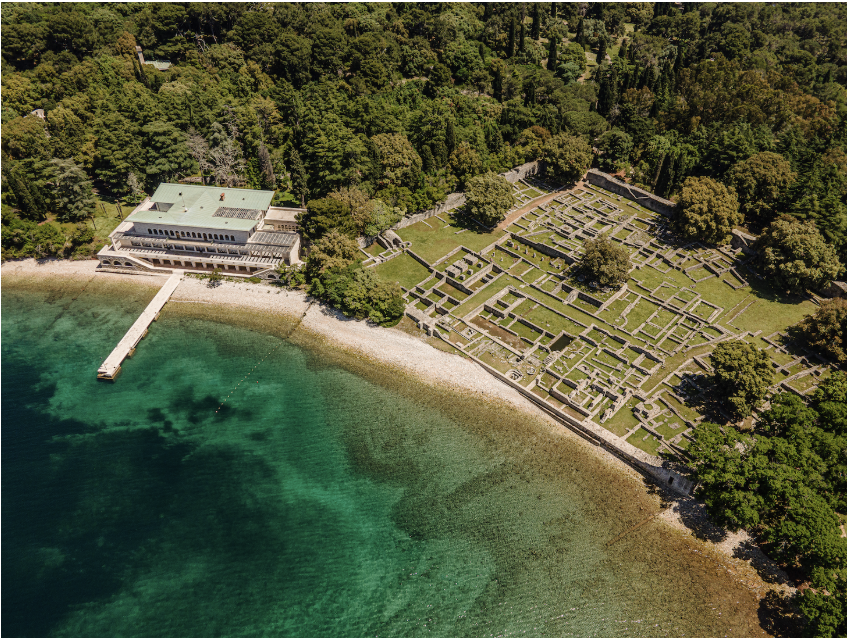
November 27, 2025 (Berlin, Germany) – Emerging from the Adriatic Sea like a chain of emeralds, the Brioni Islands are a place where carefully planted pine forests open onto rolling meadows and ancient ruins lie half-hidden in the grass. With traces of Yugoslav modernism embedded in the landscape and faded façades, Brioni has a nostalgic, Wes Anderson-like quality where time appears to stand still. Combining the enduring legacy of Roman villas, Austro-Hungarian elegance, and Tito’s bold socialist experiments, the archipelago evokes the charm of a bygone era and remains one of Croatia’s best-kept secrets.
The new publication Brioni Islands, edited by Reiner and Sabina Opoku, presents the archipelago as a place shaped by rich histories, striking contrasts and enduring possibilities. The authors invite readers to rediscover the islands not only as relics of the past, but as active environments capable of inspiring new ways of thinking about sustainability and heritage in the present. Once a stage for diplomacy and the non-aligned movement, Brioni is shown here as a site where the interaction between nature and culture becomes newly visible. Combining contemporary photography, rare historical images and essays by six authors each of whom have visited Brioni and drawn inspiration from the region, this publication offers readers an unprecedented journey into the heart of these undiscovered islands.
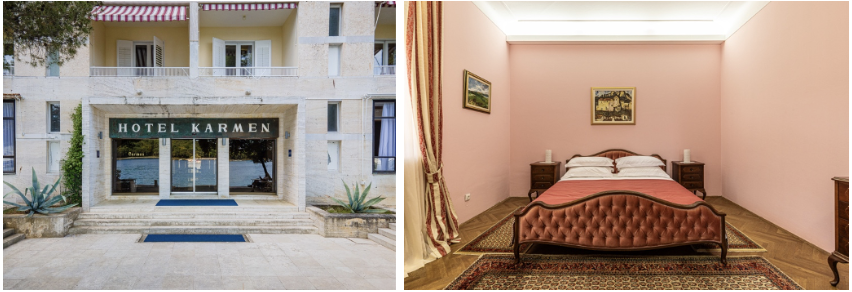
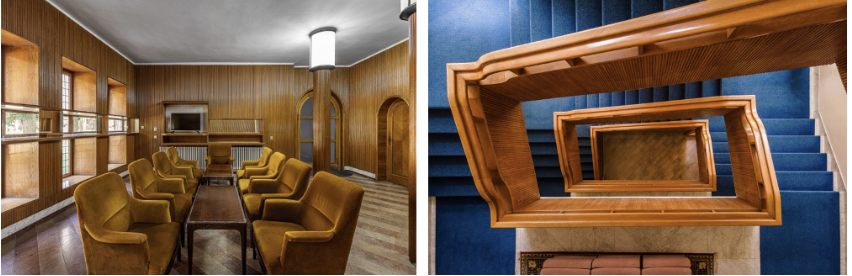
Tom Wagner’s photography anchors the book’s visual narrative, capturing the islands throughout the year with symmetry, precise framing and color palettes inspired by Anderson’s cinematic style. From faded pastels of mid-century interiors to vibrant landscaped greens, his unpeopled images highlight Brioni’s authentic, often surreal atmosphere. By showing each location as it is, Wagner creates a sense of temporal displacement that invites reflection on what was imagined, achieved, and left behind.
Complementing Wagner's contemporary vision is a series of essays that delve into the archipelago's complex history. From Kupelwieser's transformation of a malarial island into a celebrated resort, including the creation of the iconic Hotel Neptun and Hotel Karmen, which welcomed guests in the early 20th century and became central to Brioni’s golden era. It also explores Tito's use of Brioni as a stage for non-aligned diplomacy and glamorous retreat, where he hosted major world leaders and celebrity figures from Queen Elizabeth II to Elizabeth Taylor, Sophia Loren, Fidel Castro, and Josephine Baker. Alongside these political and social narratives, Pavletić’s archaeological insight reveal the deep cultural layers that shape Brioni’s identity. These perspectives are further enriched by Pizzaroni's fictional interlude and Šerbedžija's account of the Ulysses Theatre's revival, all ultimately framed by Kellein's vision of Brioni as a model for a sustainable and creatively driven future.
Brioni Islands offers a comprehensive exploration of the archipelago without prescribing a single, definitive interpretation. Instead, it brings together a wide range of perspectives to create a multifaceted portrait of the region that draws on its past while showing how it remains a living site of cultural meaning today.
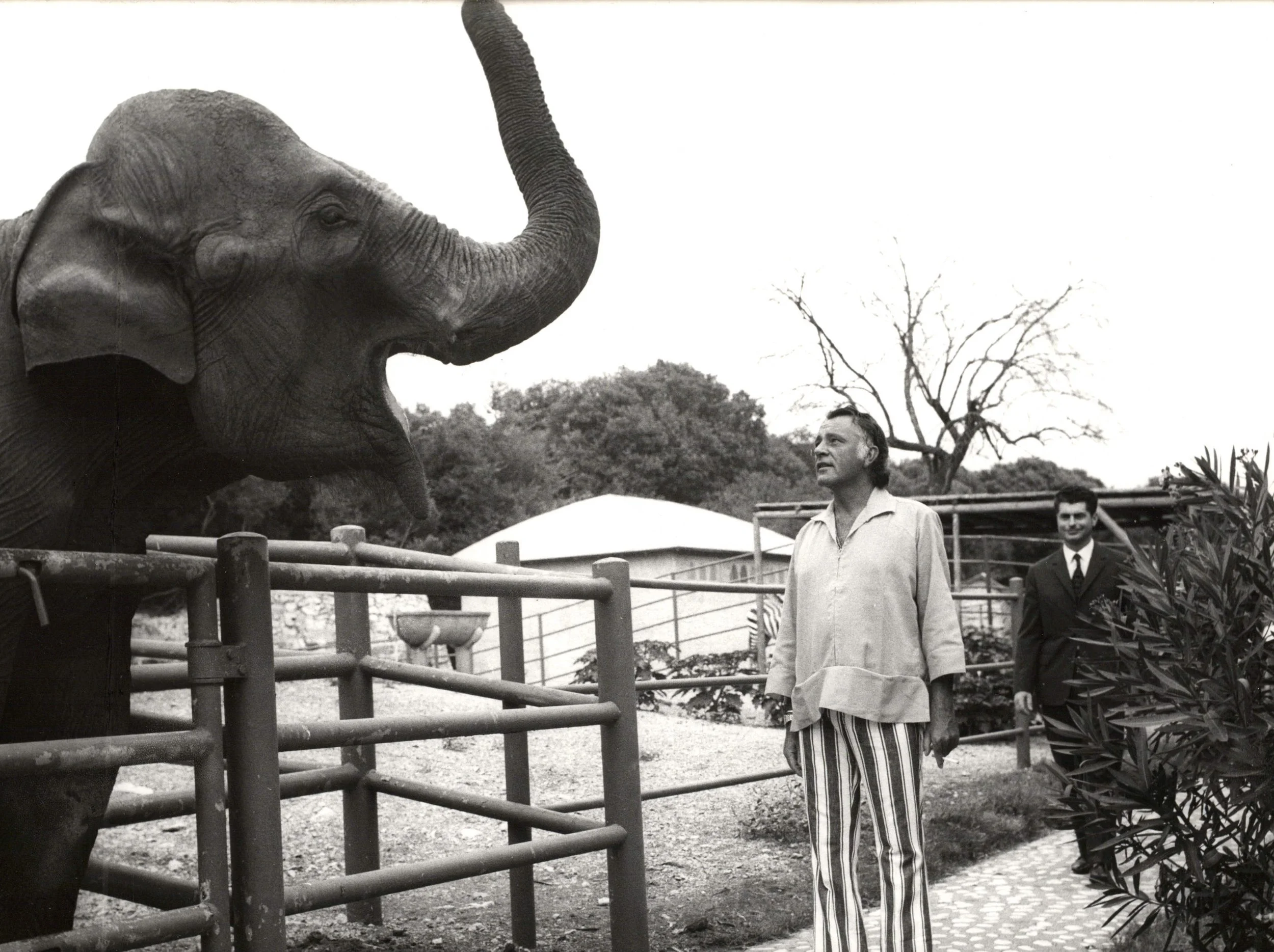
Image Credits:
1. Dobrika Bay, Villa Brionka, built in 1957 by Vinko Glanz, and the Byzantine castrum from the 1st century BC. Photo: Tom Wagner
2. The entrance of Hotel Karmen. Photo: Tom Wagner
3. Bedrooms of Villa Primorka. Photo: Tom Wagner
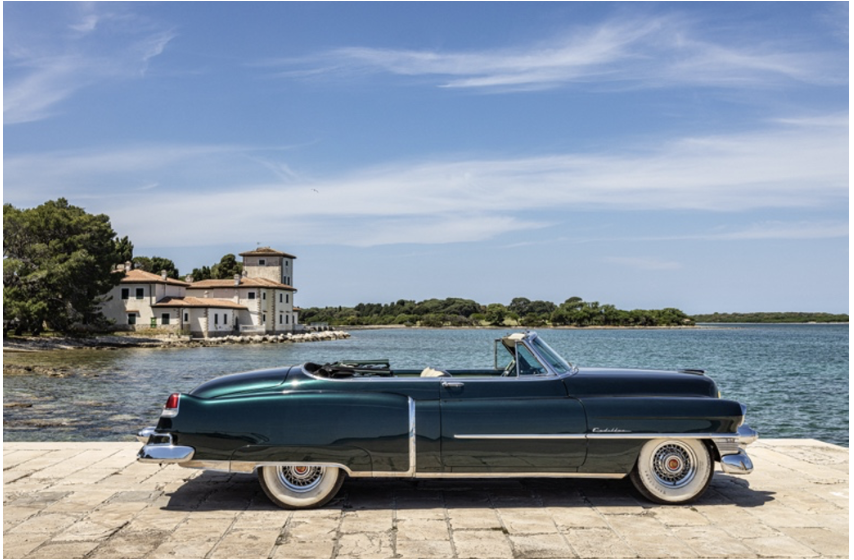
4. The Cadillac was a gift to Tito from a Canadian emigrant in 1953 and remains on the island. Photo: Tom Wagner
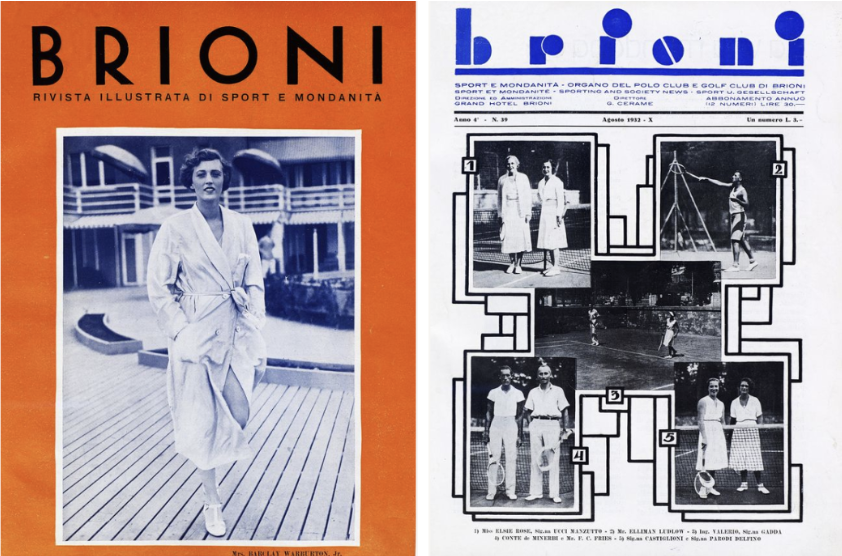
5. Cover of the Brioni Magazine ‚Rivista illustrata di sport e mondanità magazine‘, published from 1929 to 1939. © Metelwin digital library
6. Cover of the Brioni Magazine ‚Rivista illustrata di sport e mondanità magazine‘, published from 1929 to 1939: Issue 39; August 1932 X. © Metelwin digital library
7. Lobby Hotel Karmen. Photo: Tom Wagner
8. Staircase of Hotel Karmen. Photo: Tom Wagner
9. Richard Burton visiting „Sony“, 1971. © Museum of Yugoslavia, Belgrade