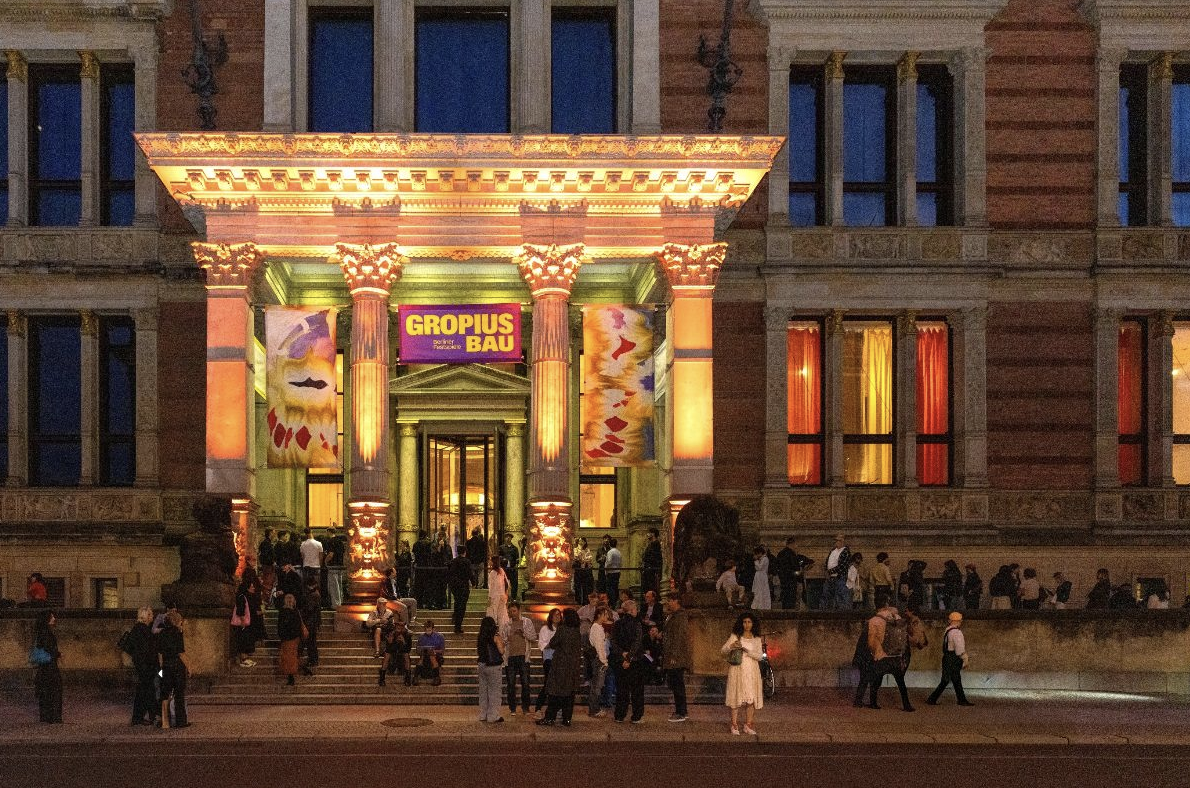
November 18, 2026 (Berlin, Germany) – Gropius Bau presents its 2027 programme, continuing its commitment to an artist-centred approach that embraces openness and experimentation. The institution brings together large-scale exhibitions, live programmes and artist commissions, fostering new forms of artistic production and exchange. Through its interdisciplinary programme, Gropius Bau continues to explore new possibilities for cultural institutions in the 21st century, dissolving boundaries between art and life.
The building originally opened in 1881 as a Museum and School of Decorative Arts, focused both on production and presentation. Today, artists continue to engage with Gropius Bau beyond simply presenting finished work: they work from on-site studios, curate exhibitions and live programmes, and shape the institution from within.
“In 2027, Gropius Bau will present solo exhibitions by Florentina Holzinger and Rosa Barba, two artists whose work engages with social and political realities and blurs the boundaries between art forms. A major group show will examine Germany at a time of profound change, revisiting questions of recent German history that were central to our 2026 programme.
Across these exhibitions, we are particularly interested in how art can move beyond the exhibition space and bring people together – Keith Haring’s work is a powerful example of this. In autumn, we will present a major survey of his work, curated by the artist Matthew Lutz-Kinoy. Together with our focus on free play and our live programme, these projects help make Gropius Bau a place where the boundaries between art and life become more fluid and where artists actively shape the institution itself.” — Jenny Schlenzka, Director, Gropius Bau
Wenn ich an Deutschland denke (WT)
March 19 – July 25 2027
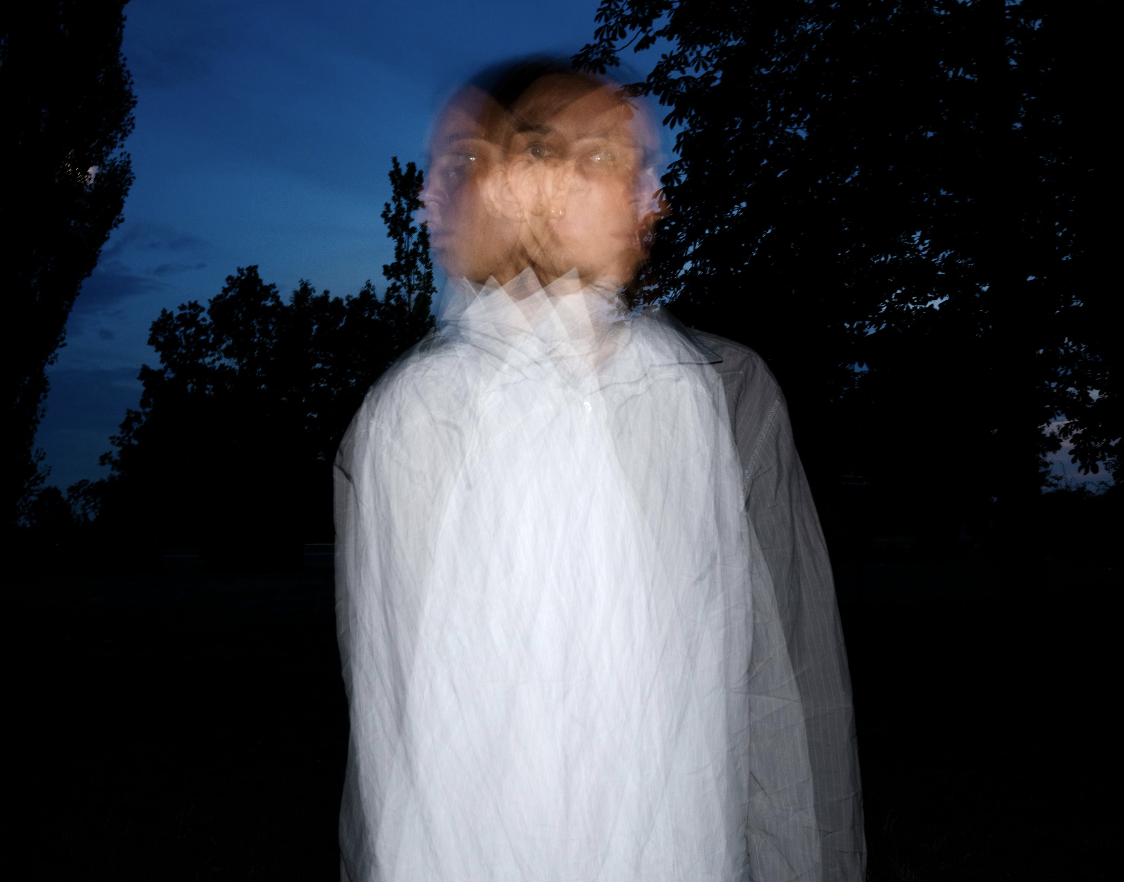
In spring 2027, Gropius Bau presents Wenn ich an Deutschland denke (working title), an exhibition exploring the ways artists have engaged with the topic of Germany over the past 30 years. Against a backdrop of constant upheaval, growing social uncertainty and the resurgence of debates once thought to be settled, the group exhibition brings together some 30 artistic perspectives on the country. On display will be a mix of new commissions and existing works by artists including Yael Bartana, Ayşe Erkmen, Hamishi Farah, Isa Genzken, Jutta Koether, Henrike Naumann, Adrian Piper, Katharina Sieverding, Hito Steyerl, Sung Tieu, Wolfgang Tillmans, Leyla Yenirce and Doris Ziegler.
The exhibition considers Germany at a threshold moment – a state in which seemingly established certainties are called into question and new social and political orders become imaginable. Such moments mark junctures, periods where contradictions meet and coexist: inside and outside, past and future, the familiar and the unknown. Rather than presenting a linear account of German history, the exhibition focuses on that which has been suppressed or marginalised, that which remains unresolved and that which seems to have disappeared yet continues to exert an influence. The absent and the spectral become starting points for an artistic exploration of what “Germany” and “German” might mean today.
The fourth edition of Reflexes & Reflections, a series of talks and panel discussions curated by Saba-Nur Cheema and Meron Mendel, builds on the exhibition’s central themes, exploring questions of German identity and what it means to belong. The programme takes place at the Haus der Berliner Festspiele from 24 to 27 June 2027.
The exhibition is funded by the Capital Cultural Fund (Haupstadtkulturfonds) and Sparkassen-Finanzgruppe with its partners Feuersozietät Berlin Brandenburg, DekaBank Deutsche Girozentrale, Berliner Sparkasse and Sparkassen-Kulturfonds des Deutschen Sparkassen- und Giroverbandes.
Florentina Holzinger: SEAWORLD VENICE BERLIN
April 2 – May 23 2027
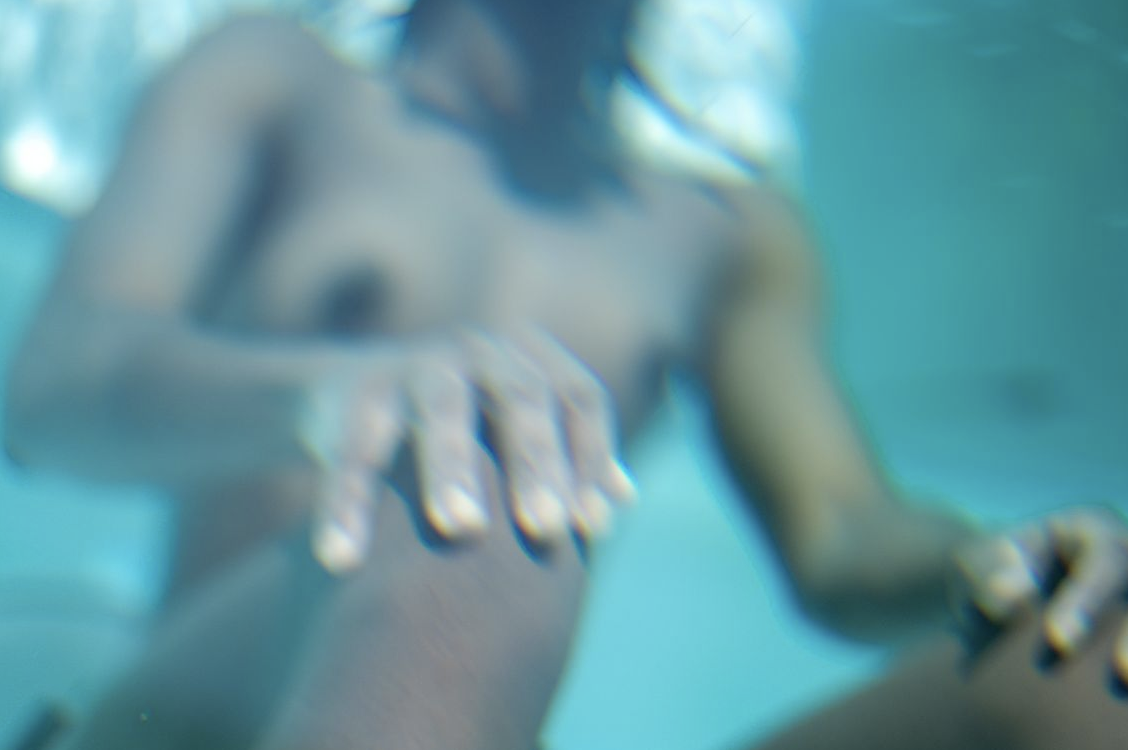
Water, levels rising; water that we drink and excrete in countless cycles every day; water, a vital, life-sustaining natural resource and highly managed commodity; water to plunge into, dive into, and emerge from, perhaps transformed.
Holzinger’s first institutional solo exhibition transforms the entire Gropius Bau atrium into an underwater theme park, sewage treatment plant and sacred building all in one. Turning visitors’ bodily fluids into living quarters for performers inhabiting the atrium of Gropius Bau, SEAWORLD VENICE BERLIN takes the form of a machinic organism in which action and its consequence on the body are continuously negotiated.
The interdisciplinary project complicates the dualisms of purity and pollution, sin and expiation, making visible the waste that is kept out of sight yet remains constantly present. First presented at the Austrian Pavilion of the 61st International Art Exhibition of La Biennale di Venezia in 2026, SEAWORLD VENICE BERLIN will be shown at Gropius Bau in an adapted form.
After its first stop at Gropius Bau, the project will be presented at Kunsthalle Wien and Amant in New York.
Rosa Barba: Myth and Mercury (WT)*
June 18 – November 28 2027
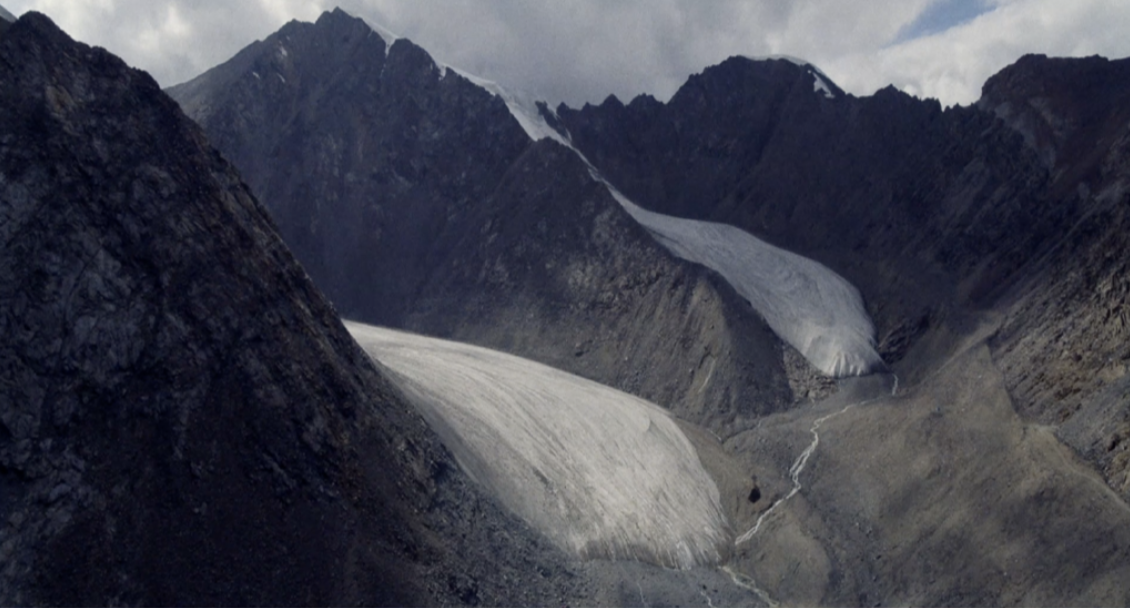
Berlin-based artist Rosa Barba understands landscapes as sites in which human intervention, technological development and traces of history become inscribed. They often form the starting point for her films, which explore the relationship between historical records, personal anecdotes and filmic representation, approaching time as an accumulation, an archive, rather than a linear progression. Myth and Mercury (working title), Barba’s solo exhibition on the ground floor of Gropius Bau, brings together works from the past 20 years and focuses on the geological, ecological and physical dimensions of her artistic practice.
Rosa Barba’s filmic works exist in a state of indeterminacy: between documentary and fiction, between concrete observation and abstraction. By challenging conventions of cinema, the artist explores film as both a medium for conveying information and a physical material with sculptural properties. Her work often investigates the convergence of light and sound. For Barba, cinema “allows time and space to vibrate, collapse, overlap and extend.”
The exhibition traces her exploration of film as a research tool and practice, with particular emphasis on the extensive inquiry underpinning her work, which addresses the resilience of existence and the question of what holds the world together.
* planned
Playing as Method (WT)
With a New Installation by Monster Chetwynd
July 2 2027
2 July 2027
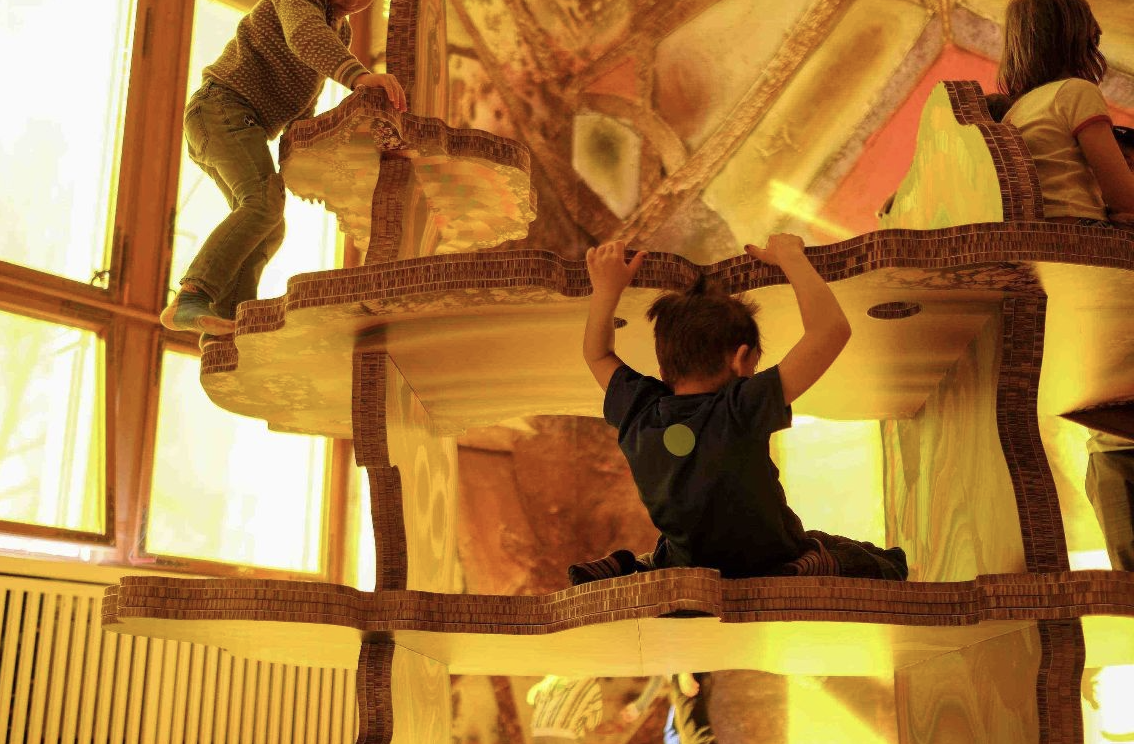
In the radical openness of free play – beyond rules and purpose – immediate experience takes centre stage, creating opportunities for encounter, creativity, negotiation, friction and disorientation. In early July, Gropius Bau hosts a symposium bringing together artists and experts from a range of disciplines whose work focuses on play, art and the public sphere. Together, they explore the possibilities and seriousness of playfulness in and through art. The programme features talks, performances and workshops, as well as the presentation of a new Gropius Bau publication on play, devoted in part to BAUBAU, a play space for children designed by artist Kerstin Brätsch. At Gropius Bau, play offers new ways of encountering art and one another, challenging both conventional modes of engaging with art and established ideas about how a cultural institution can be experienced.
Opening alongside the symposium, a new commission for Gropius Bau’s atrium by artist Monster Chetwynd transforms the building’s central space into a communal environment. Conceived as an inflatable landscape sculpture, the installation is designed for children and adults alike, inviting movement, play and shared experiences. Free to enter, it will remain open to visitors beyond the symposium.
KEITH HARING LIVES
Curated by Matthew Lutz-Kinoy
September 9 2027 – January 16 2028
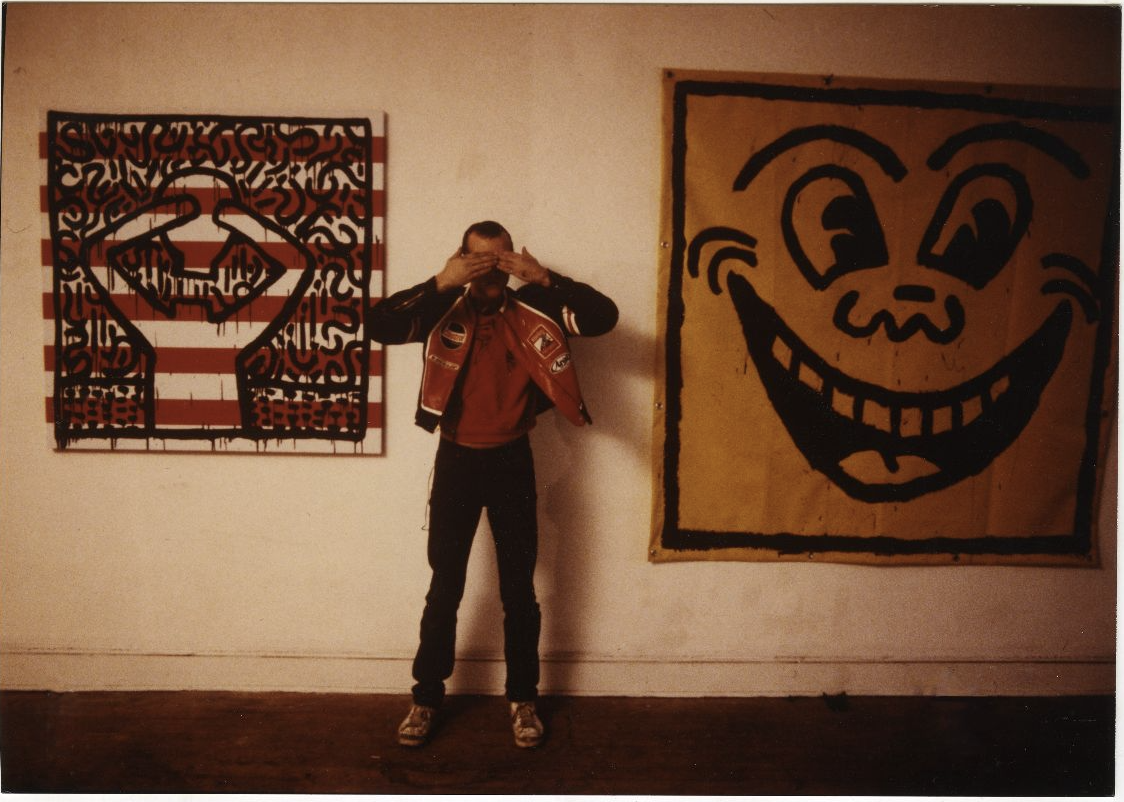
Keith Haring Lives is an expansive survey of Keith Haring’s work, occupying the atrium and entire first floor of Gropius Bau. Haring wanted his art to be part of everyday life, not confined to the walls of museums and galleries. His impulse to disperse himself into the world found expression in drawings in subway stations, murals in public spaces and images on clothing and bodies – art that reached out to people and touched them directly.
Curated by the artist Matthew Lutz-Kinoy, who grew up encountering Haring’s work on the streets of New York, the exhibition explores a visual language that has always reached far beyond the museum. Haring’s practice took shape in the streets, clubs and artistic circles of 1980s New York, where gay, lesbian and trans people were forging new forms of expression, community and political activism. Against the backdrop of conservative politics and the AIDS crisis, joy became a form of defiance, finding expression through sexuality, performance and radical visibility.
Keith Haring Lives foregrounds the openness and collaborative nature of Haring’s practice, bringing his oeuvre into dialogue with works by Alvin Baltrop, William S. Burroughs, Nancy Brooks Brody & Zoe Leonard, John Giorno, Tony Just, Ser Serpas and Sturtevant, among others.
The exhibition is funded by Capital Cultural Fund (Hauptstadtkulturfonds).
After its presentation in Berlin, the exhibition will travel to Moderna Museet, Stockholm and Kunsthaus Zürich.
NOTES TO EDITORS
Address
Gropius Bau
Niederkirchnerstraße 7
10963 Berlin
Opening Hours
Monday, Wednesday – Friday | 12 – 7 PM
Saturday, Sunday, Holidays | 10 AM – 7 PM
Closed on Tuesdays
Image Credits:
1. © Gropius Bau, photo: Rosa Merk
2. Loretta Fahrenholz, Gap Years 1, 2021/2022, Courtesy: Reena Spaulings Fine Art © Loretta Fahrenholz
3. SEAWORLD VENICE, 2026, photo: Nicole Marianna Wytyczak © VG Bild-Kunst, Bonn 2026
4. Rosa Barba, Aggregate States of Matters, film still, 2019 © VG Bild-Kunst, Bonn 2026
5. © Gropius Bau, photo: Guannan Li
6. Keith Haring with early paintings, c. 1981 © Keith Haring Foundation, photo: Klaus Wittmann
7. © Gropius Bau, photo: Ceren Saner
© Gropius Bau, photo: Guannan Li