Featuring works by Heinz Mack, Bernard Aubertin, Hans Bischoffshausen, Alberto Burri, Hal Busse, Dadamaino (Eduarda Maino), Lucio Fontana, Gotthard Graubner, Oskar Holweck, Yves Klein, Yayoi Kusama, Adolf Luther, Piero Manzoni, Christian Megert, Otto Piene, Uli Pohl, Günther Uecker, Jef Verheyen and Nanda Vigo.
On view through September 6, 2026
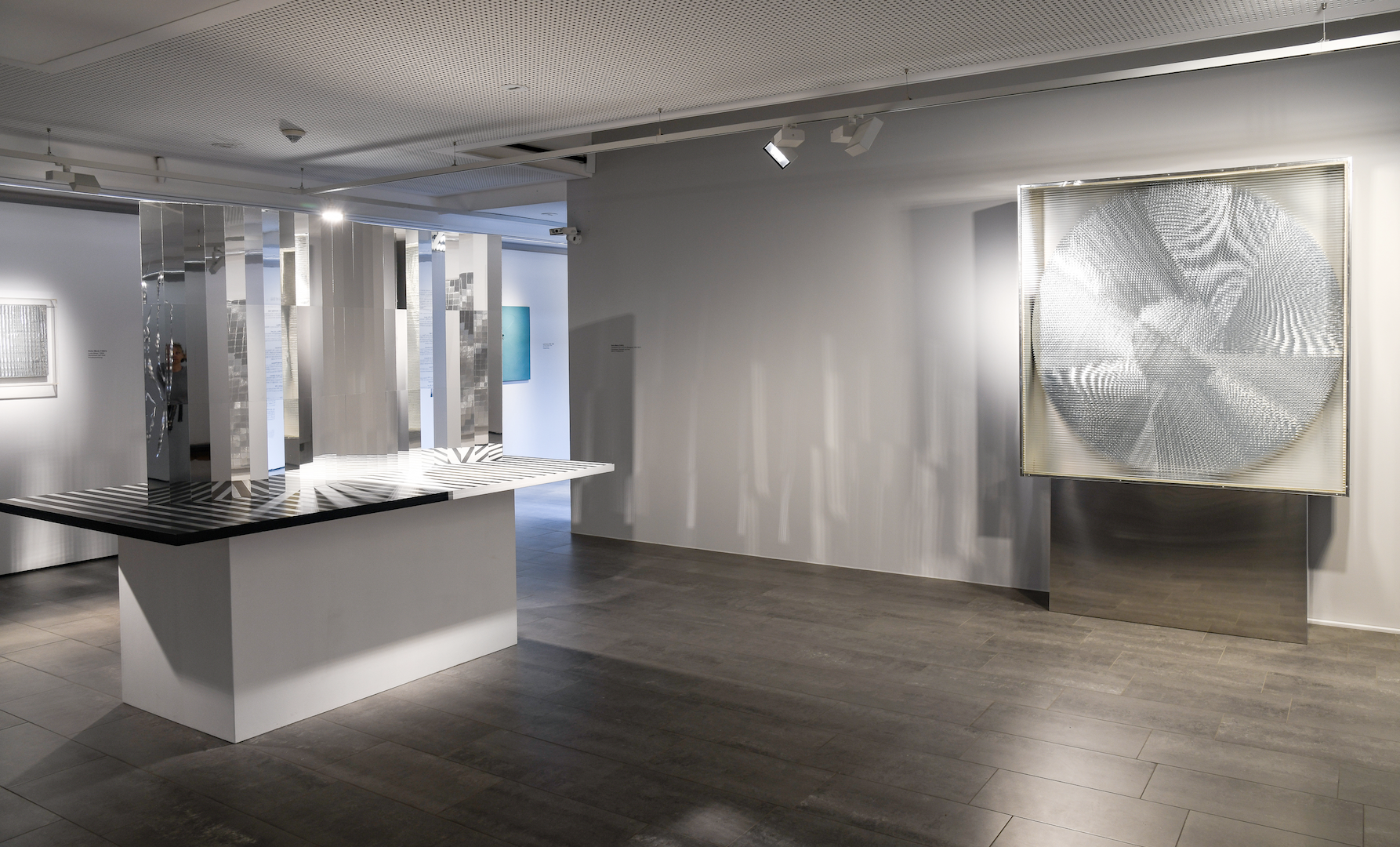
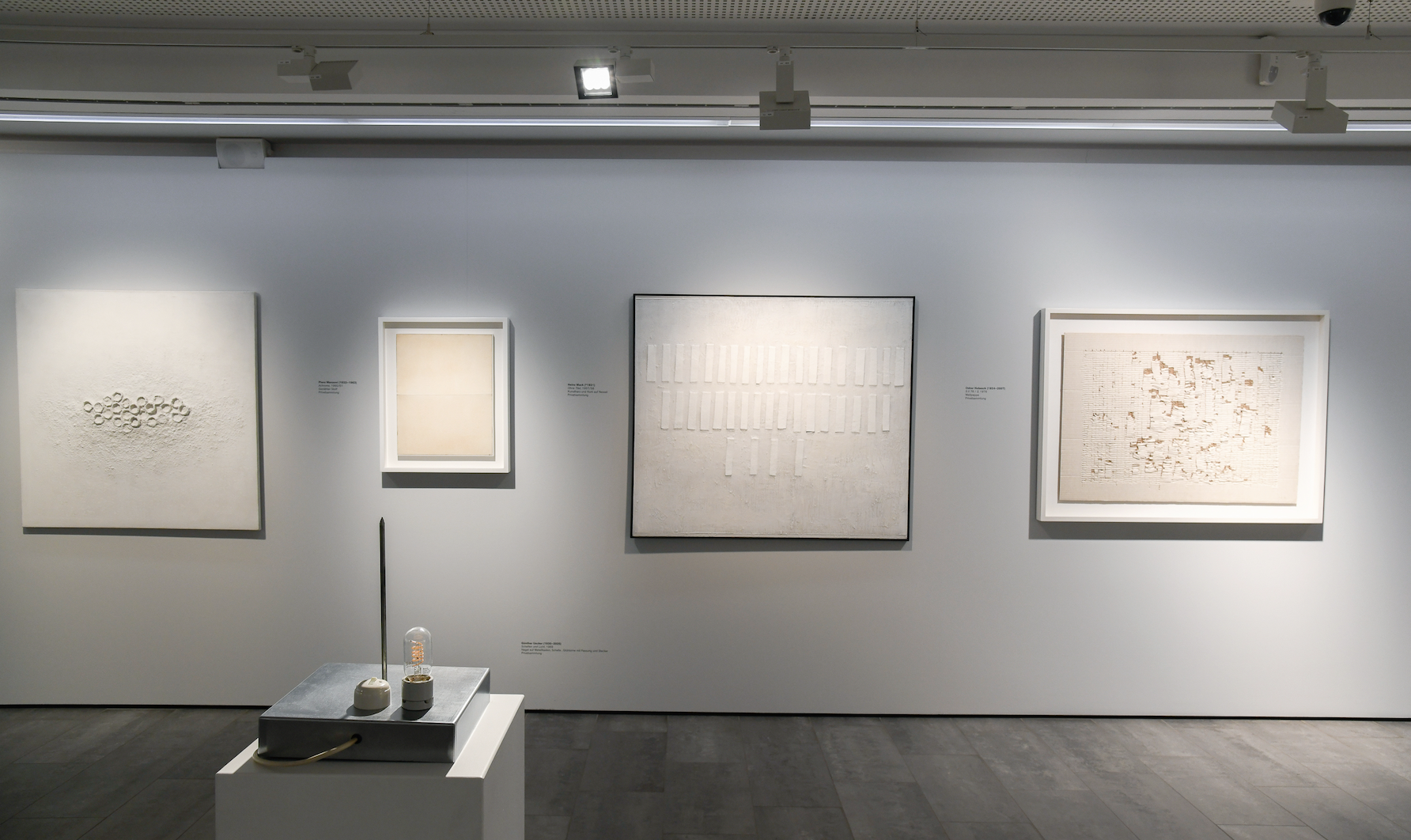
March 27, 2026 (Tegernsee, Germany) – The Olaf Gulbransson Museum, presents ZERO. An International Artist's Movement. 1957–1966, a group exhibition featuring the artist Heinz Mack, on view through September 6, 2026.
ZERO – A New Beginning at Zero
In the late 1950s, young artists in Düsseldorf and other European cities were searching for a radical new beginning in art. After war and dictatorship, they wanted to break away from pathos, ideology, and the subjectively charged postwar painting and rethink art “at zero,” at “Zero.” An open zone in which structure instead of composition, light instead of narrative motifs, and movement instead of rigid form became decisive. ZERO was never a closed collective, but rather a loose network of artists connected through exhibitions, magazines, and personal contacts.
Düsseldorf burns for light: the birth of ZERO
In Düsseldorf, the ZERO ideas found a concrete location: the studios of Heinz Mack and Otto Piene on Gladbacher Straße. There they organized the so-called evening exhibitions, short, dense presentations that were only accessible on the opening night. To do this, the artists cleared out their studios, only to put everything back in place the next day and continue working. Günther Uecker soon joined them, and a lively meeting place for artists seeking new forms of expression was created. At the same time, Mack and Piene published the magazine “ZERO” (1958–1961), which coined the name for the movement and spread it internationally.
Light, movement, and immateriality
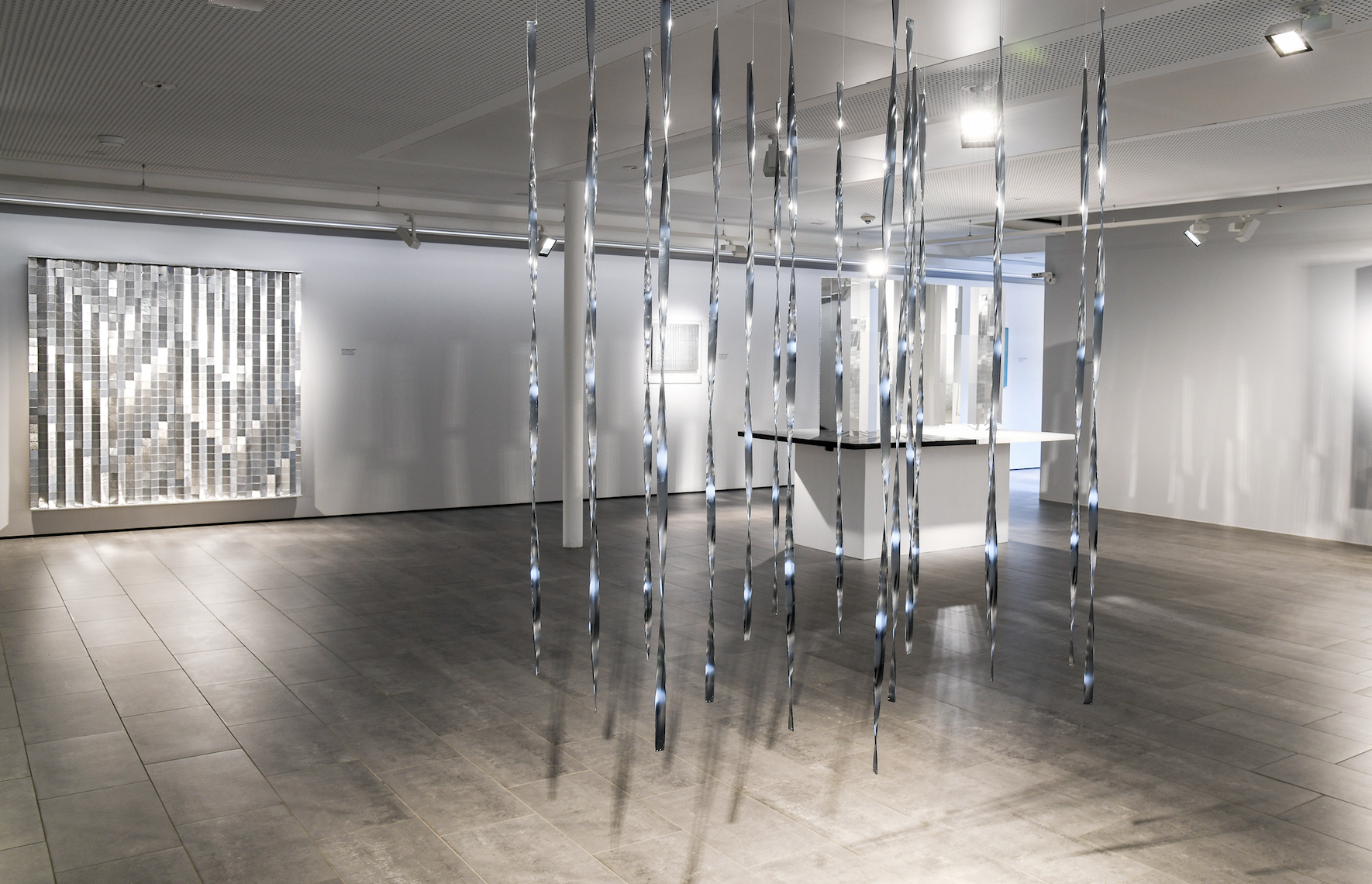
Many works break away from traditional painting and instead focus on light, reflections, shadows, movement, and chance. A central motif of ZERO is the question: How can light itself be turned into art?
Heinz Mack, Otto Piene, and Günther Uecker developed light reliefs, rotors, nail reliefs, mirror objects, and light ballets in which light can be experienced as an immaterial, constantly changing phenomenon. The movement often lies less in the object than in the perception: when viewers move in front of the works, optical vibrations and virtual movements are created.
Heinz Mack – The Biographer of Light
Heinz Mack creates the poetry of immateriality. For him, light is not just a theme, but a lifelong artistic obsession. Influenced by early experiences of light during the war – nights of bombing over Krefeld, a narrow beam of light in a darkened hallway, dancing dust particles in the air – he developed a strong awareness of immateriality and the magic of minimal light sources. Later, a trip to the Sahara deepened this interest: the dazzling mirage reflections, the barely perceptible horizon, and the silence of the desert became key experiences for him. In his work, he attempts to translate these elusive phenomena into abstract, autonomous constellations of light and space – using aluminum, stainless steel, glass, acrylic glass, marble, and reflective surfaces. Silver in particular plays a major role because it reflects light intensely and, for Mack, is symbolically associated with inwardness, night, and consciousness.
Europe in network mode: ZERO and its sparkling satellites
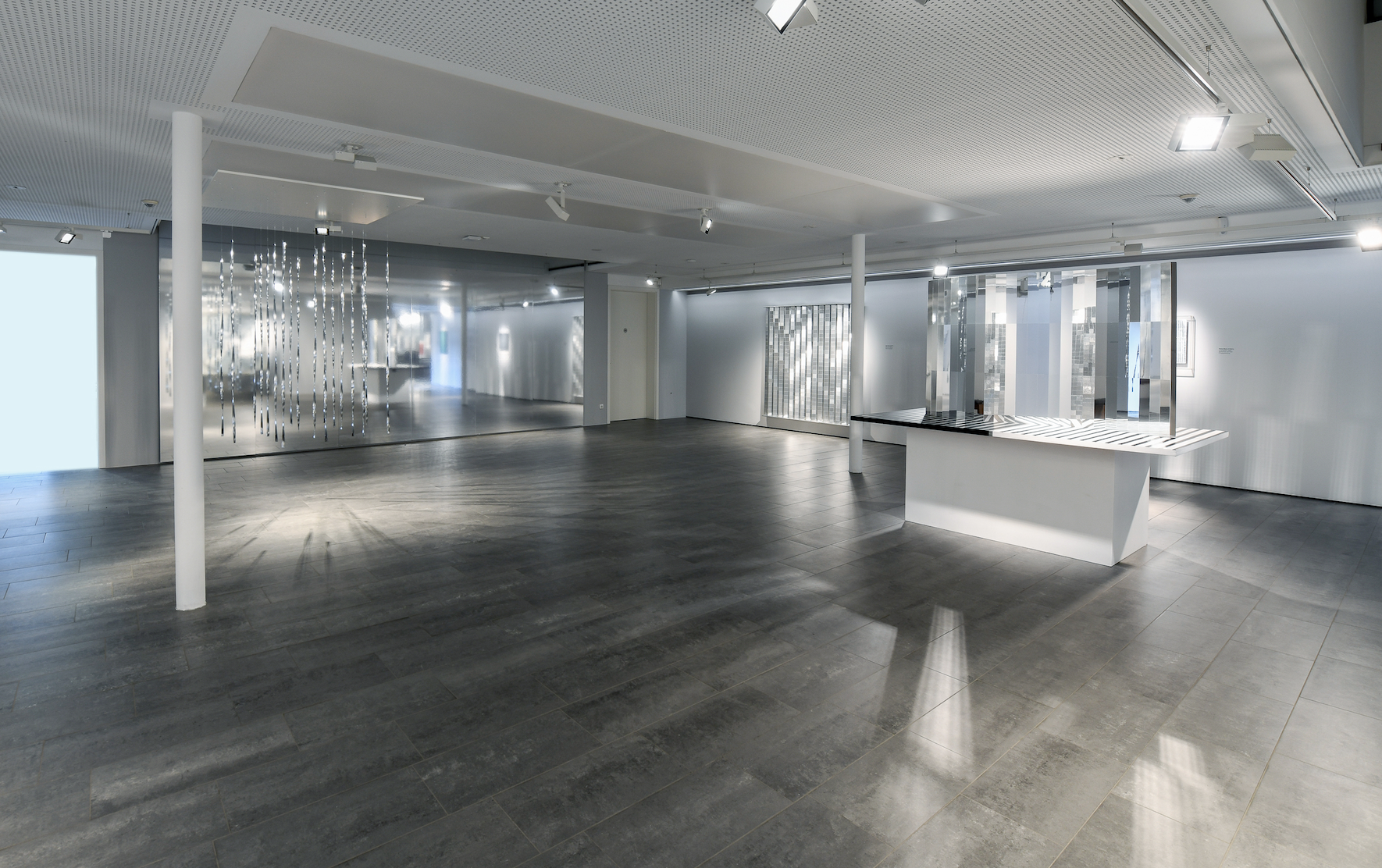
From the outset, ZERO was conceived as an international movement. In Milan, Paris, Brussels, Amsterdam, and other cities, artists were working on similar questions: How can art be detached from objects, narratives, and ideology and focus instead on light, space, time, and perception?
In Italy, the Azimut(h) group formed, in the Netherlands the NUL group, and in Belgium the ZERO network around Jef Verheyen; closely related positions also emerged in France, Switzerland, and Croatia. Important names in the ZERO circle include Dadamaino, Lucio Fontana, Yves Klein, Yayoi Kusama, Piero Manzoni, Jef Verheyen, and Nanda Vigo. Through publications, joint exhibitions, and mutual studio visits, a dense European network emerged that paved the way for the art of the information age.
Women in the ZERO cosmos, lots of shadows, but also light
For a long time, male protagonists dominated the ZERO discourse, but female artists played a central role. Hal Busse, Hanne Brenken, and Herta Junghanns-Grulich were already present at the early evening exhibitions in Düsseldorf and experimented with new materials such as nails on monochrome color surfaces. In Italy, Dadamaino was an early member of the circle around Piero Manzoni and Enrico Castellani; she developed radical hole and volume paintings that brought space and movement into play. Nanda Vigo created light-flooded objects at the interface of architecture and art with her “Cronotopi.” Yayoi Kusama brought a strongly physical and psychological dimension to the ZERO context with her dot networks and room installations, which also show thematic proximity to questions of repetition, infinity, and space.
Why ZERO continues to shine today
The ZERO network officially disbanded in 1966, but the movement's ideas continued to have an impact far beyond that decade. In the 1960s, ZERO was perceived—especially in the US—as the first German post-war movement of international standing after “Brücke” and Bauhaus. Today, ZERO is considered a key movement in the development of light art, kinetic art, minimalism, conceptual art, and space-related installations. Major retrospectives at the Guggenheim Museum in New York, the Stedelijk Museum in Amsterdam, and the Gropius Bau in Berlin have once again underscored the international significance of ZERO in recent years. The exhibition at the Olaf Gulbransson Museum builds on this and places ZERO in a contemporary context as a movement that has had a lasting impact on our understanding of perception, material, and space.
NOTES TO EDITORS:
ZERO. An International Artist's Movement. 1957–1966 is on view through September 6, 2026.
Address:
Olaf Gulbransson Museum
Kurgarten 5
83684 Tegernsee
Opening Hours:
Tuesday – Sunday | 10 AM – 5 PM
Closed on Mondays
About Heinz Mack:
Heinz Mack, born in 1931 in Lollar (Hesse, Germany), attended the Academy of Arts Düsseldorf during the 1950s. In 1956 he also earned a state examination in philosophy at the University of Cologne. Together with Otto Piene he founded the group ZERO in 1957 in Düsseldorf. Besides his participation at Documenta II (1959) and Documenta III (1964), he also represented The Federal Republic of Germany at the XXXVth Venice Biennale in 1970. In the same year he was invited to Osaka (Japan) as a visiting professor. He also became a full member of the Berlin Academy of Arts, to which he belonged until 1992. Heinz Mack has been honored with major awards including the Art Prize of the City of Krefeld (1958), the Premio Marzotto (1963), the 1st Prix arts plastiques at the 4th Paris Biennale (1965), 1st prize in the international competition Licht 79 in the Netherlands (1979), the Großer Kulturpreis des Rheinischen Sparkassen-Verbands (1992) and the Cultural Prize of the city of Dortmund’s arts council (2012). He also received the Grand Federal Cross of Merit with Star of the Federal Republic of Germany in 2011. In 2015, Heinz Mack was unanimously voted an honorary member of the Kunstakademie Düsseldorf by the academy's senate. In 2016, the city of Düsseldorf bestowed the Jan-Wellem-Ring upon Heinz Mack. He received the Moses Mendelssohn Medal in 2017. The central theme of Heinz Mack’s art is light. Sculptures and pictures are the media of his multifaceted oeuvre. The exceptionally diverse complete works include sculptures made of different materials: light-stelae, light-rotors, light-reliefs and light-cubes. His oeuvre also involves paintings, drawings, India ink, pastels, graphics, photography and bibliophilic works. Another important aspect of Mack’s work is the design of public spaces, church interiors, stage settings and mosaics. His works have been shown in nearly 300 solo exhibitions and numerous other group exhibitions. They are also found in over 170 public collections. Numerous books and two films document his work. Heinz Mack lives and works in Mönchengladbach and Ibiza.