Press conference: Thursday, March 5, 2026, 10 AM
Opening: Thursday, March 5, 2026, 7 PM
On View: March 6 – May 31, 2026
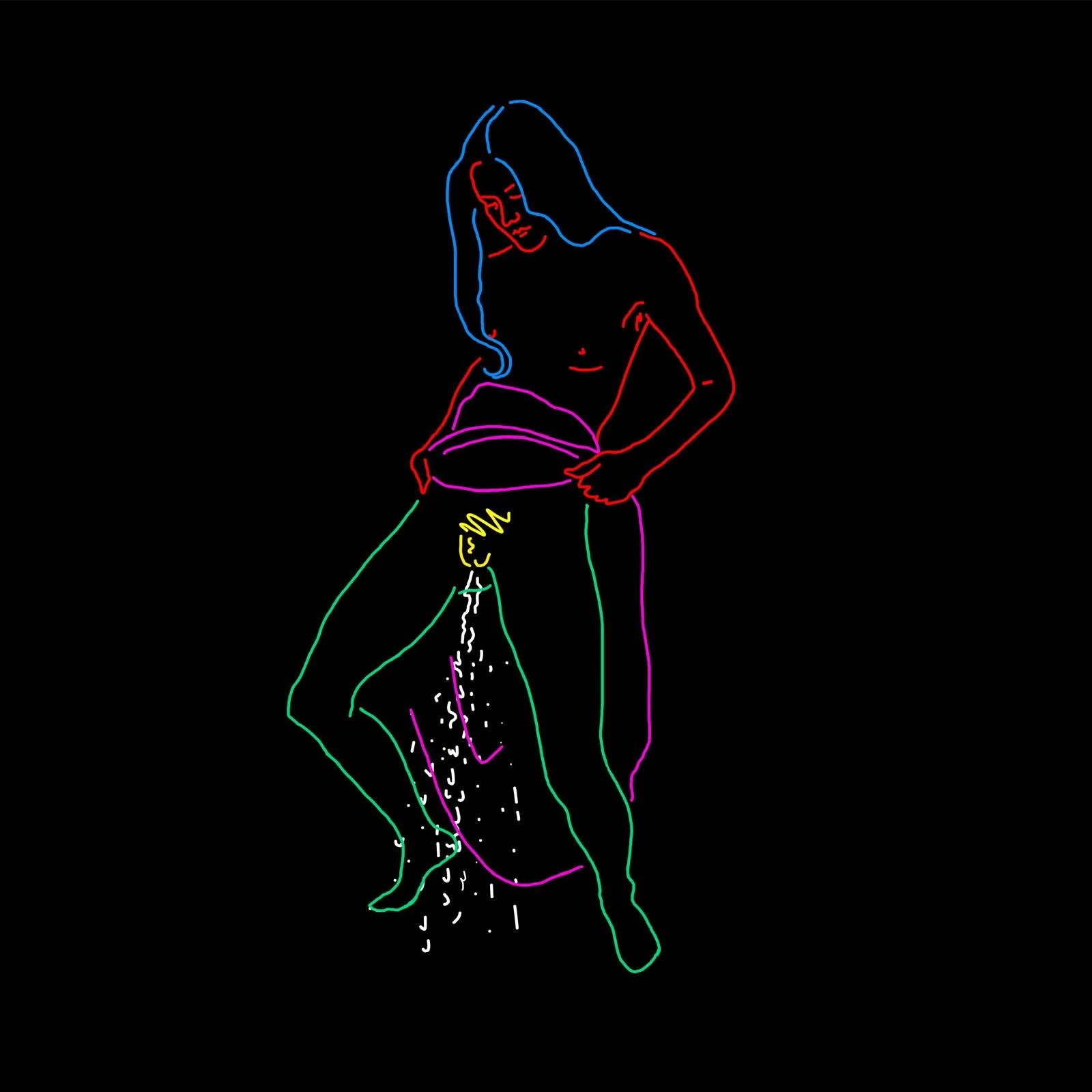
February 16, 2026 (Vienna, Austria) – At the Secession, Marianna Simnett will present Circus, a multimedia exhibition comprising light, sound, and sculptural works that draw on her Yugoslav heritage. Personal references, including a work that was inspired by her Jewish-Croatian grandfather’s experience during the Holocaust, intersect with nods to folkloric bogeywomen, who may interchangeably figure as threat or ally, and the traditional Balkan skirt that stages the delicate play of revealing and concealing intimate body parts. The show’s Circus theme manifests itself in a variety of ways throughout the presentation: in the maniacal spinning of a skirt overhead, alluding to a circus tent; in a stage for a performance; in the sound of torturous laughter; or in dazzling lights illuminating a darkened space.
Simnett’s practice consistently engages with intense corporeal states – urinating, fainting, the sensation of being tickled – which she taps into in an investigation of pleasure and pain. Having grown up in Great Britain as the daughter of a Croatian mother during the Yugoslav Wars, the artist remembers a recurring fantasy of a urinating figure resembling a folkloric female character who lifts her skirt to expose her genitalia to ward off evil spirits. Translated into neon lighting, this figure oscillates between provocation and defence, between abjection and agency. Neon does not merely illuminate; it intrudes. It screams, demands attention, and collapses distance. Building on the legacy of Bruce Nauman’s neon works, light here becomes a body in its own right – one that addresses, agitates, and physically affects the viewer.
In Catherine Wheel (2026), an illuminated blue skirt spins above the viewer’s head, synchronized with the artist’s uncontrollable laughter. The sound originates from a four-hour tickling session during which Simnett was pushed into an increasingly exhausted and unpredictable state. The resulting laughter – dark, strained, and edged with gallows humour – takes on a possessed, almost satanic quality. The skirt’s relentless movement becomes threatening in its sheer persistence, exerting pressure not only symbolically but bodily, as something that cannot be stopped or escaped.
The title refers both to a historical torture and execution method – used in Europe until the nineteenth century – and to a spectacular firework associated with fascination and childish awe. This semantic ambivalence mirrors a destabilizing experience that wavers between attraction and dread. While the corporeal experience invoked by the work borders on the intolerable, the body itself remains absent. The skirt assumes an anthropomorphic, ghostlike presence, standing in for a body that is felt but not seen. This absence functions as a repudiation of the representational regimes that historically framed the female body – particularly in states of so-called hysteria – as a spectacle of loss of control. Instead of showing the body in crisis, Simnett abstracts it, while activating the viewer on a visceral level.
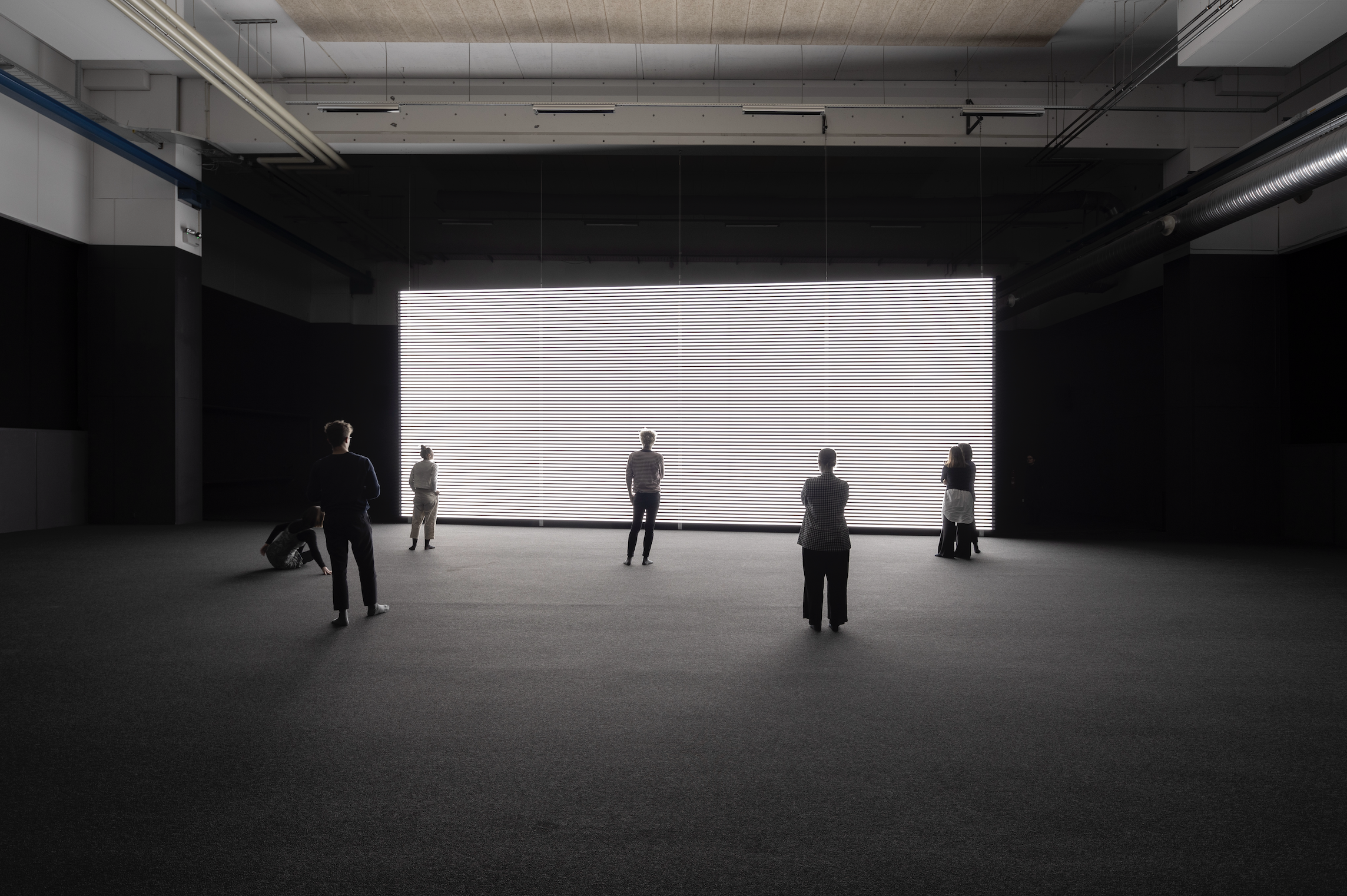
The same strategy is also crucial to Faint with Light (2016). For this work, the artist made herself faint four consecutive times through hyperventilation before a medic intervened after she had a seizure. Monumental LED lights pulse in synchrony with her breathing, rising and falling alongside her repeated collapse and revival. The result is a blinding, overwhelming experience that is brutal in its intensity – disorienting, almost orgasmic, and unmistakably primal.
The work resonates with the story of Simnett’s Jewish grandfather, who survived the Holocaust. After he had escaped during transportation between different concentration camps, he fainted when he was about to be shot and thus was believed to be dead. At the same time, the work confronts a long visual and medical history in which women’s fainting spells were systematically medicalized: diagnosed as nervous weakness or hysteria, photographed, classified, and scrutinized as evidence of supposed physical and mental instability. The fainting female body became an object of control and eroticized passivity. This was not incidental but a visualization of deeply entrenched power asymmetries.
Simnett revisits fainting as a motif not to reproduce these images, but to dismantle them. By absenting the body while intensifying its physiological effects through light, sound, and rhythm, she stages exhaustion and loss of control as an active, deliberate strategy. Fainting is no longer something to be looked at, but something that destabilizes the act of looking itself. The work asks insistently: Who is falling? Who is watching? And who bears responsibility for holding – or letting go?
Drawing on personal experience and collective cultural memories, Simnett’s works embrace the surreal not as an escape from reality, but as a method of transformation. Fantasy, play, and excess function here as tools for renegotiating agency in the aftermath of trauma. Rather than narrating trauma directly, the exhibition articulates it as a bodily condition structured by repetition, anticipation, and sensory overload – something that is not resolved but continuously reactivated and reworked.
Programmed by the board of the Secession
Curated by Bettina Spörr
The exhibition is made possible by the generous support of Simona Petrova-Vassileva.
NOTES TO EDITORS
Address
Association of Visual Artists Vienna Secession
Friedrichstraße 12
1010 Vienna
Opening Hours
Tuesday – Sunday | 10 am – 6 pm
Closed on Mondays
About Marianna Simnett
Marianna Simnett is a British-Croatian multidisciplinary artist living and working between Berlin and New York. Her immersive narratives centre around the overlapping and at times incongruous themes of vulnerability, autonomy, control, pain, metamorphosis, and care.
Simnett’s work has been exhibited internationally in solo exhibitions at venues including Max Ernst Museum, Brühl (2026); Société, Berlin (2025); Hamburger Bahnhof, Berlin (2024); LAS, Berlin (2023); Société, Berlin (2022); Institute of Modern Art, Brisbane (2019); Kunsthalle Zürich, Zürich (2019); MMK, Museum für Moderne Kunst, Frankfurt (2018); The New Museum, New York (2018) and Zabludowicz Collection, London (2018). Selected group exhibitions include Chrysalis: The Butterfly Dream, Centre d’Art Contemporain Genève (2023); the 59th Venice Biennale: The Milk of Dreams (2022); Espressioni: The Epilogue, Castello di Rivoli, Turin (2022); and Prize of the Böttcherstraße, Kunsthalle Bremen (2022).
Image Credits:
1. Marianna Simnett, Circus, 2025. Preparatory drawing. Courtesy the artist and Société, Berlin.
2. Marianna Simnett, Faint with Light, 2016, SEIZURE installation view at Copenhagen Contemporary, Copenhagen, 2019. Courtesy of the artist. Photo: Anders Sune Berg.