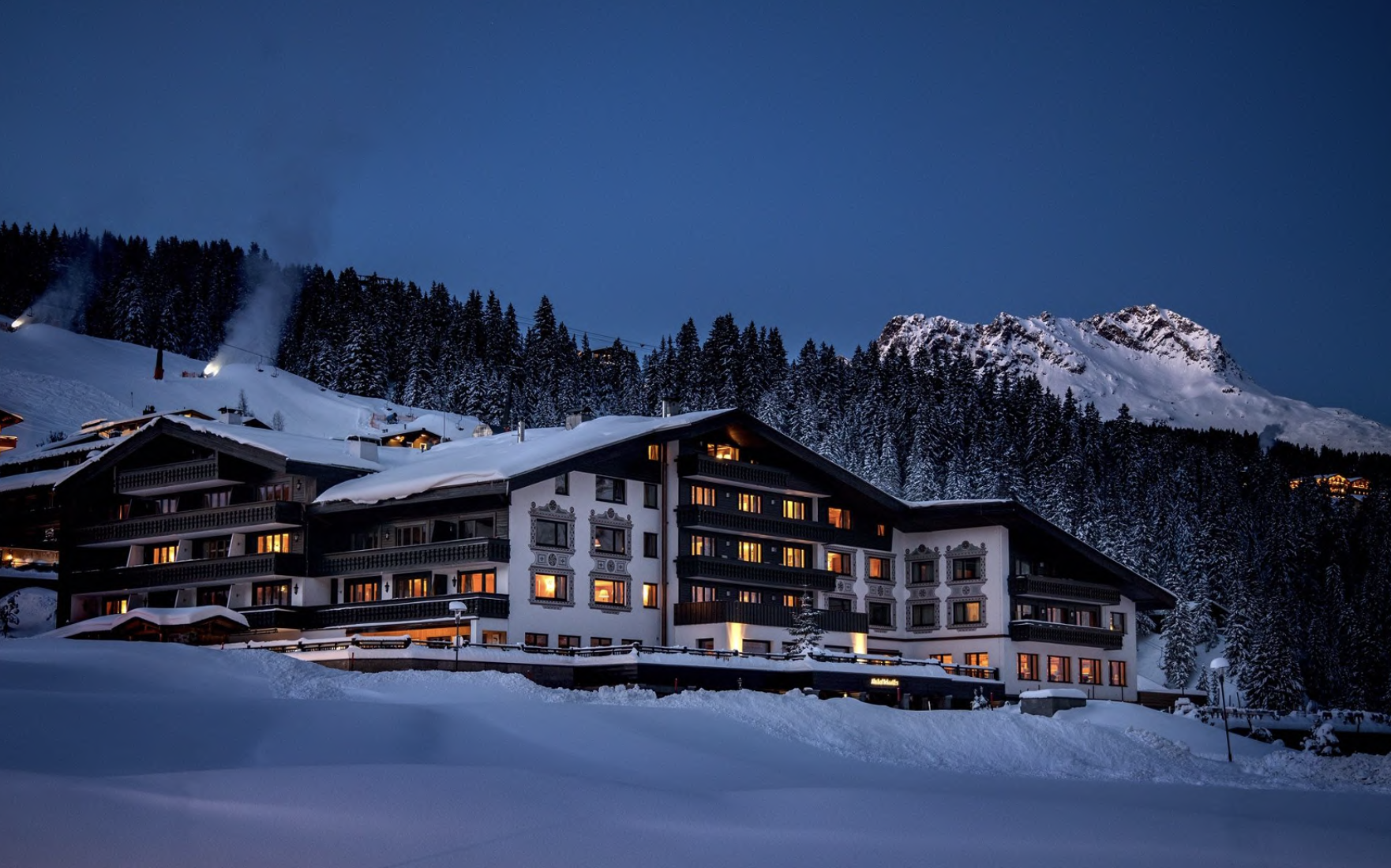
November 23, 2026 – A R T Communication + Brand Consultancy is pleased to announce its collaboration with Katia and Gerold Schneider, whose longstanding dedication to the Austrian Alps spans hospitality, architecture, and the cultivation of cultural life in the region. Central to their work is an understanding of heritage as custodianship: the responsibility to care for what has been entrusted to one generation, while expanding its legacy for the next. This philosophy nurtures connected cultural propositions while preserving the distinct identity of each project, fostering a community that has shaped their approach to hospitality, rooted in the relationships between people and the places they inhabit. Their work spans Hotel Almhof Schneider, the restored farmhouses of Chalet Sonnenhof, HausW, as well as the historic Restaurant Klösterle, alongside allmeinde commongrounds, a cultural initiative comprising its original space in Lech, Kunstraum Zug and Werkraum Zug.
Prior to taking over the family hotel, Katia and Gerold Schneider began shaping their vision for a cultural cosmos in the Austrian Alps. In 1994, while still based in Vienna, they began developing their vision for the transformation of Hotel Almhof Schneider. In 1995, they founded an architectural practice, undertaking projects in the region and award-winning commissions in Lech. Their architectural and cultural pursuits have remained independent of their hospitality activities, which developed alongside their work on the family-owned Hotel Almhof Schneider. They returned to Lech in 1997 and assumed responsibility for the hotel in the early 2000s. The Schneider family's presence in Lech am Arlberg reaches back to the late 14th century, with the oldest surviving parts of the family's barn dating to 1399, more than 500 years before the village became an international Alpine destination. In 1929, the family welcomed its first guests into their farmhouse, laying the foundations for what would become Austria's first five-star Superior hotel, which today comprises 47 rooms and 105 beds. Katia and Gerold’s approach to the hotel reflects the same sense of responsibility that had long informed their architectural and cultural work, preserving the hotel's original domestic character and its tradition of hospitality as a way of nurturing lasting relationships between hosts and guests, while allowing it to evolve for future generations.
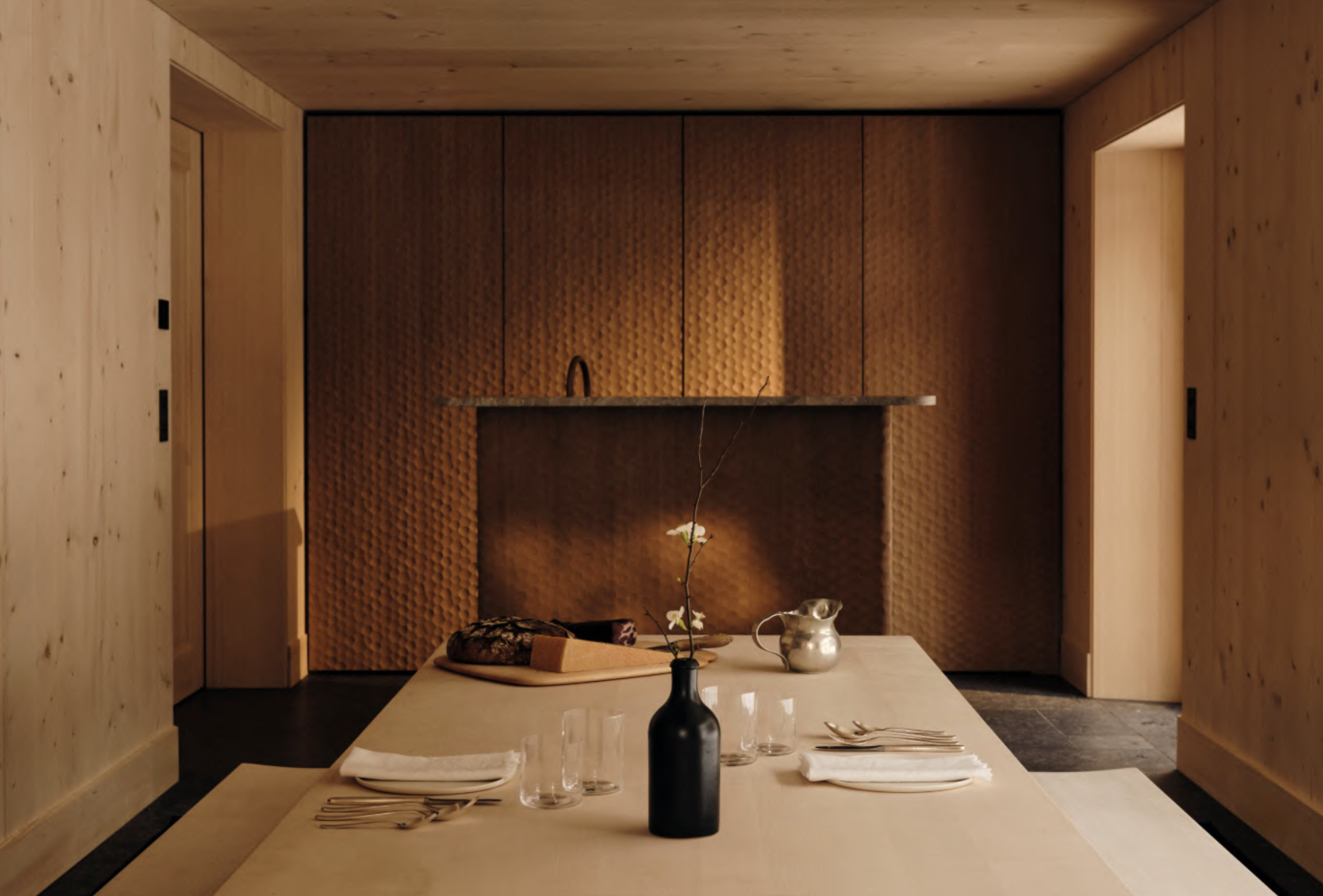
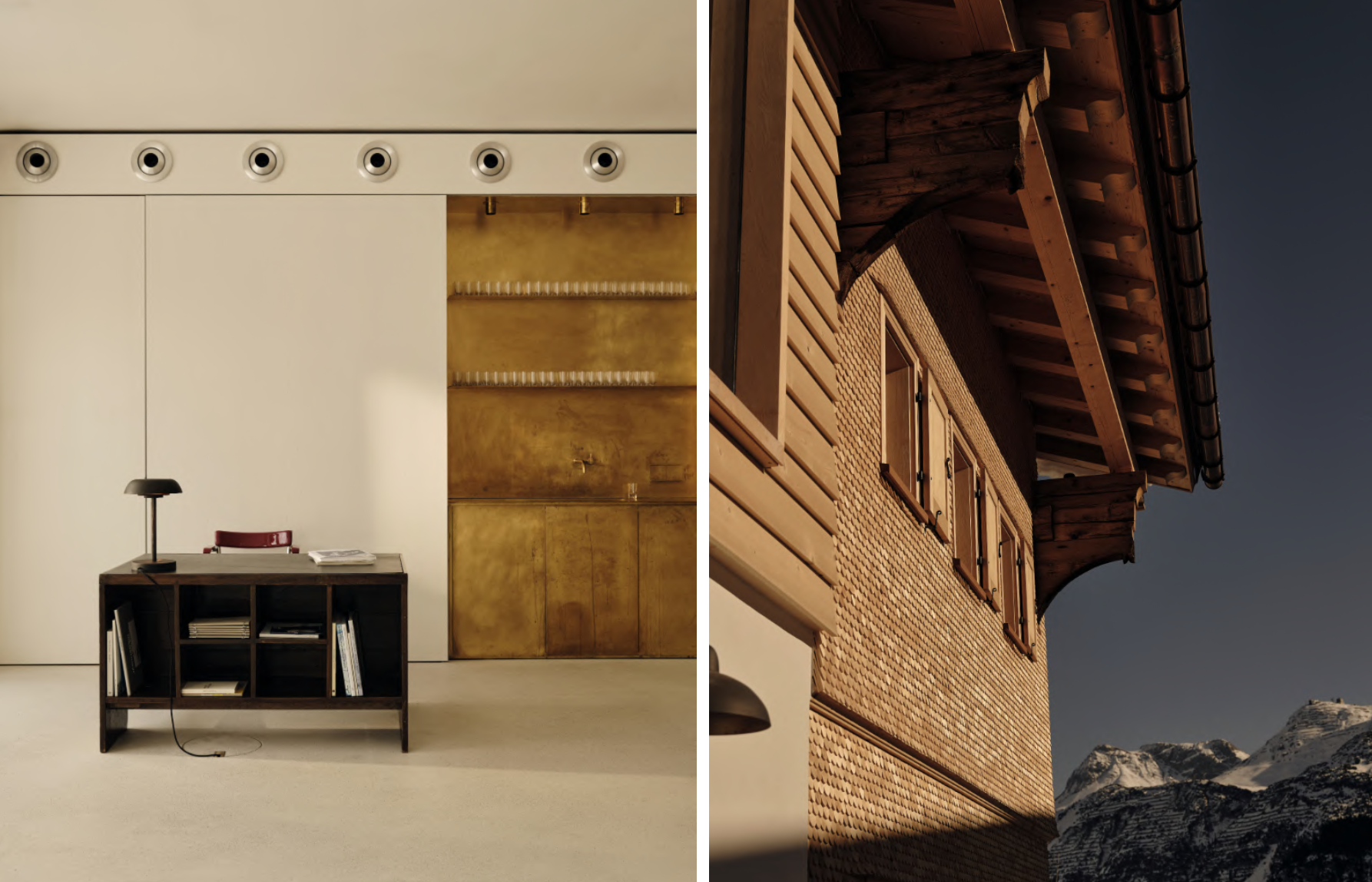
Their approach also finds expression in three historic Walser farmhouses in Lech and neighbouring Zug: Chalet Sonnenhof, HausW and Restaurant Klösterle, all of which share the same vernacular building tradition as the original Almhof. Traditionally, Walser farmhouses brought domestic life and work together under one roof, reflecting a way of living shaped by the surrounding landscape and the needs of the community. Chalet Sonnenhof, a farmhouse dating to 1393, has been restored as a private six-bedroom residence, while HausW, a 17th-century farmhouse in Zug, brings together four-bedroom accommodation and Werkraum Zug, an atelier for creative practice, with both spaces designed to function independently or together. Restaurant Klösterle, a historic farmhouse under heritage protection that remained in agricultural use during the summer until recently, has found a new purpose as a restaurant, without undergoing the architectural transformation of the other two properties. Beyond their architectural significance, the houses reflect an understanding of historic buildings as living spaces, whose continued use allows traditions of gathering and exchange to endure and evolve.
Their commitment to community is carried further in allmeinde commongrounds, an independent cultural initiative founded by Gerold Schneider in 2000, which grew out of an earlier vision for A House for the Alps. Its name derives from Allmende or Allmeinde, two historical variations of the term for the Alpine commons, which refers to the collective use and management of shared natural resources, including water, wood and meadows. Far from being a practice of the past, the collective management of these resources remains part of life in the region today. Bringing this principle into the present, allmeinde commongrounds is dedicated to the creation and exchange of knowledge, reflection and creative practice as means of engaging critically with society. Initially bringing its activities together under one roof, the initiative has since evolved into distinct spaces for intellectual exchange, artistic production and public dialogue. The original allmeinde space in Lech, a two-storey building converted from a rural barn dating to the 1950s, houses a library and office and remains the intellectual centre of the initiative. Its activities extend to Kunstraum Zug, dedicated to exhibitions and discourse, and Werkraum Zug, an atelier for artistic production and experimentation within HausW. Accommodation at HausW supports the initiative by enabling visiting practitioners and thinkers to gather and exchange perspectives in person, while the historic Zugerhorn farmhouse is also envisaged as a future space for hospitality. Across these initiatives, Katia and Gerold Schneider continue to explore how inherited spaces can remain relevant through new forms of use and collective experience.
NOTES TO EDITORS
The exhibition by Shingo Oka and OGATA Nomadic Boutique will be on view from December 4, 2026 – April 4, 2027. The OGATA Nomadic Restaurant can be experienced from December 8 – 18, 2026.
Address
Tannberg 59
6764 Lech
Austria
Image credits:
1. Hotel Almhof Schneider © Klaus Vyhnalek. Courtesy of Hotel Almhof Schneider
2. HausW, Dining Bar. Photography by Jake Curtis. Courtesy of Hotel Almhof Schneider
3. Kunstraum Zug. Photography by Jake Curtis. Courtesy of Hotel Almhof Schneider
4. HausW, exterior. Photography by Jake Curtis. Courtesy of Hotel Almhof Schneider